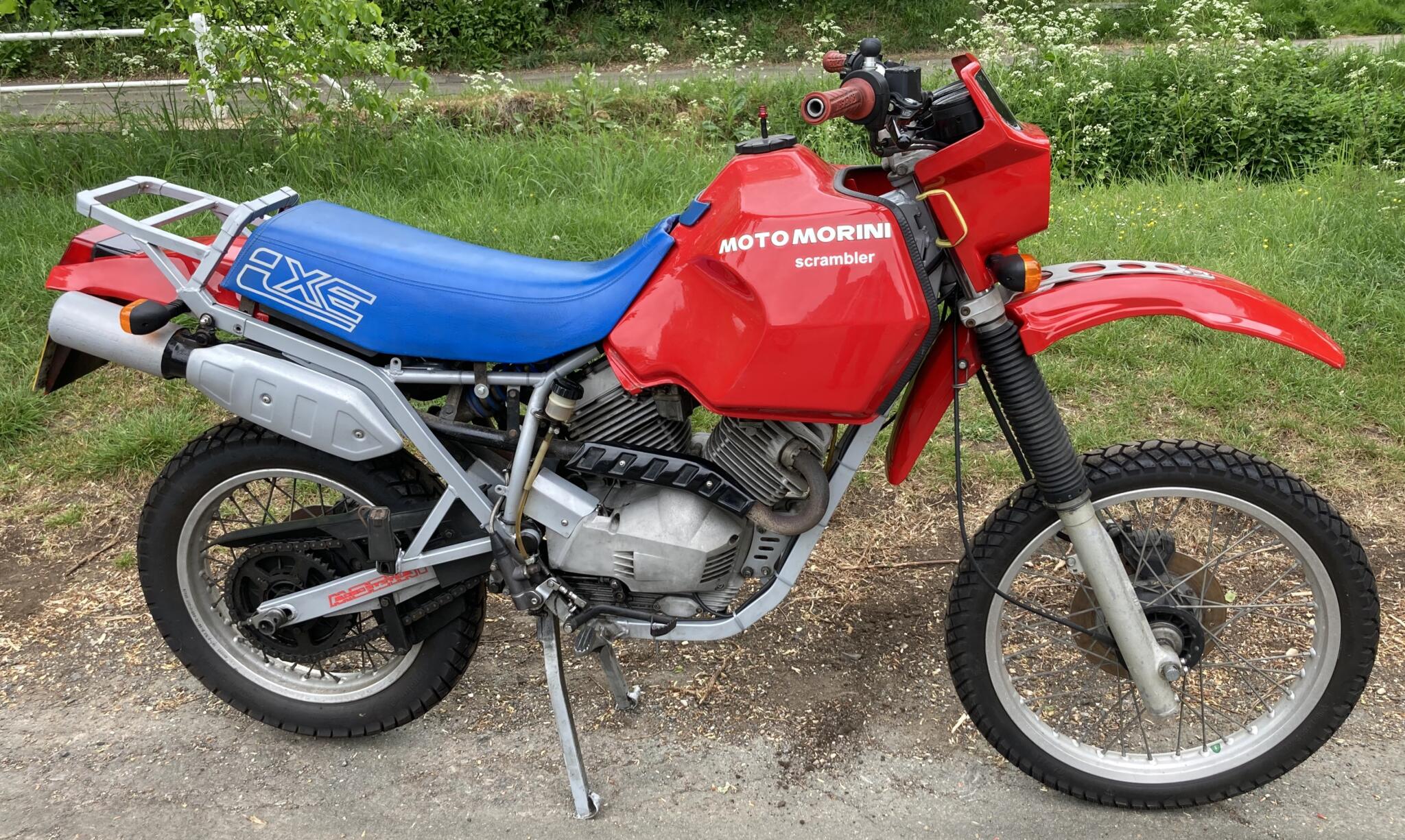
This is a 501 Camel, featuring Mr Lambertini’s second-generation 500 V twin engine
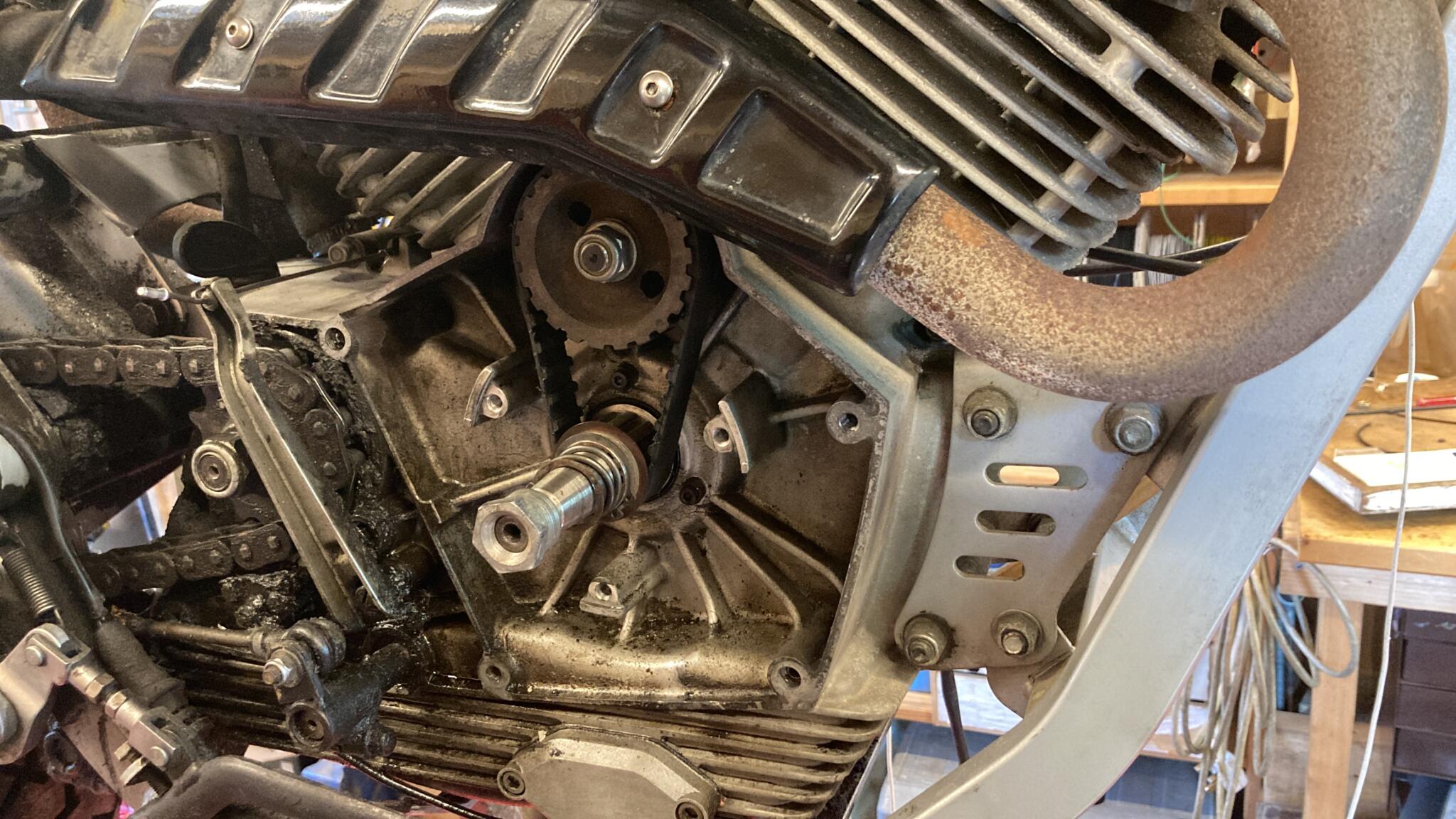
The alternator had to come off for a rejig, exposing the rubber cam belt
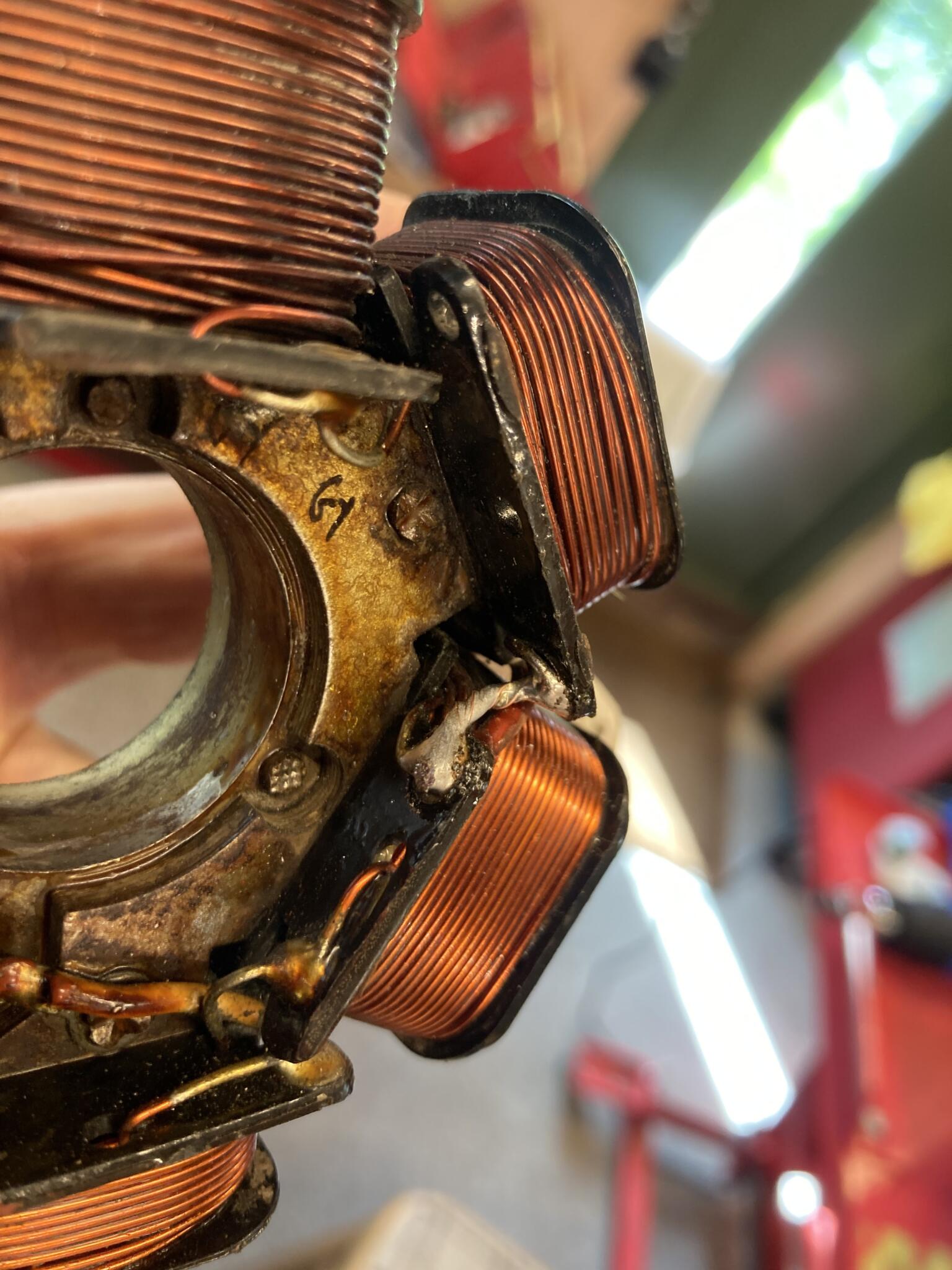
The rejig in question joined two sets of coils together to redeploy the AC headlight feed, and thus make the alternator more like a ‘normal’ one
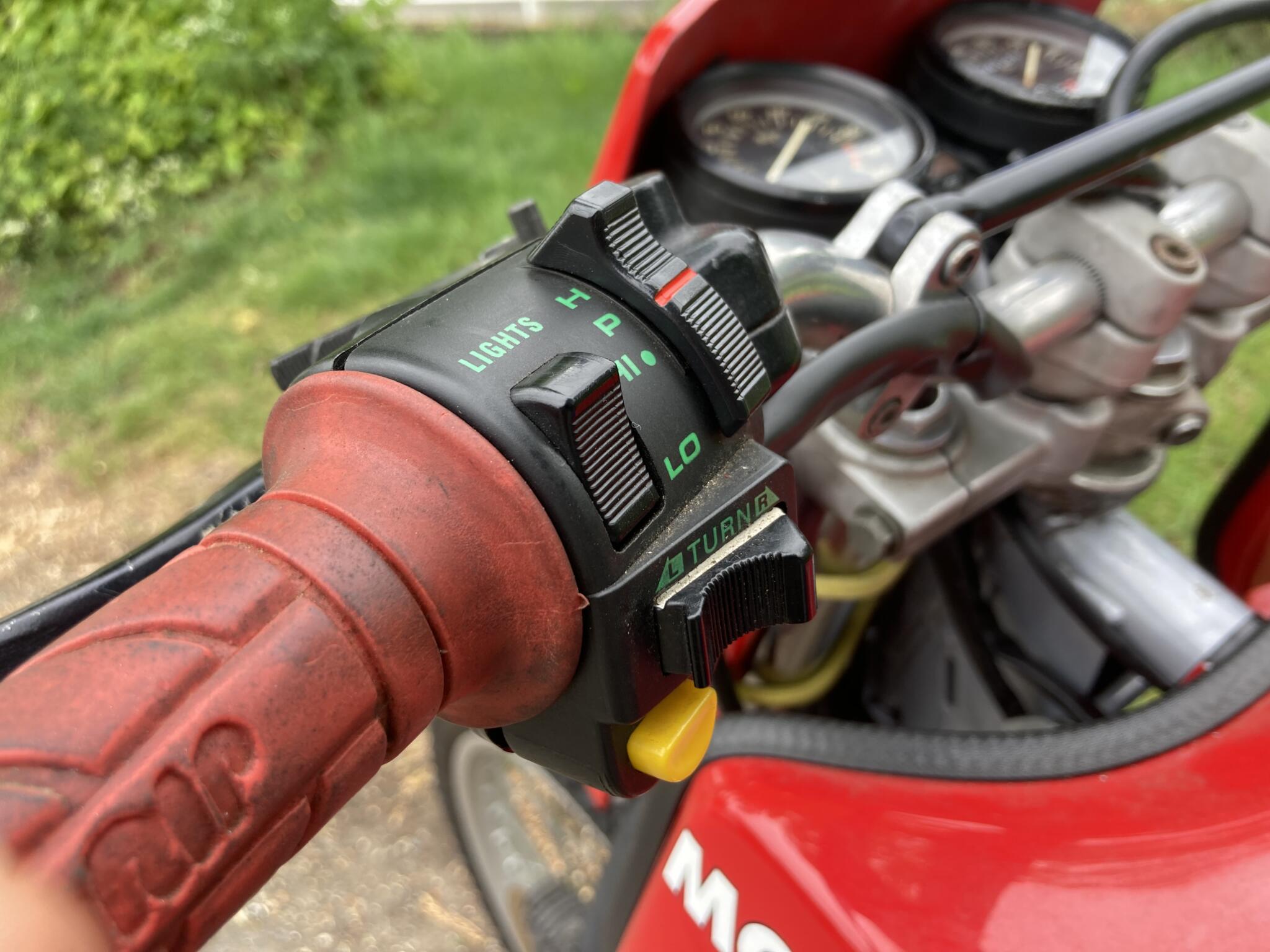
I eventually realised the 501 handlebar switch is the same as a Honda MBX80’s. The old one was damaged, but the new one I ordered was poorly made. The final version combined the best bits of both components
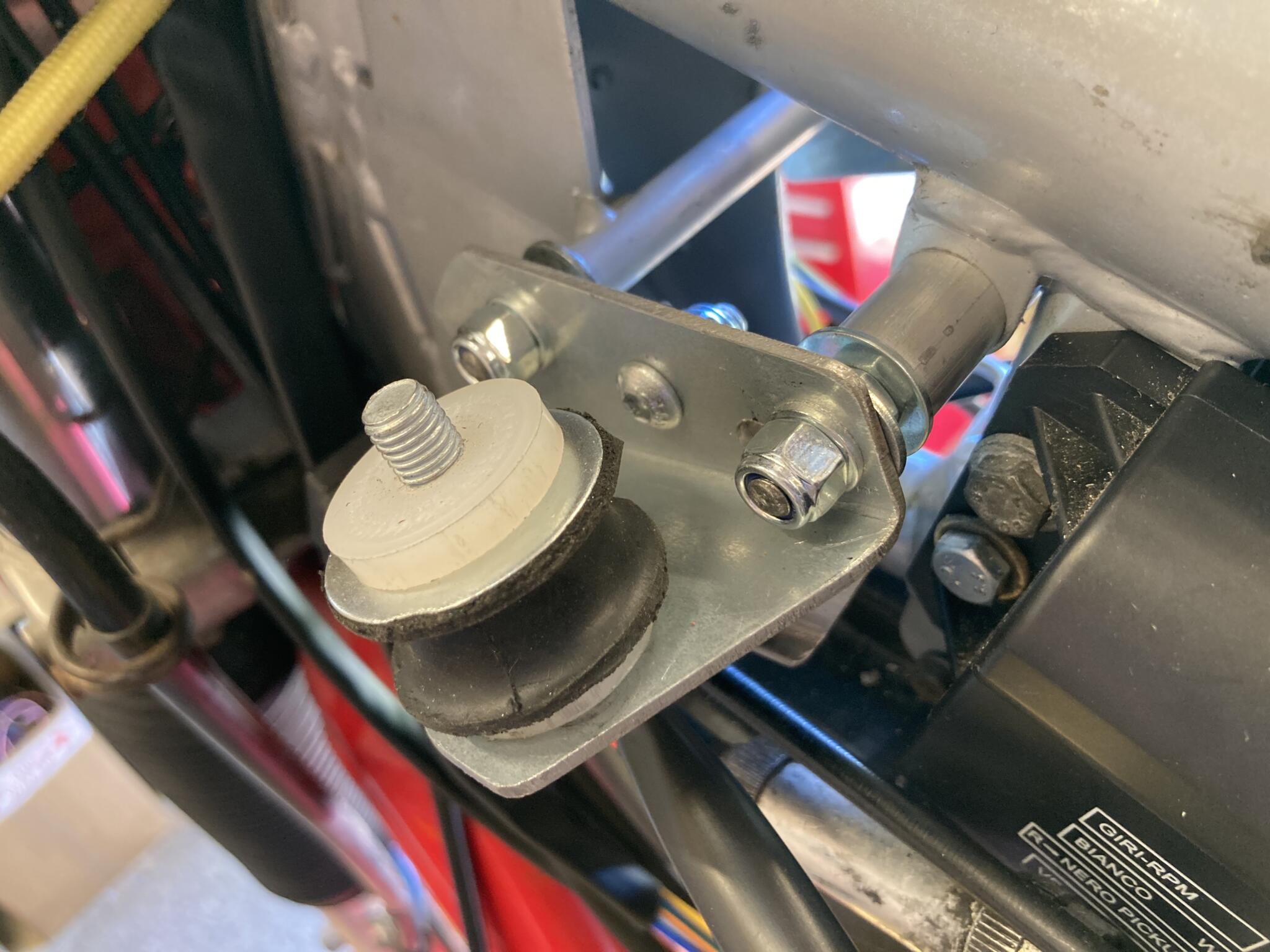
The 23 litre tank is from a later model, so the mountings need beefing up. This is a temporary version, pending a welded solution
Gordon’s Morini 501 Camel
Like all reasonable people, Gordon has a mild case of Morini disease. He’s a handy off road rider, and has already won a couple of events on his Mk 1 500 Camel.
But that’s not his only Morini.
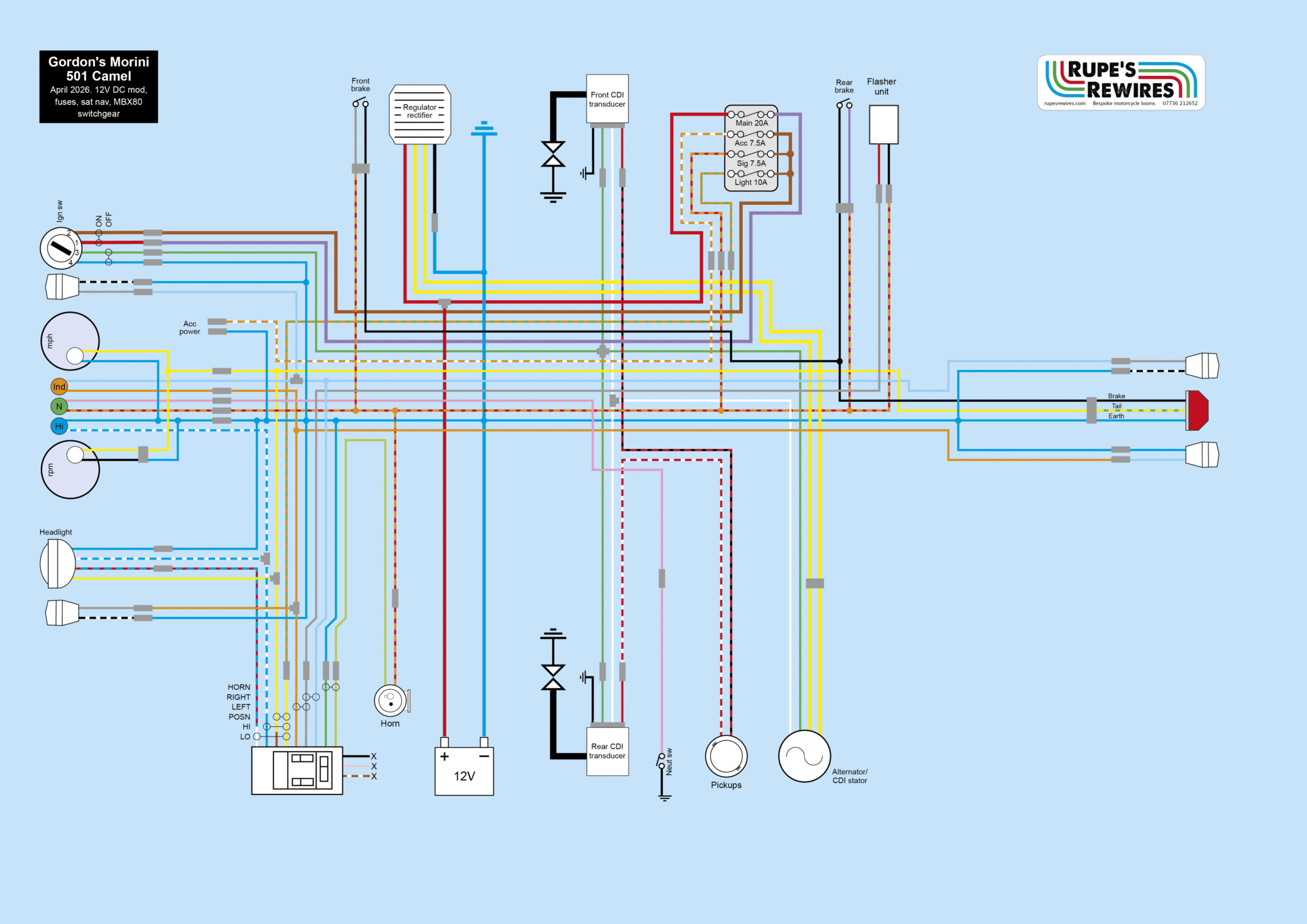
He’d had this second generation model (the 501) a while, and even got it going, but the electrics were no good. Check the pic. It’s not hard to see why. But let’s not get ahead of ourselves. Because just getting this bike ready for a loom felt like being in an epic Russian novel.
Electrically, as you can see, it’s little more than a Ladybird book. But the bit before that was like War and Peace.
Where to start? Like other Morini trail bikes, it runs the lights 12 volt AC, and the rest 6 volt DC. It probably saves a bit of copper, and reduces weight with a tiny 6V battery. But it is quite annoying having your lights go dim at low revs.
The Morini Riders’ Club describes a way of rejigging the alternator coils to make it into a device that allows you to run everything 12 volts DC, like a normal bike. Gordon was keen to get this done, so with the help of Morini wizard (and veteran loom builder) Benjy Straw I had a go. Having tried it himself, Benjy had his doubts about how well it would work. Apart from anything else, this stator is a 42 year-old electrical component.
I tested the coils after the rejig and noticed a very slight leak to earth: about 15.5 megohms, according to my Fluke meter. Somewhere, some insulation is breaking down. But not much. And nobody makes replacement alternator stators for Morini 500s. I crossed my fingers that the charging test would be acceptable.
Next I needed to fit the tank properly, to see what kind of space was available underneath it. This turned out to be brain-bogglingly complicated. And because the tank was much heavier than standard, it needed extra support. I found a tab on the frame, made up some spacers and used the tab as a second mounting point.
The following job was to source some indicators, and fit them. Having first refitted and repaired the bodged headlight cowling. Needless to say, the indicators wanted to hit the tank on full lock.
After that it was just a case of sorting out the omni-shagged electrical items, finding somewhere to squeeze in a fuse box, sourcing the smallest 12 volt battery available, mounting it, mounting the flasher unit and reg rec, replacing the handlebar switch and… you get the idea.
Because the 501 has twin high-level exhausts, the whole under-seat area gets really hot, so it’s best to keep wiring there to an absolute minimum. Unfortunately that compresses all the loom connections into an area about seven inches long. So it does look a little bit less tidy than I would like. On the plus side, no part of the loom is going to get too hot.
The bike fired up nicely, and I was amazed how strong the engine felt. The charging? 14.7V lights off, 13.1V lights on. It’s not ideal, but it’s functional, and much the same as my old Morini Kanguro, which had the same conversion.
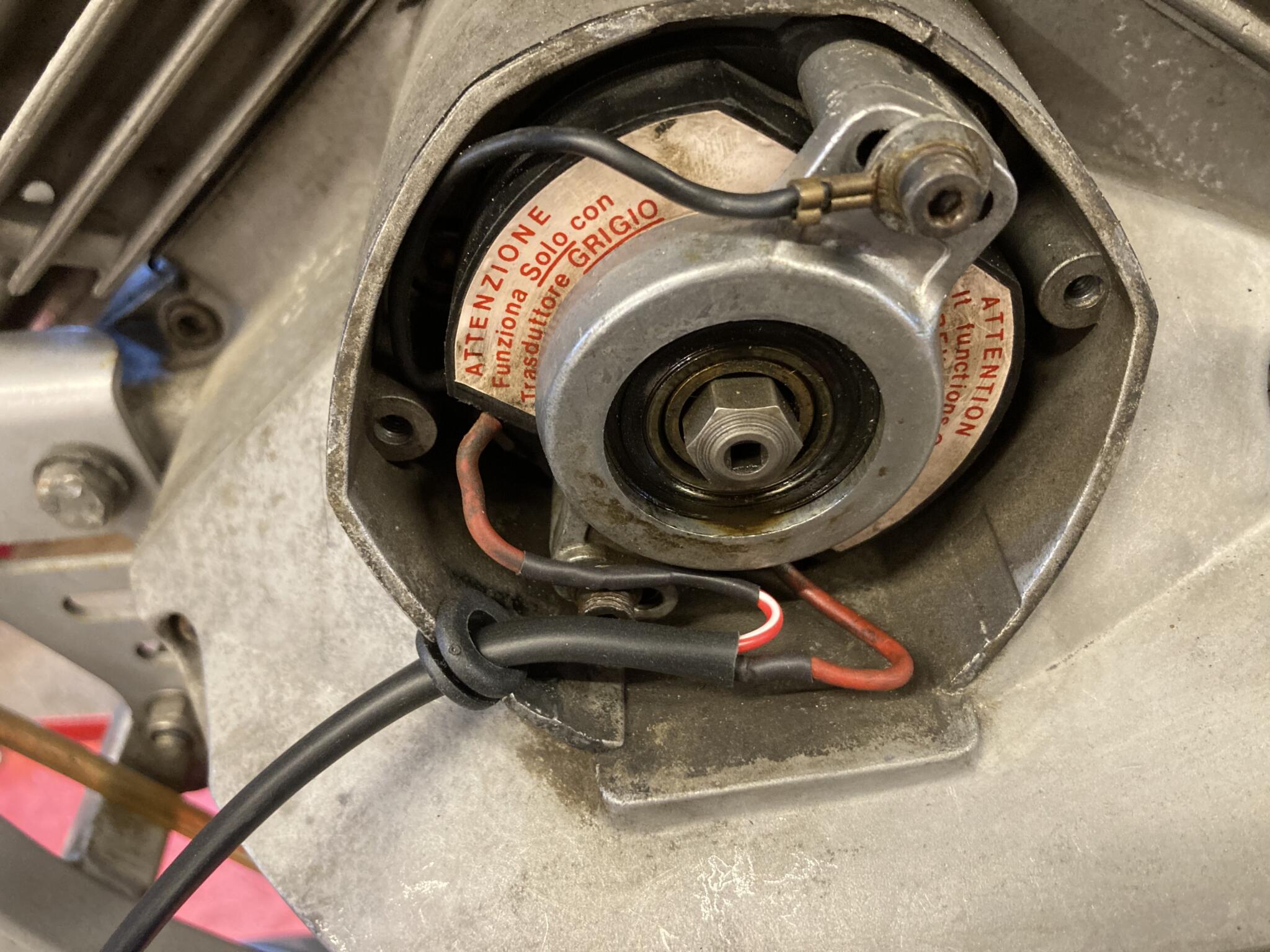
Both pickup cables were damaged. All I could do was chop off the damage and crimp on new cables
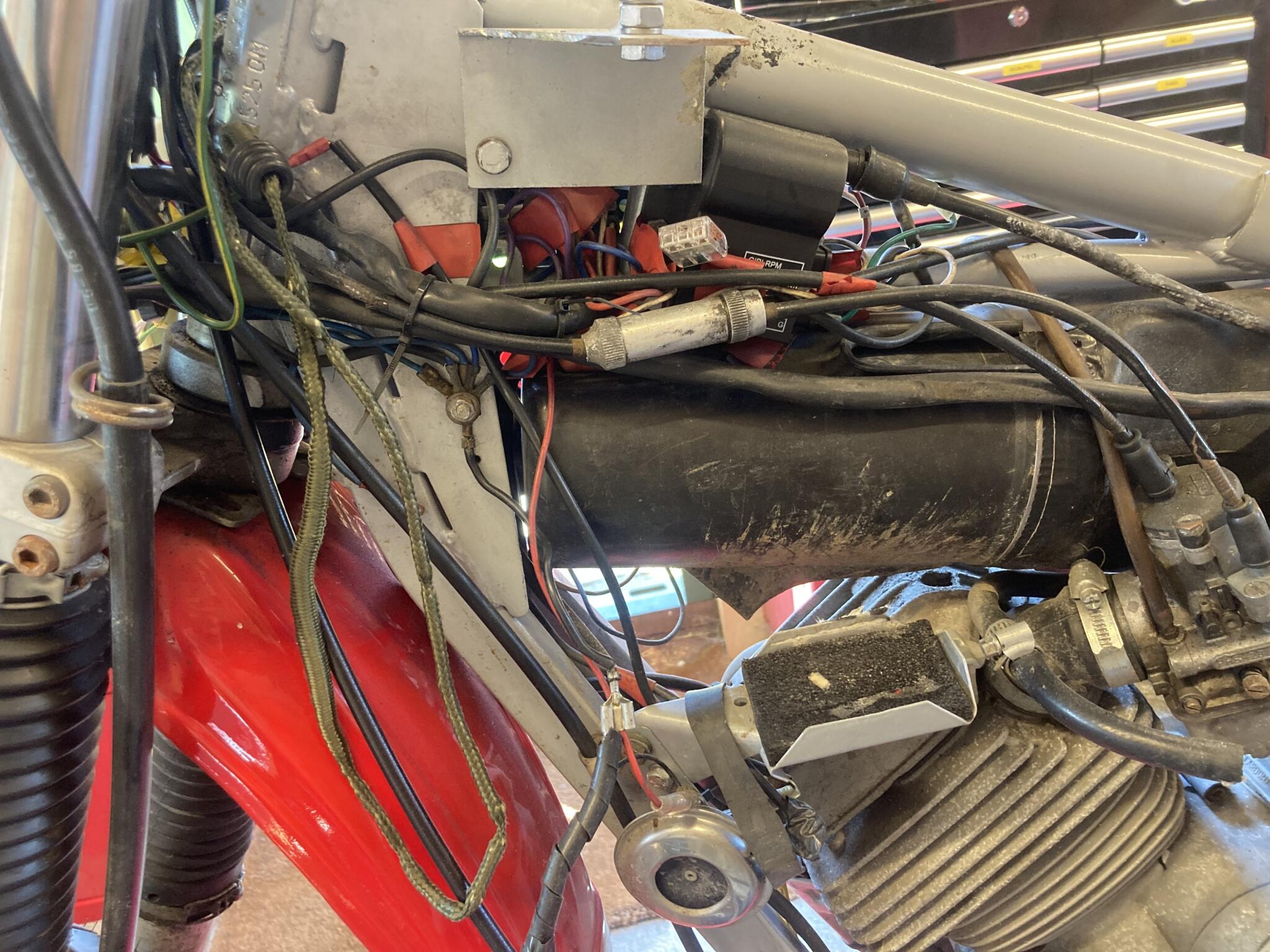
How things looked on day one. Quite a lot to go at, all things considered
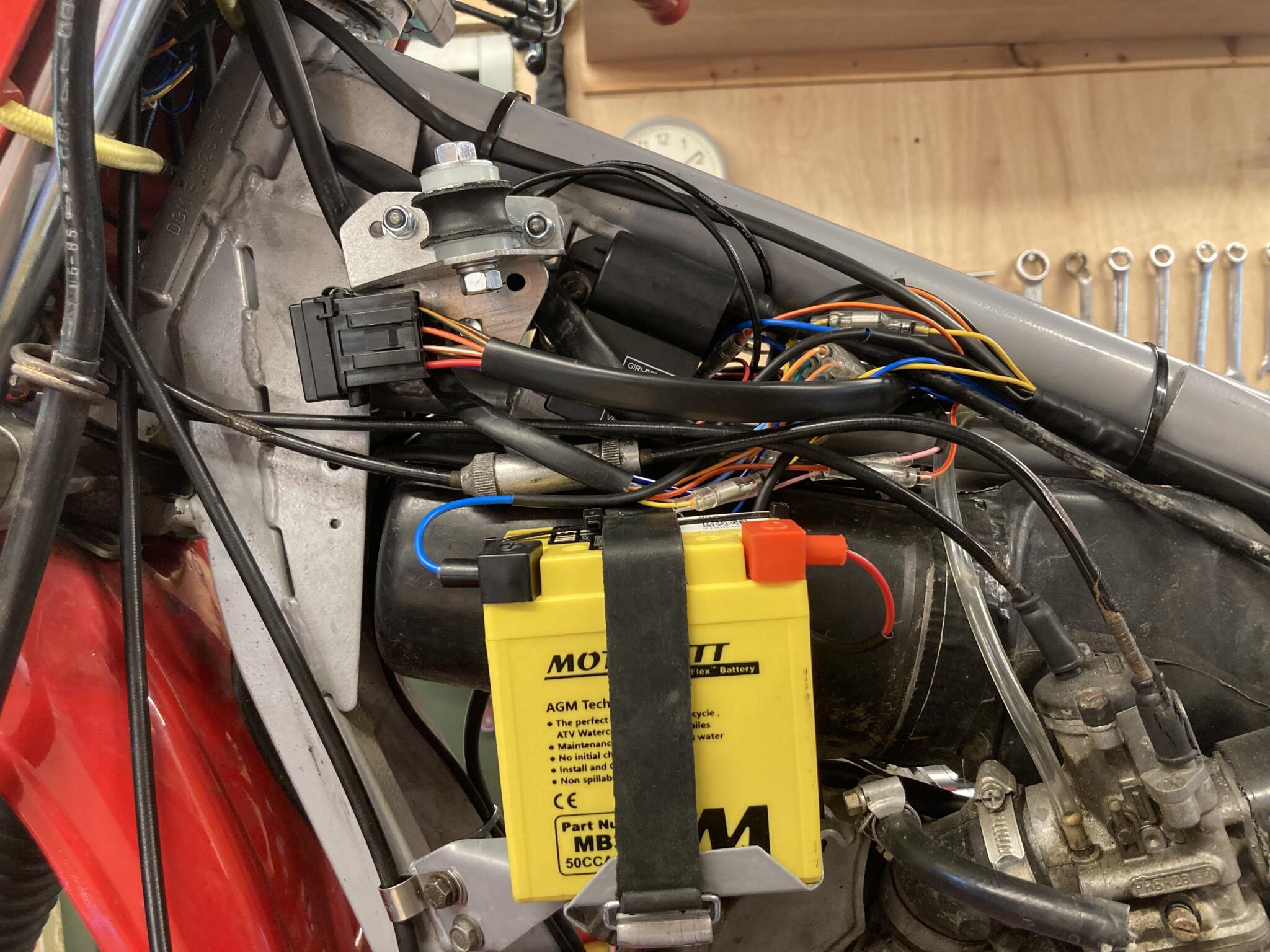
A lot later, it had a new battery mounting, new cowling elastic, revised tank mounts, a fuse box and some fresh wires
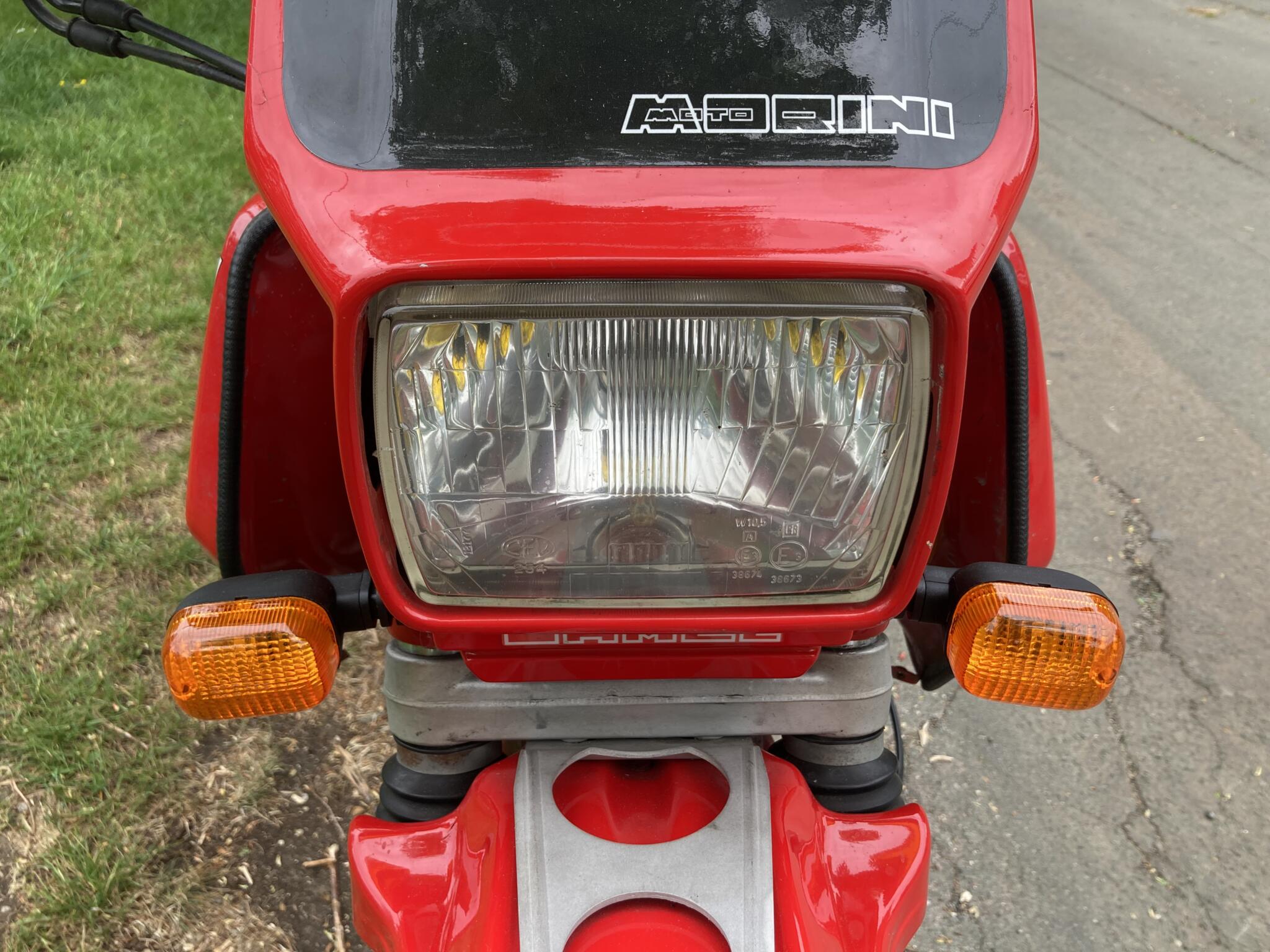
Indicators just graze the oversize tank on full lock
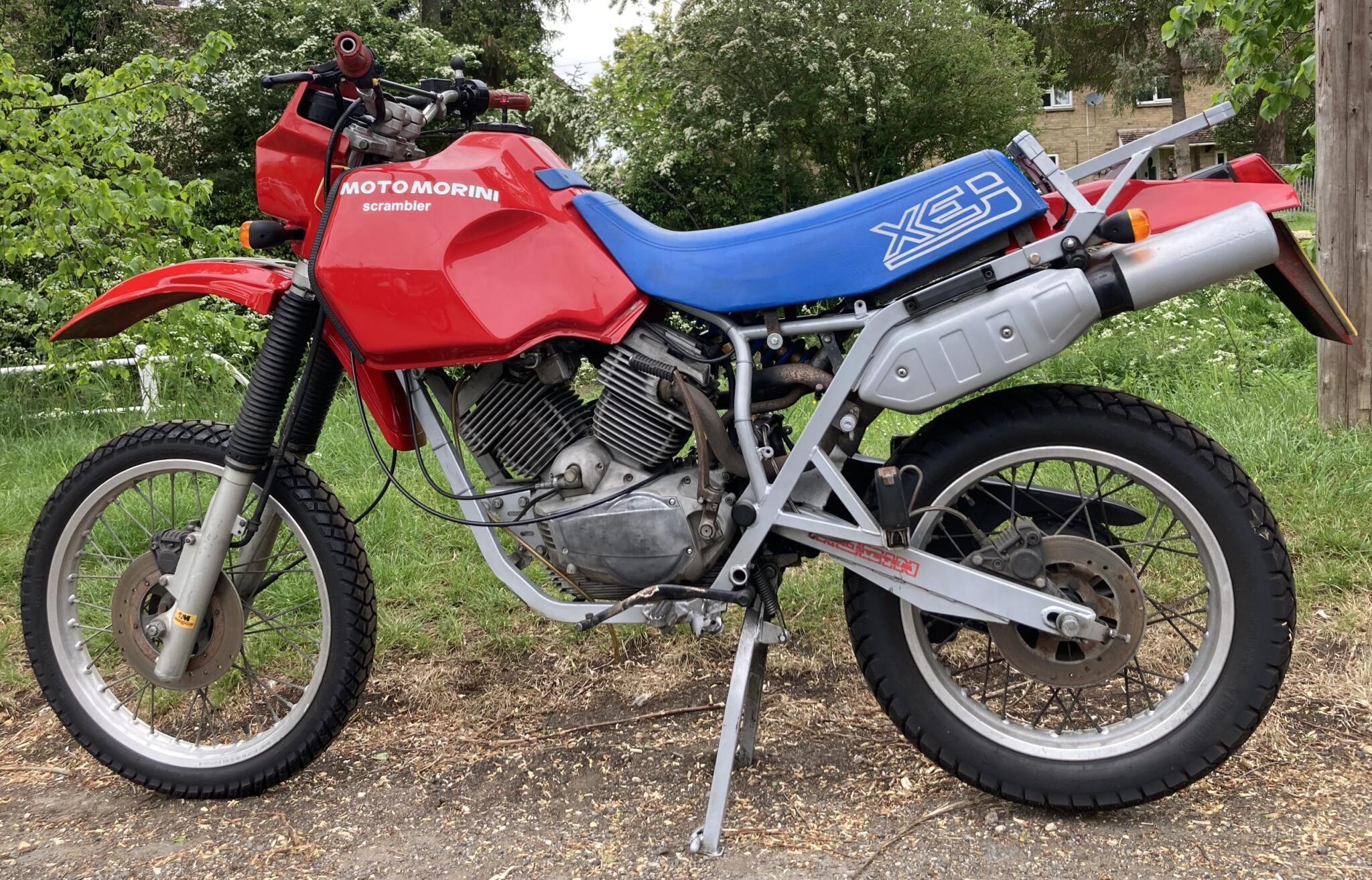
Almost ready for some rocks and gravel