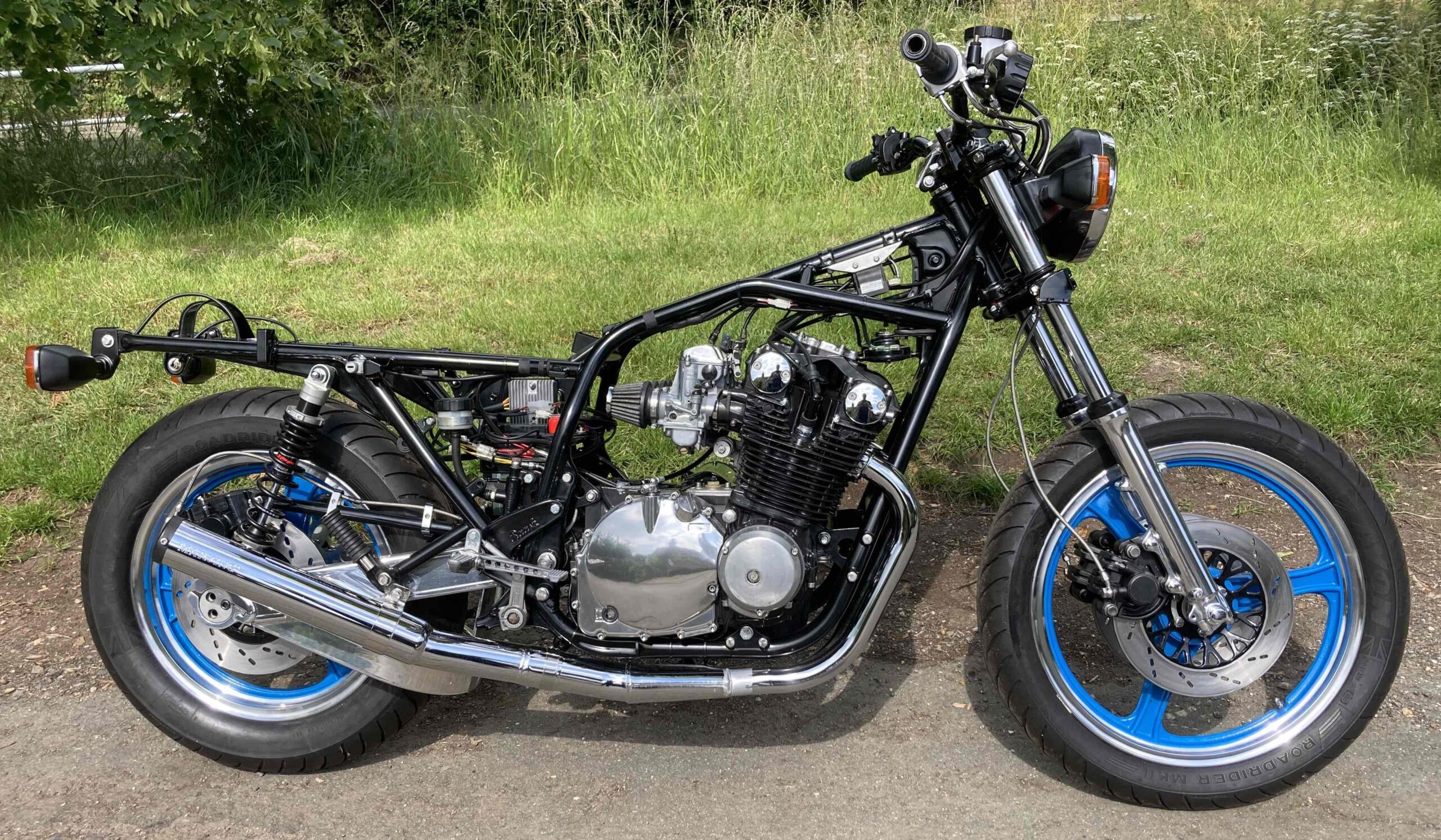
Bodywork the be added when it gets home
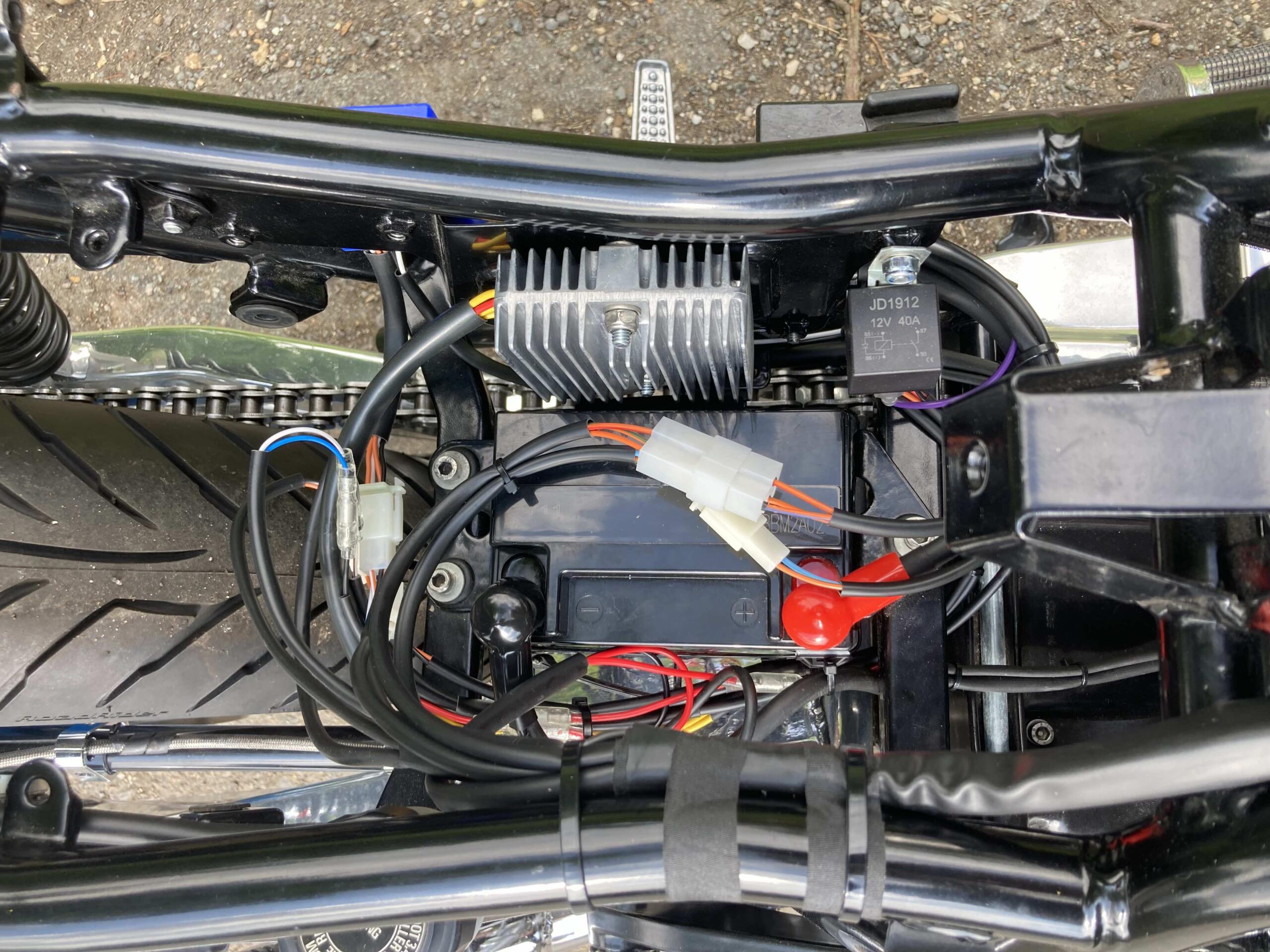
We ditched the original separate charge regulation components. This ElectrexWorld reg rec is much better. Relay (top right) gets round the feeble OE ignition switch cables
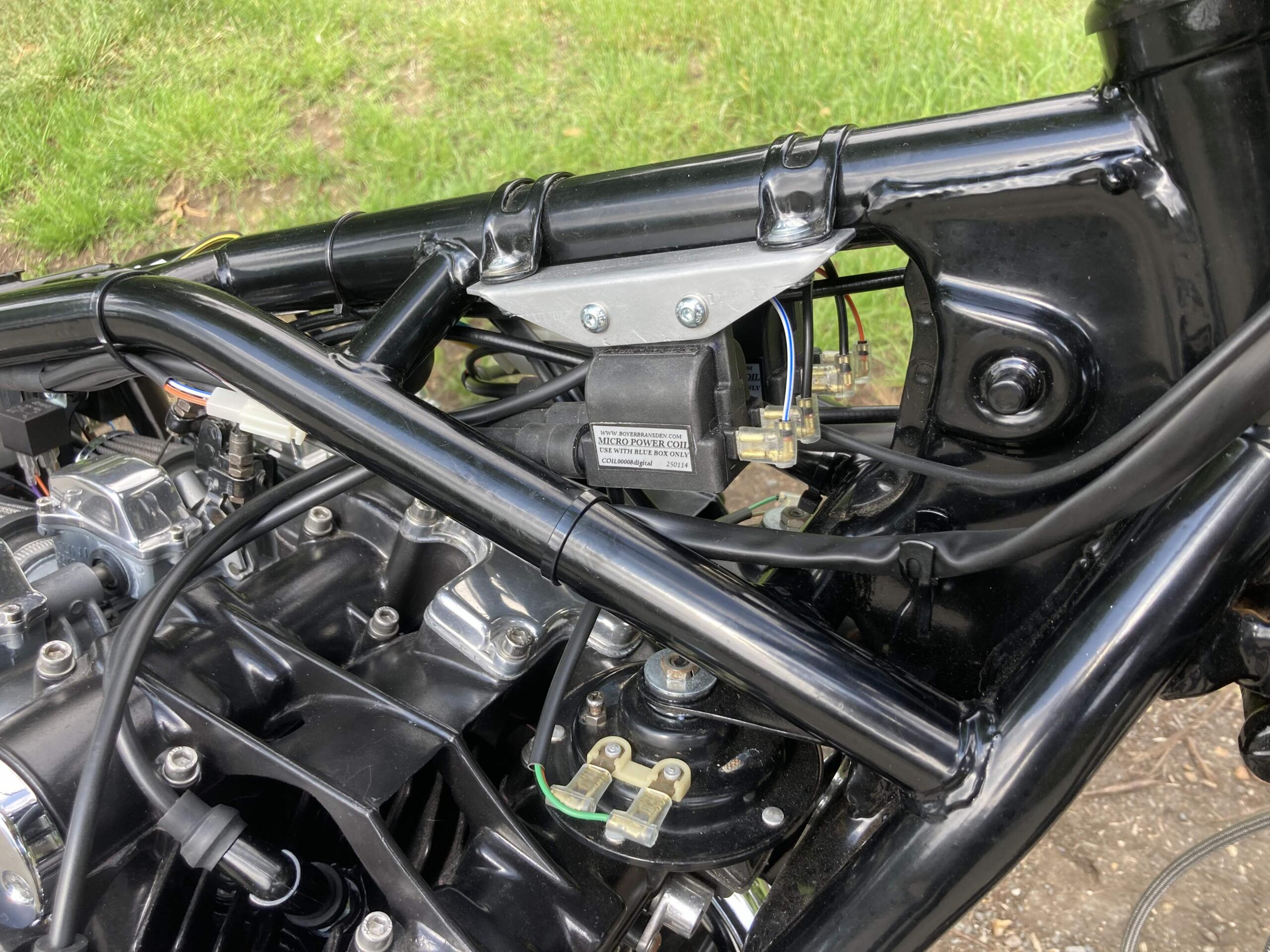
Boyer digital coils sit on a custom aluminium bracket
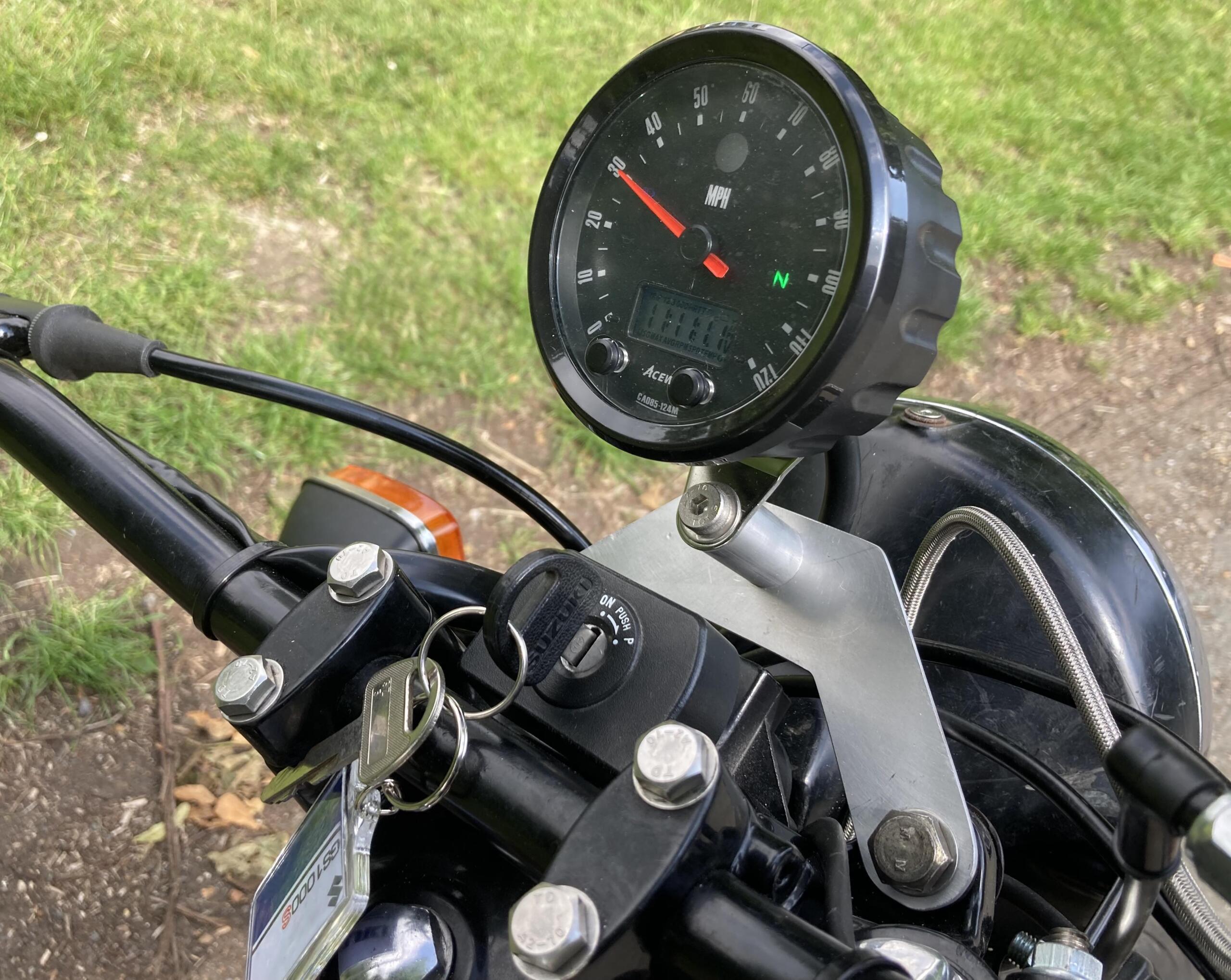
Acewell speedo needed a custom bracket and spacer to sit at the right angle
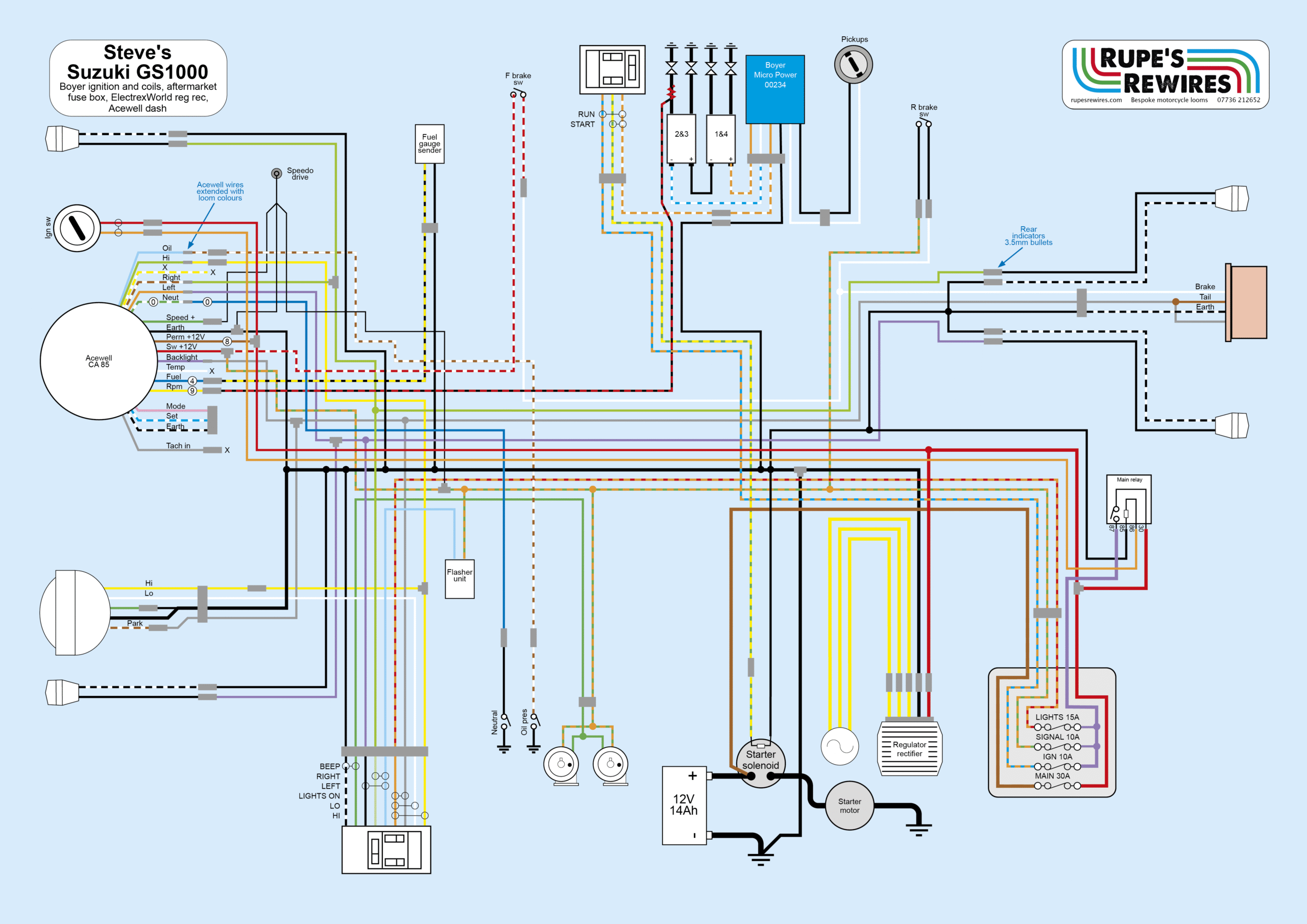
Steve’s Suzuki GS1000
Steve has built this bike from several boxes of bits. He’s done a lovely job of making it shiny and clean, but the electrics were still in their original state: terrible.
He’d sourced a Boyer ignition, which is quite a rare thing on a Japanese four for some reason. It uses Boyer’s miniature coils, which are handy. There is still plenty of space around them for cables.
He had the original console with separate speedo and tacho, plus a host of warning lights, but it was far from complete so we decided on a modern speedo. Steve mulled over a few options I sent him from Moore Speed racing and went for an Acewell 85mm jobbie. A good choice, I think, combining reasonably old-style appearance with modern whizzbang capability.
The only down side of modern speedos (or gauges as they are now called) is they take loads of setting up, and you need to think hard about the best way to provide speedo and tacho inputs. Because this bike has eccentric chain adjusters you can’t use a pickup on the rear wheel, and there is nowhere on the forks to fit a bracket to catch a ferrous object such as a disc bolt. We opted for an analogue-to-digital drive which Acewell do for Suzukis.
The right handlebar switch was recoverable, but the left was damaged by vapor blasting, so I found a pattern switch from an X7 which looked very similar to the GS original.
There’s a bit of work to do before the bike is finished, but it’s nearly there. It’s going to look great.
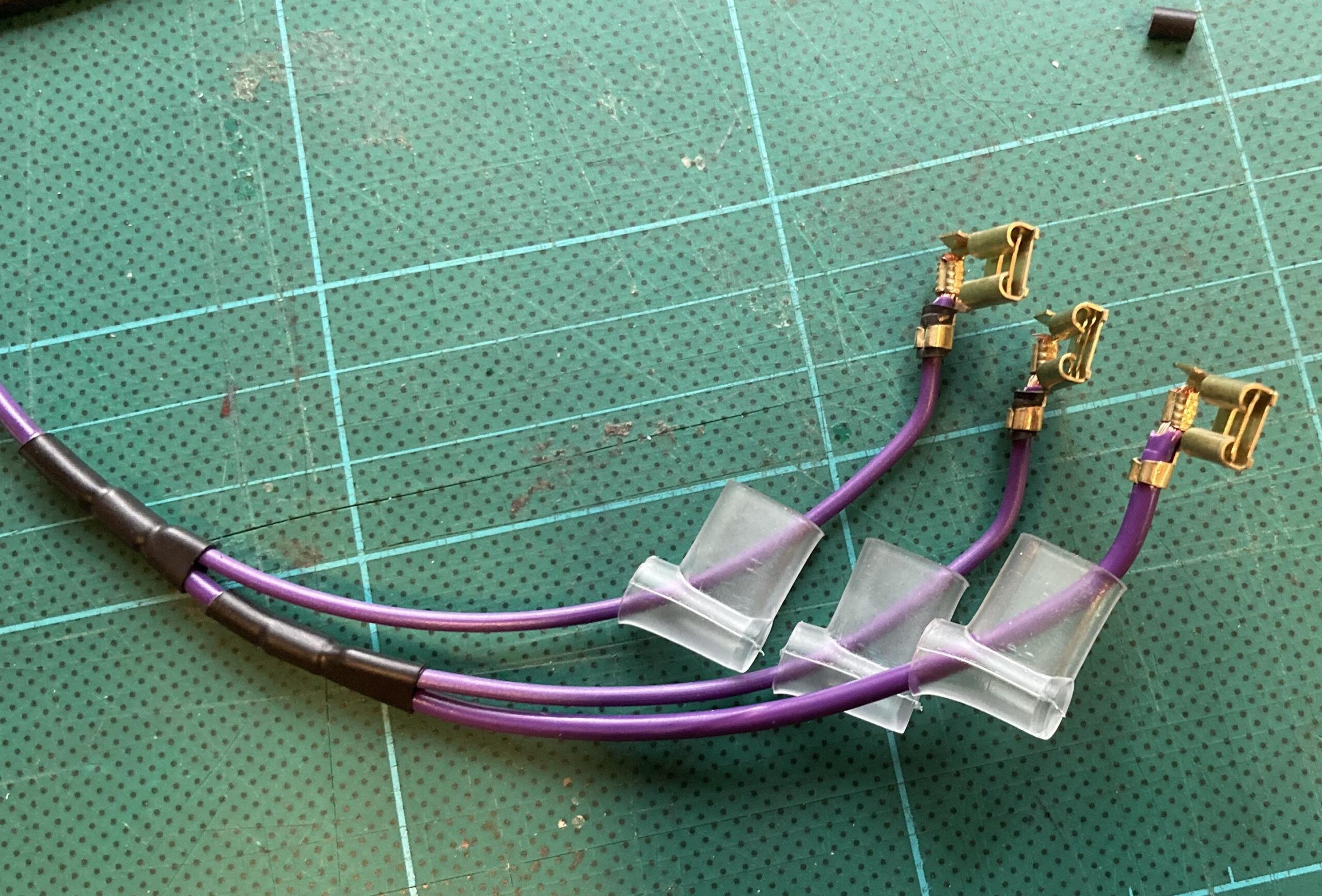
A little detail for you: the feeds for the fuse box
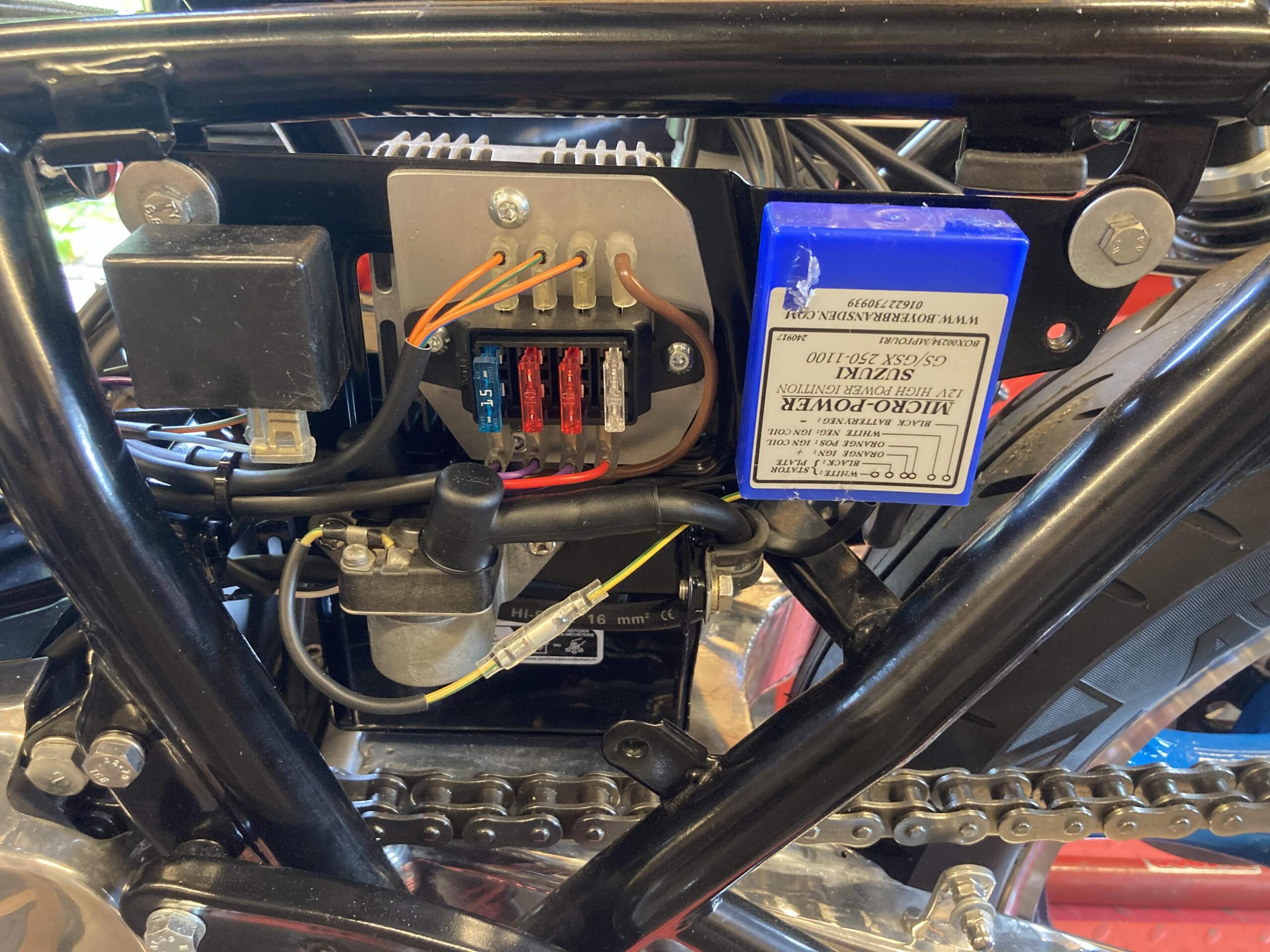
Here are those feeds, plugged in (below the fuses)
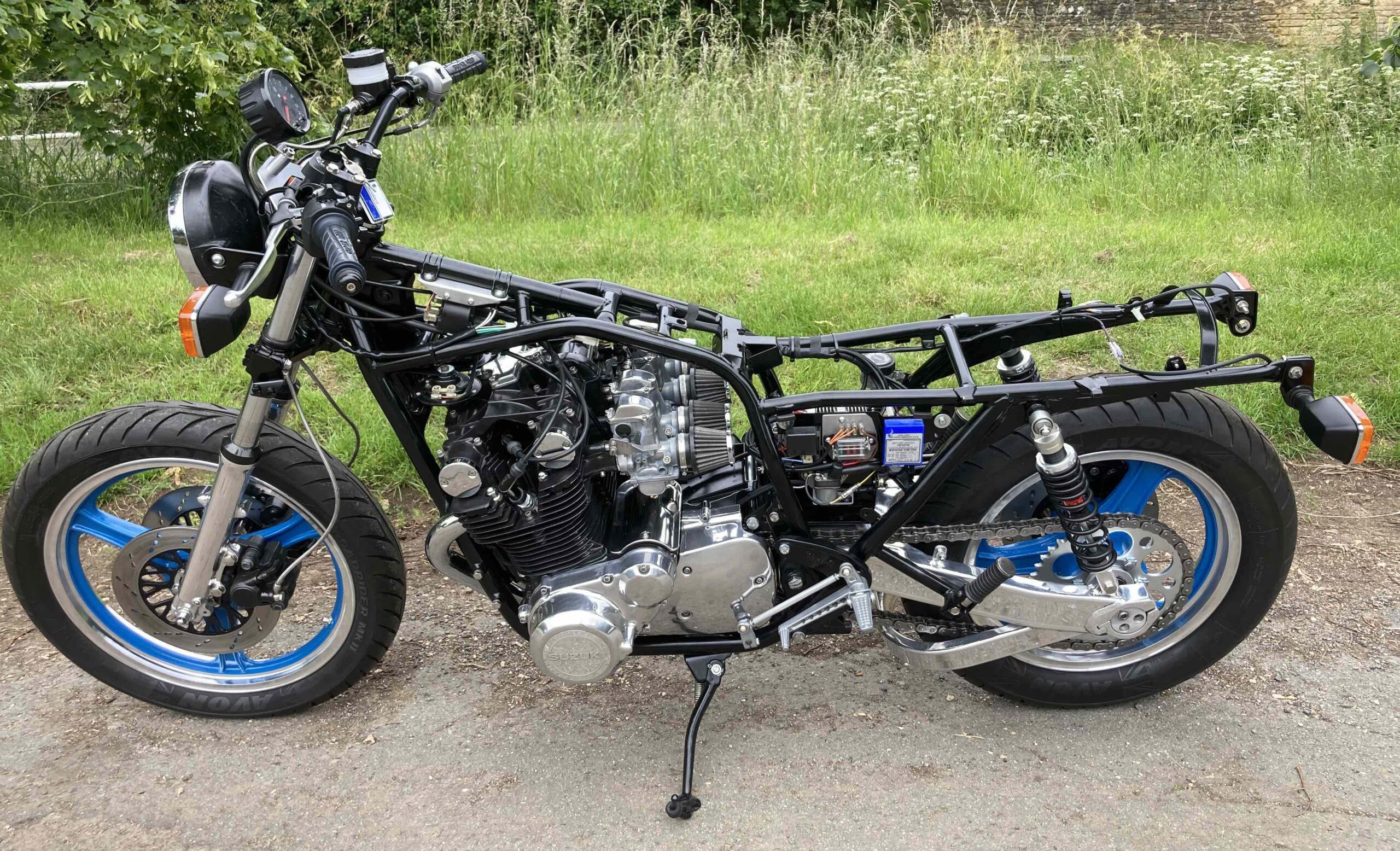
The swing arm is an original Metmachex with eccentric adjusters, which were very cool in the 1980s