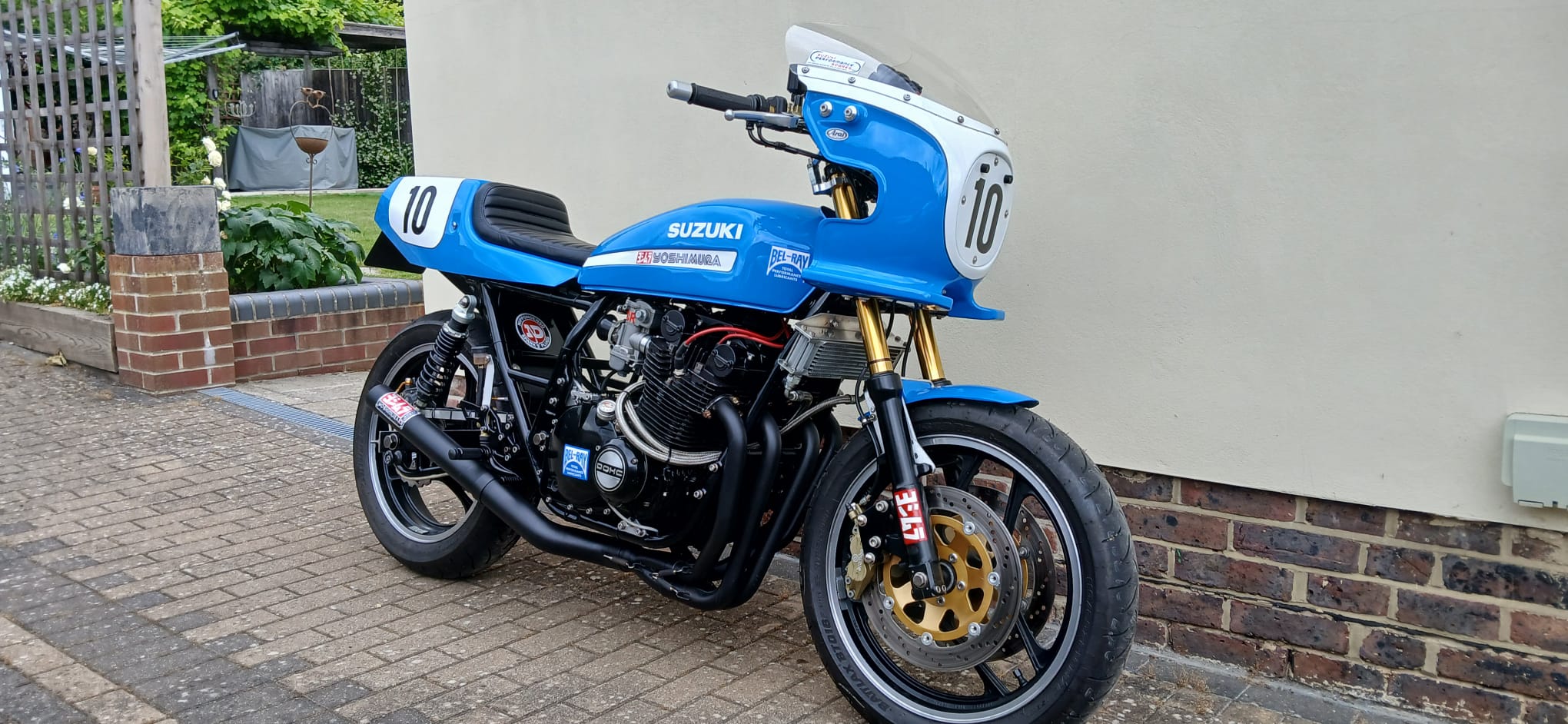
Nick sent this pic of the finished bike
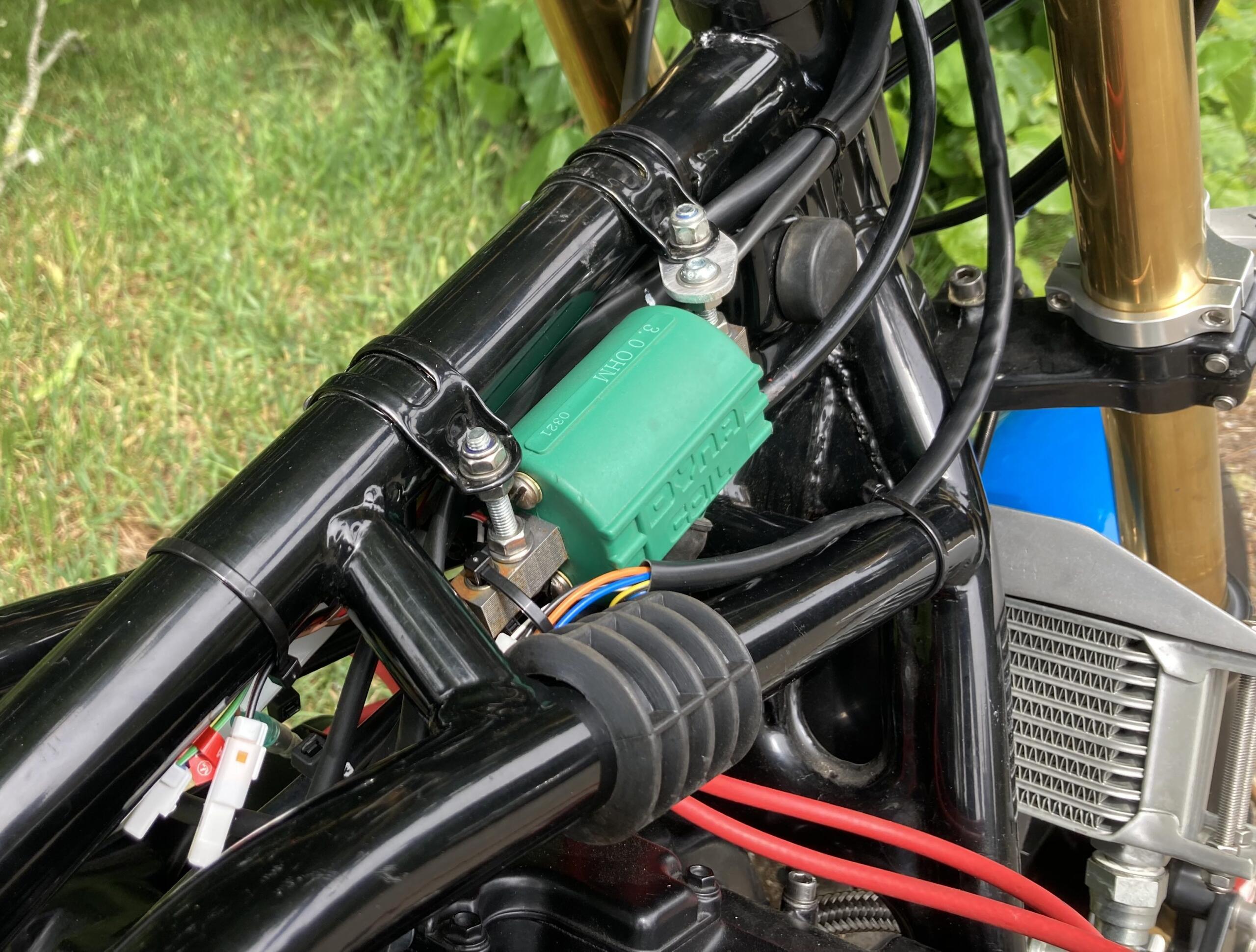
Dyna S coils: fantastic sparks, idiotic placement of the terminals. Why not rotate them 90 degrees FFS? (After 40 years I suspect this ain’t gonna happen.)
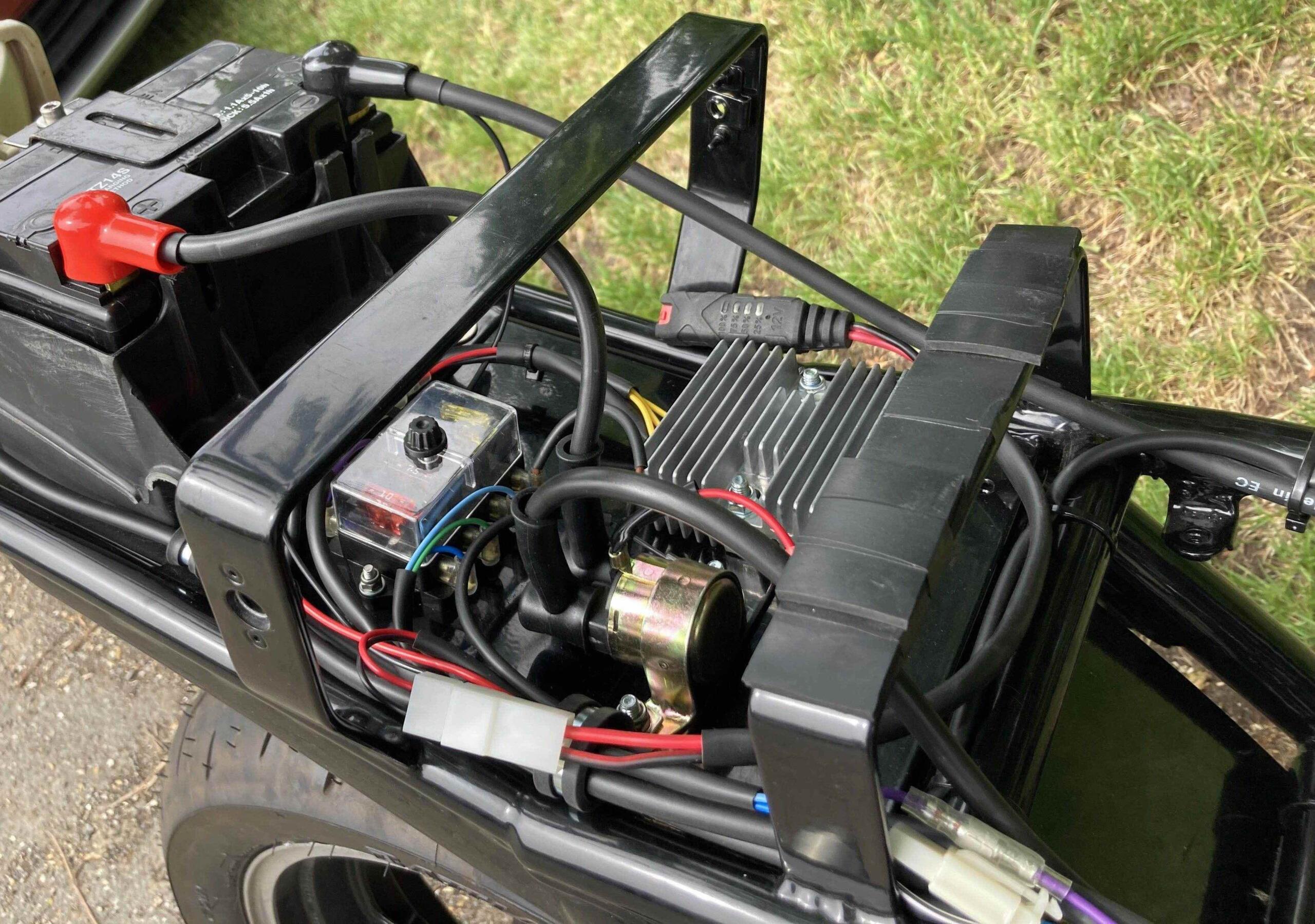
Battery, integrated charge plug, reg rec, solenoid, fuse box. Loads of room
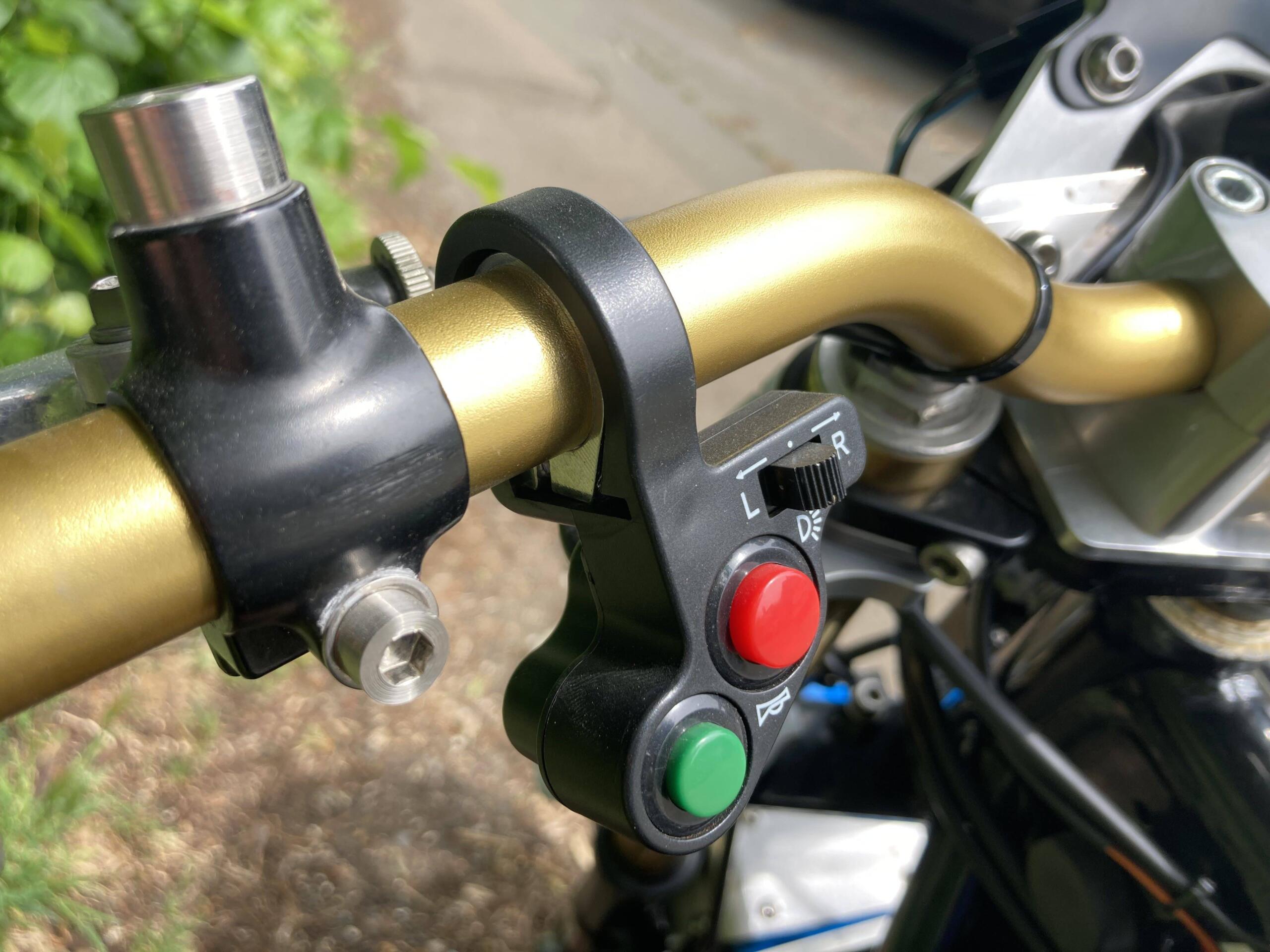
Fancy left handlebar switch. The indicator bit will get no use
Nick’s Suzuki GS1000 special
This is a GS1000 with a fair dollop of tasteful bling to bring it up to a more usable spec. It’s got 1995 ZX-6R forks, GSX-R Slabbie wheels, a 1970s Dresda swing arm, four-pot Brembos as used on 1990s Ducatis and Aprilias, a massive oil cooler and a custom exhaust made to look like a Yoshi system.
Nick was after the simplest of looms: just enough for starter motor, ignition, brake and tail lights, and a couple of LED riding lights up front. The big electrical feature is a fancy Koso speedo/tacho, which picks up speed from a ferrous element on a wheel. The rear wheel is always the best place. We also agreed he could have a plug for a horn if he ever feels like adding one.
He’d sourced a BSB-type left handlebar switch which was OK for LED levels of current. He’d also fitted a pair of green Dyna coils which are excellent devices, if a little large for some applications. Mounted on the original brackets on a GS1000 they end up touching, so after much jiggling I staggered them a tad, and spaced out the front right mount (see pic, left). That was enough to keep them apart, and it still fitted under the tank.
The rest of the build is standard Rupes Rewires for a big Japanese four: four-way fuse box, ElectrexWorld reg rec, big battery insulators, and all the wires going to the right places.
Nick said the engine hadn’t run for three years. It fired up instantly anyway. Yippee!
Later update: Nick had a lot of trouble getting a stable rpm readout on the Koso tacho. It seems this particular instrument doesn’t work too well with Dyna S ignitions. After trying the various options Koso recommends, Nick found a thing Koso make called an rpm smoother. He posted it to me and I made up a sub loom that would plug it into the loom I’d built, and sent it back with details about how to hook it up. Success!
Nick was pleased. “Thank you so much for your invaluable instructions and seemingly never-ending patience,”

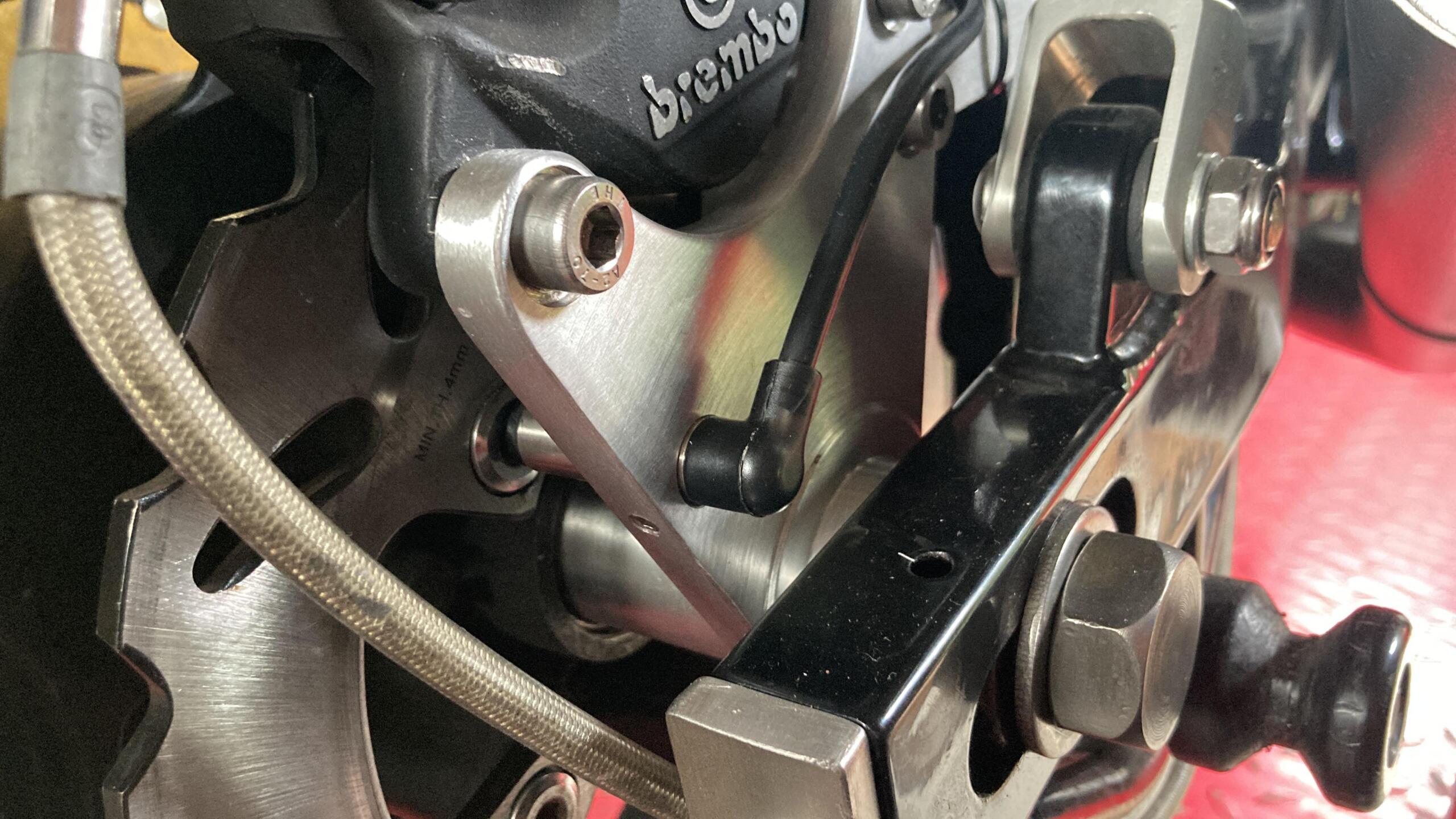
The Koso uses a magnetic steel speed sensor. Best place for it was in the rear caliper carrier
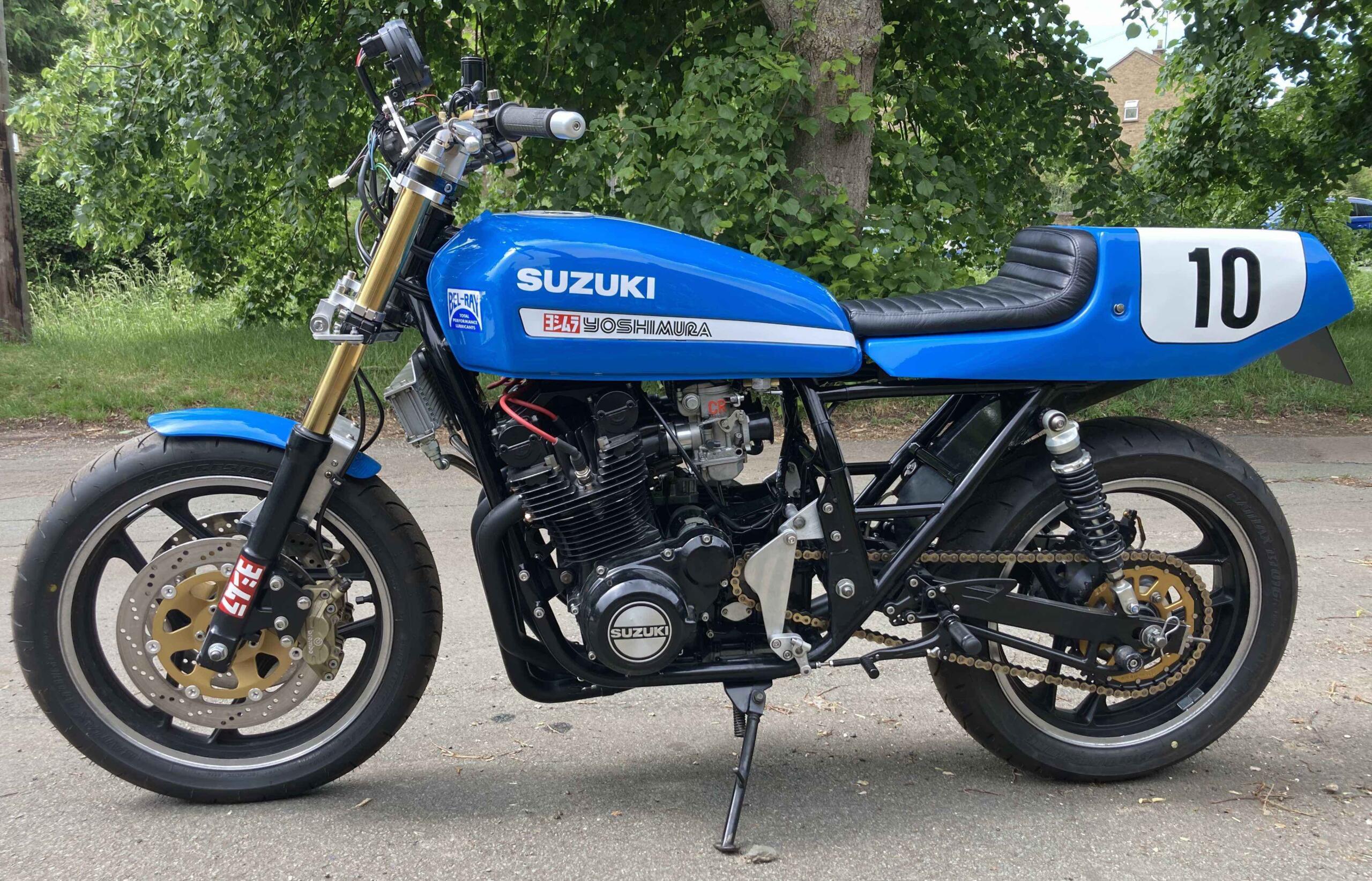
As it left the RR workshop. The nose fairing was at Nick’s house
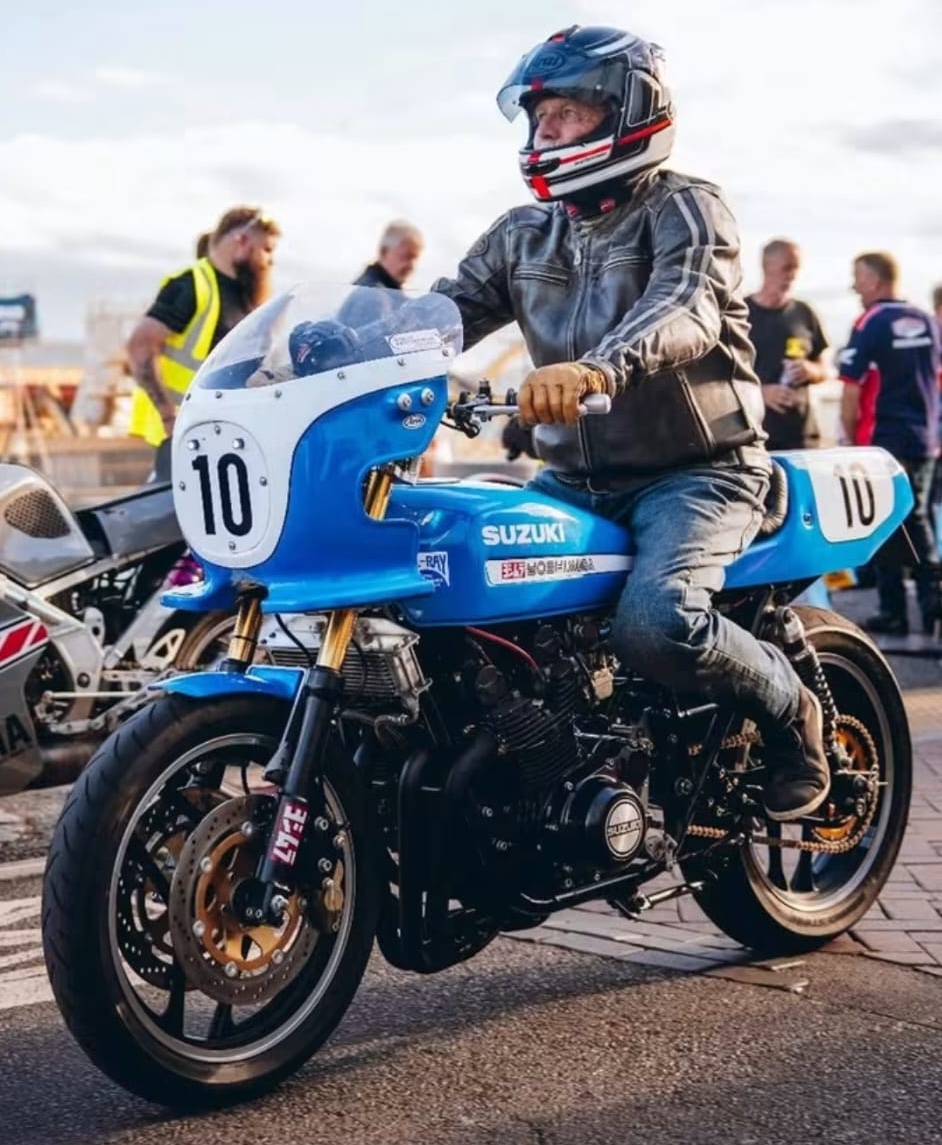
But here’s the complete bike, plus its owner, heading out for their first track day since the rewire