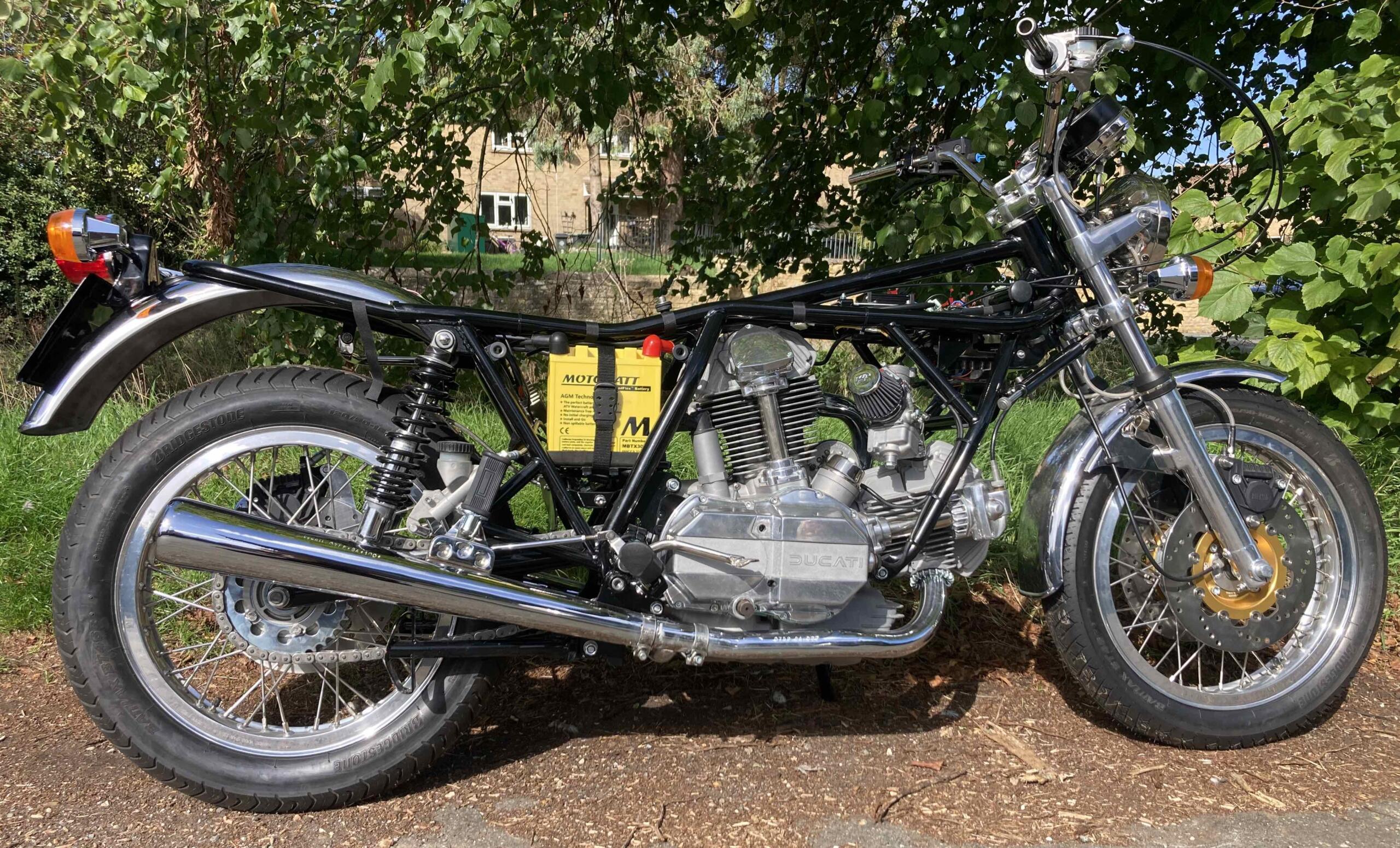
One of the most fabulous-looking engines ever invented
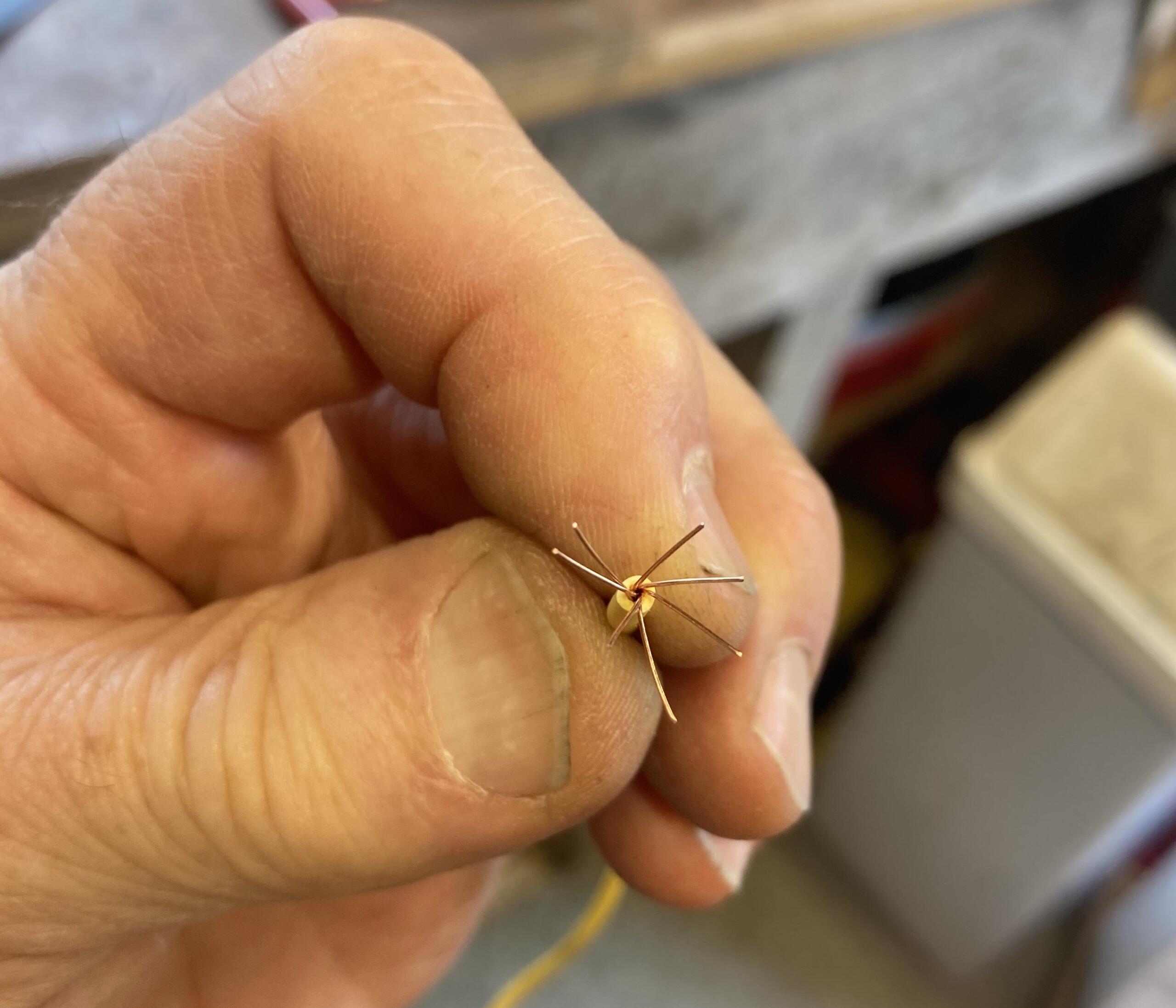
The loom design starts with this new replica switch. Ducati (and Laverda for that matter) usually used Suzuki GT250 switches. But this particular switch uses very thin cable. This is full beam – seven 0.25mm strands is only enough for about three amps
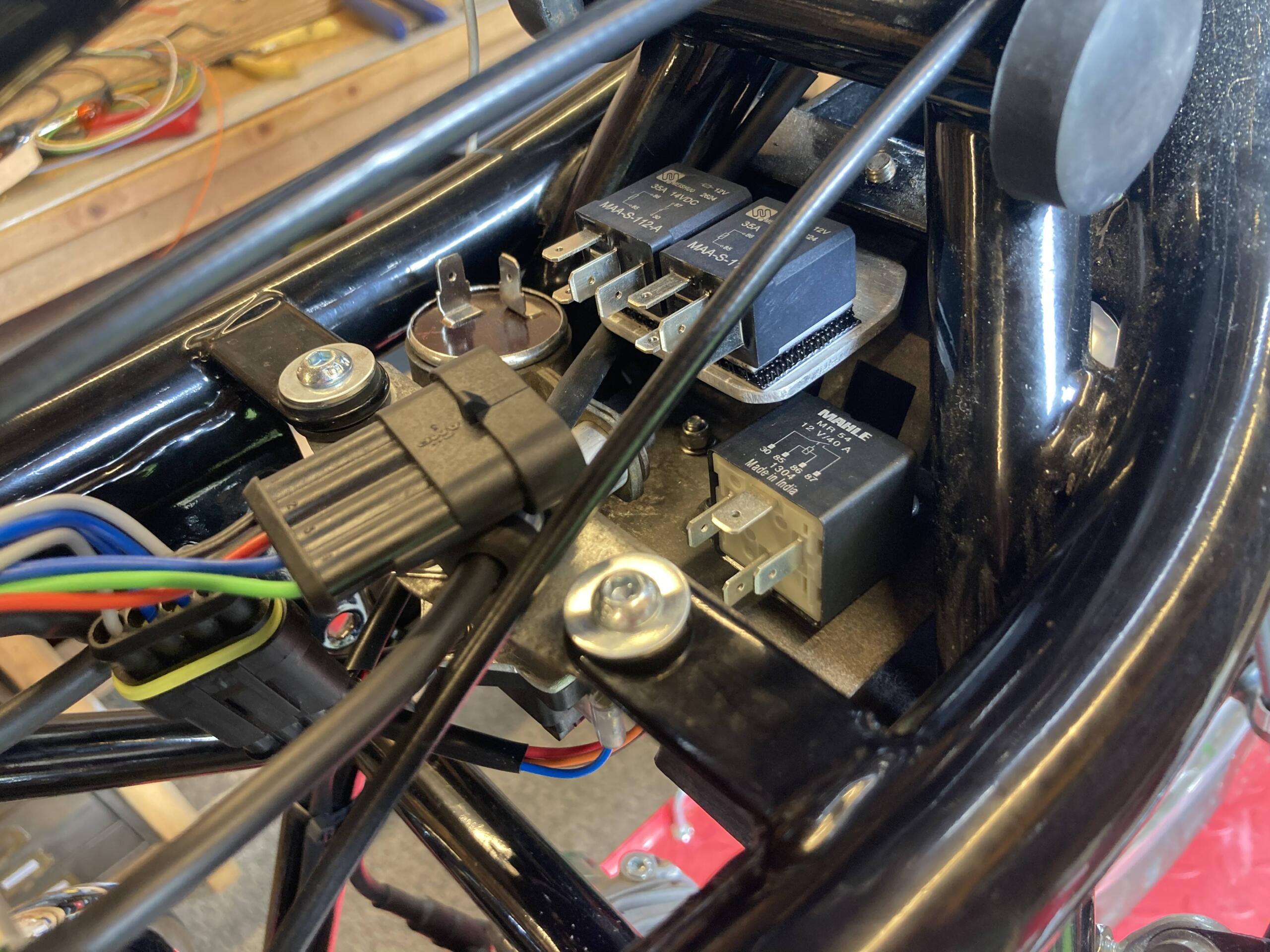
The quickest solution was two micro relays to run high and low beam. Plus another relay below for the start button, whose cables were also very marginal
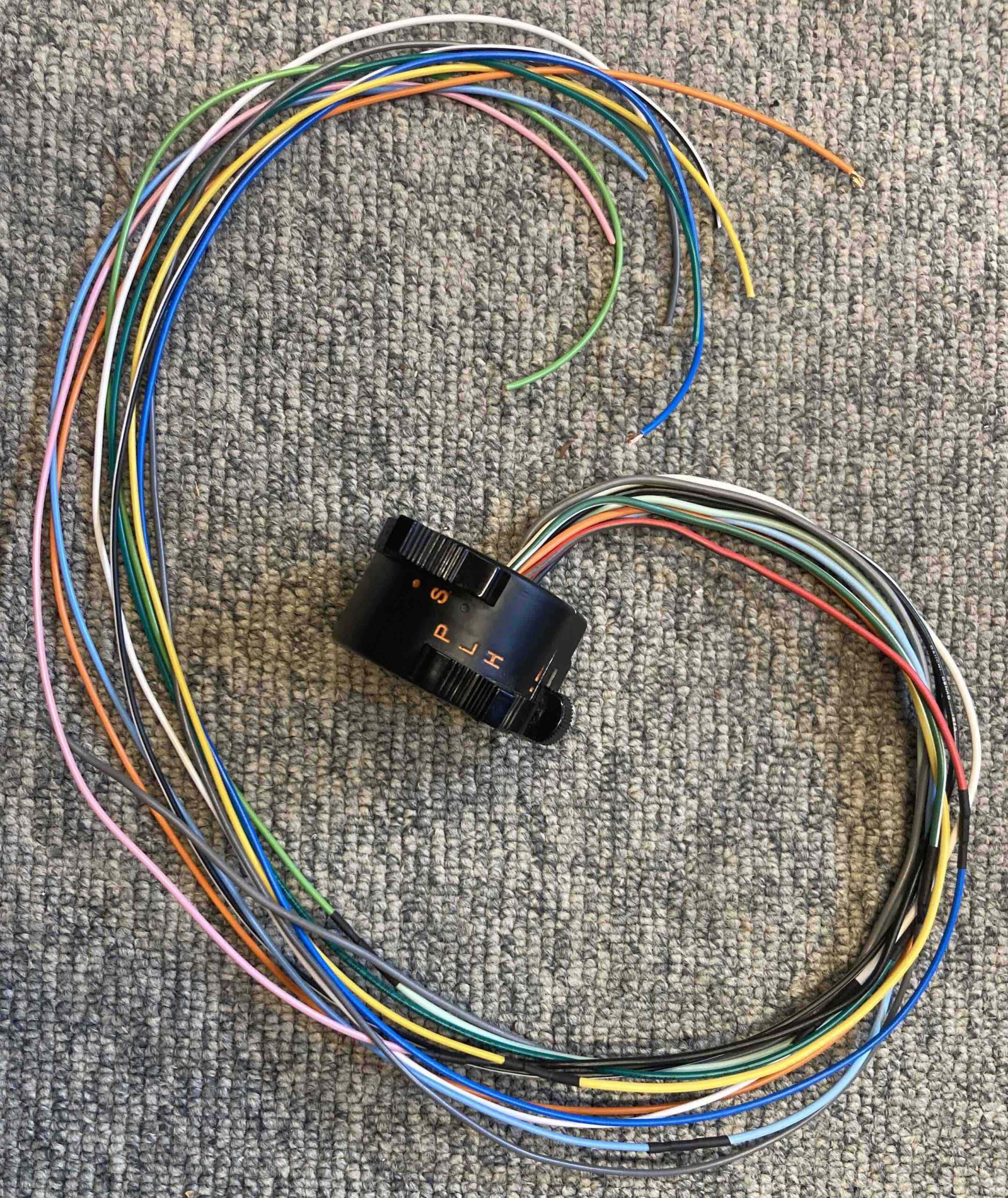
Once the switch cable capacity is sorted, we can extend the wires to reach where they will need to be
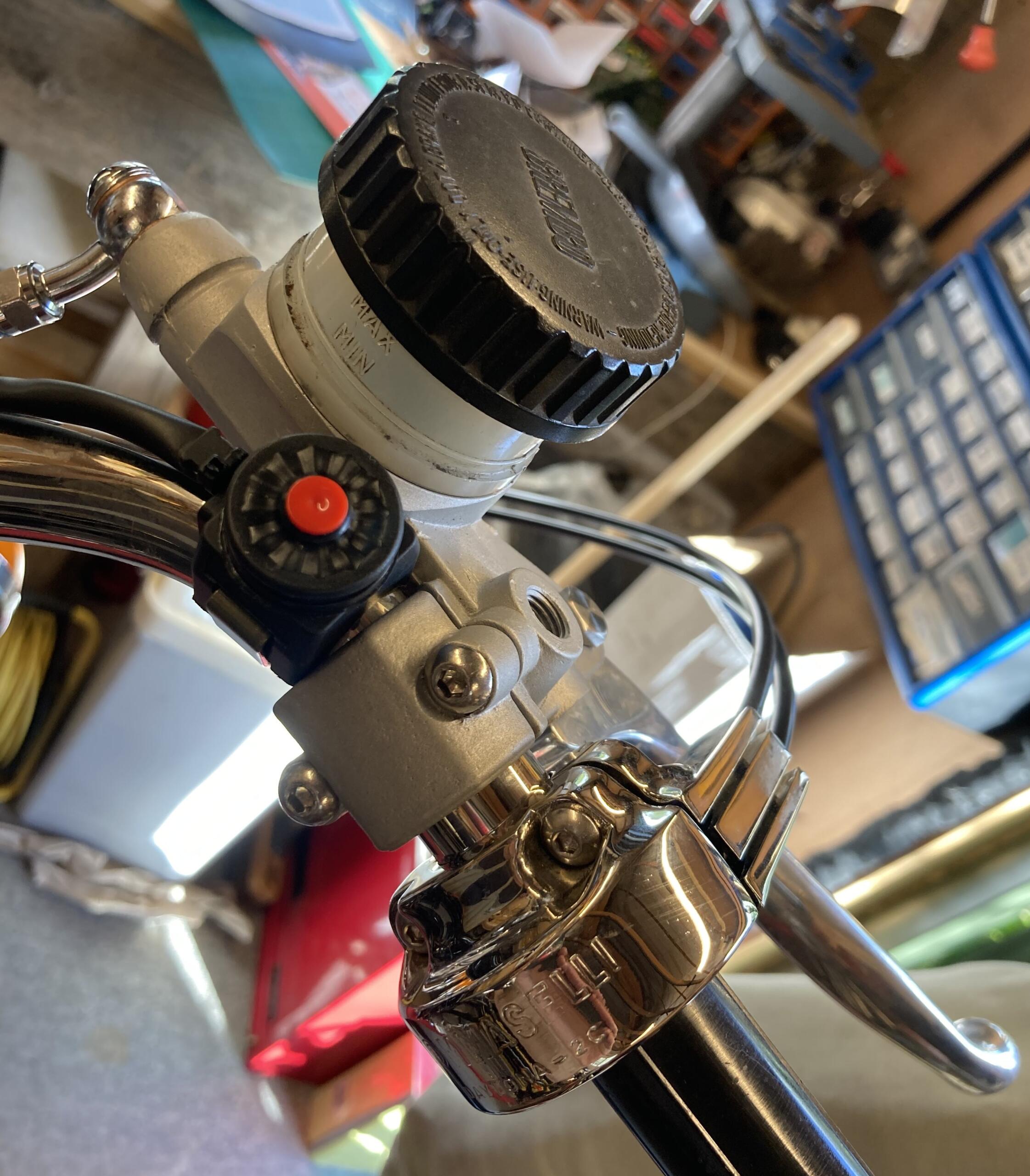
Paul had fitted a twin-pull throttle so there was no room for the original start/kill. We agreed a single push button would be fine. This one can slide in under the master cylinder, as close to the throttle as possible
Paul’s Ducati 900 Darmah
Paul sent over this beautifully restored bevel for a full rewire. The engine and chassis looked as good as these motorcycles can get, so no pressure.
As usual, an electrically simple job turns out to be a pretty complicated build. Paul had fitted a Silent Hektik ignition, and sourced a left handlebar switch that looked exactly right for a Darmah. But there was a catch: it had double on/off switching and skinny cables, both of which suggest it was originally built for a small capacity Suzuki that used switched charging coils and a 25 or 35 watt headlight bulb. The Darmah has a 60W headlight, and a check on the main beam cable showed this was too much: Seven 0.25mm strands is enough for about 3 amps. We needed at least six. Time to employ a relay.
You can get a transistorised headlight relay (made by Highsider) but the nearest one I could find was in Germany, so I fished two micro relays out of the stores and mounted them on a custom plate. One does high beam, one low.
While I was at it I extended the switch cables and checked the other wires were OK to run the indicators and horn.
Paul had also fitted a twin-pull throttle, so there was no room for the original run/kill switch on the right bar. We had a chat and decided a KTM-type push button would be fine, as its steel clip would allow the button to squeeze in near to the ideal place. I don’t trust cheap pattern parts so, for good measure, I ran that through a relay too.
All this relay action displaced the regulator rectifier from its original place behind the headstock. It moved to the back, on a custom bracket that picked up a pair of frame tabs which had 6mm screw fixings.
By this time the loom design bore zero resemblance to the original Ducati. So I drew the diagram, and built that. Electrically, and component-wise, the 900 bevels are quite similar to 1970s Laverda triples. Both use Suzuki switchgear, adapted Honda clocks and colossal batteries.
The build went well, and breaking current to the ignition showed there were sparks. But the engine wasn’t ready to start so it went back to Paul with instructions on how to check the charging system. This is a ‘first 30 seconds job’ on every new build: does the battery voltage climb to about 14.5V? If not, the charging is weak. If it goes higher, the regulator is not working. You need to know this to avoid damaging the ignition.
Paul already has a Darmah up and running. This one should be fully functional soon, and may even get a sidecar at some point.
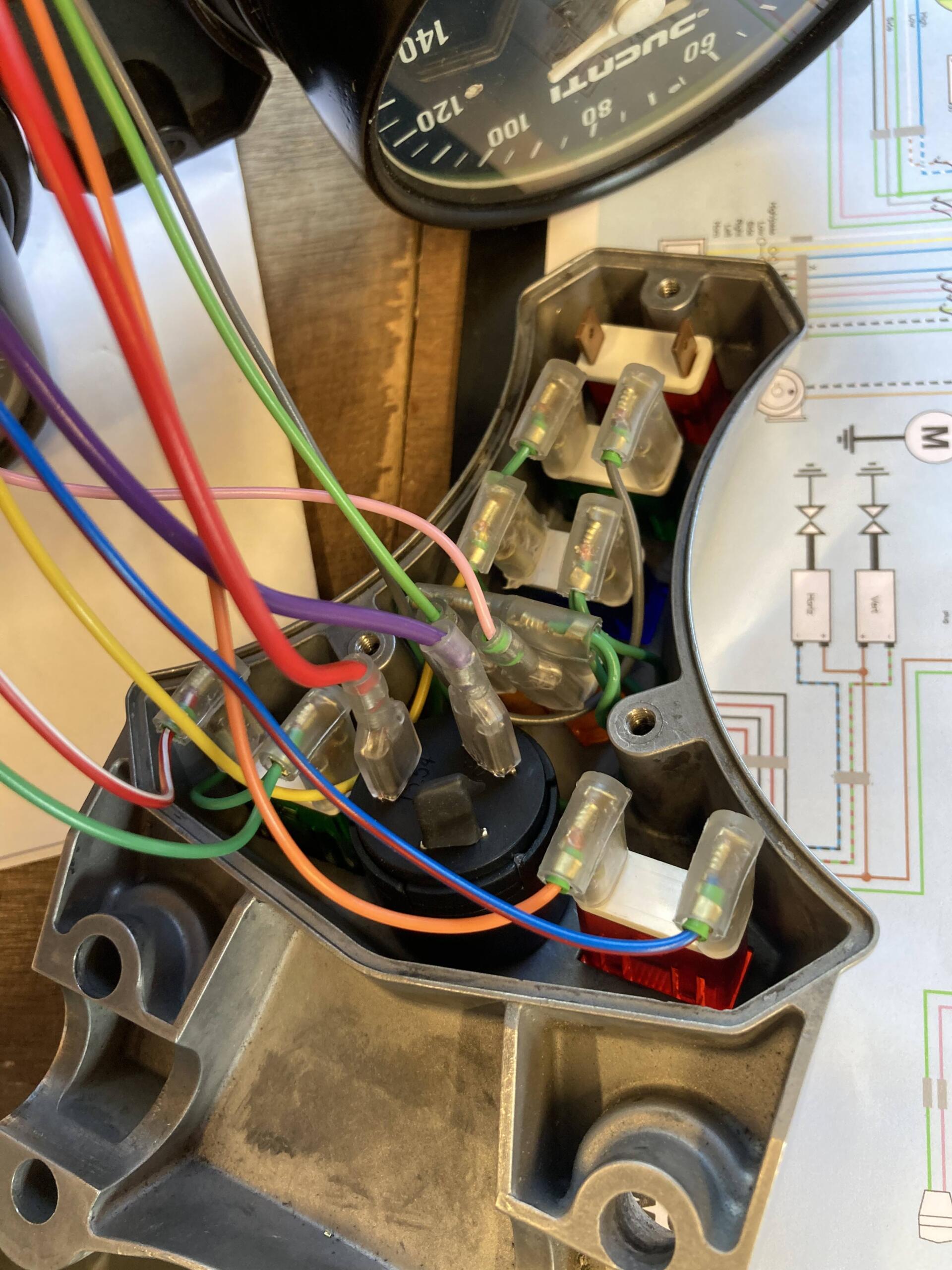
Paul had sourced a (very expensive) new set of warning light bulbs, which I hooked up with flag connectors. The fat red and purple wires are for the ignition switch
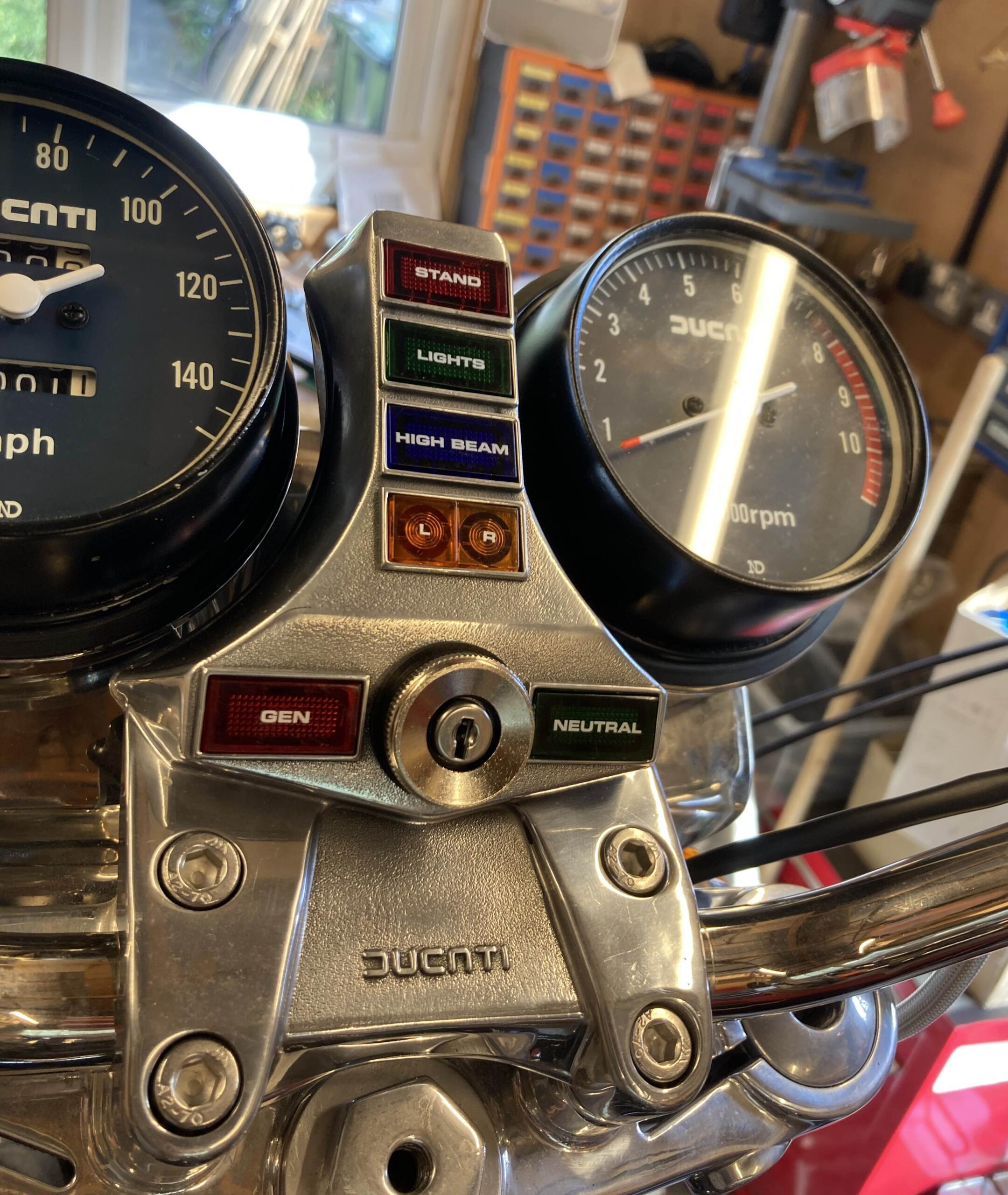
Here’s the other side. With no genuine Ducati ignition switches available, the Fiat 500 one was a gamble that paid off
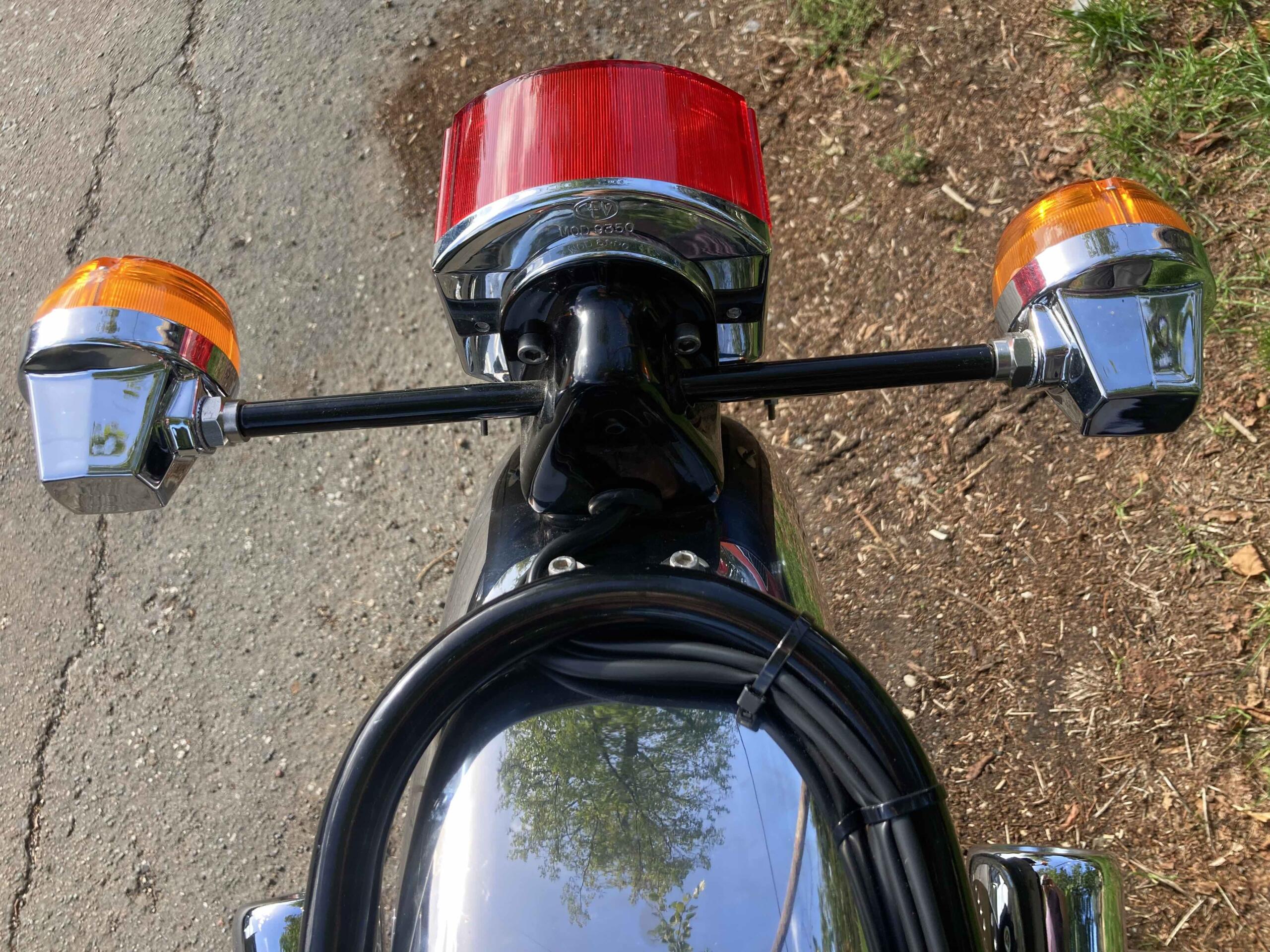
New wires for the tail light and indicators. It’s always a good idea to add individual earths to these indicators
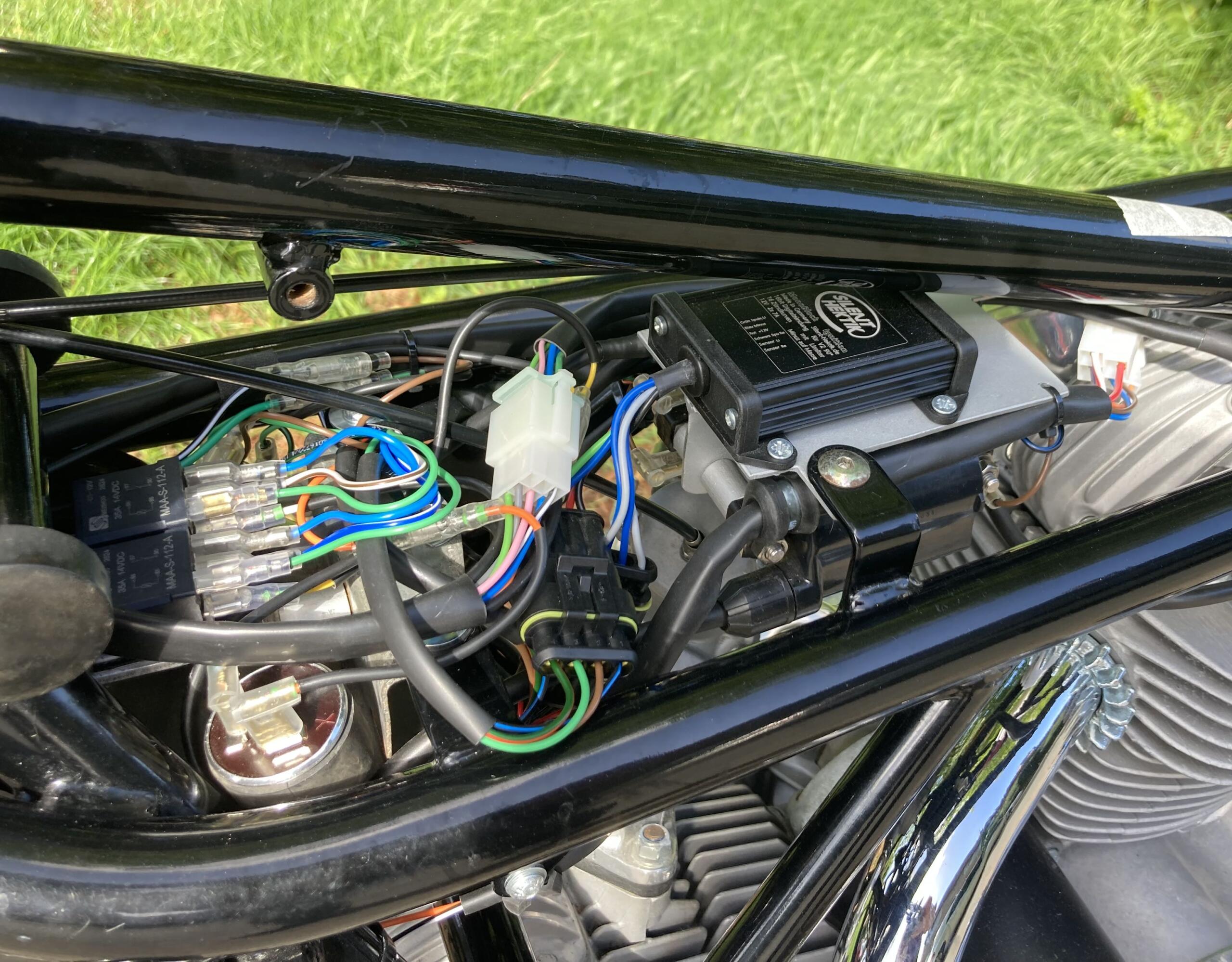
Here’s the relay area fully wired up
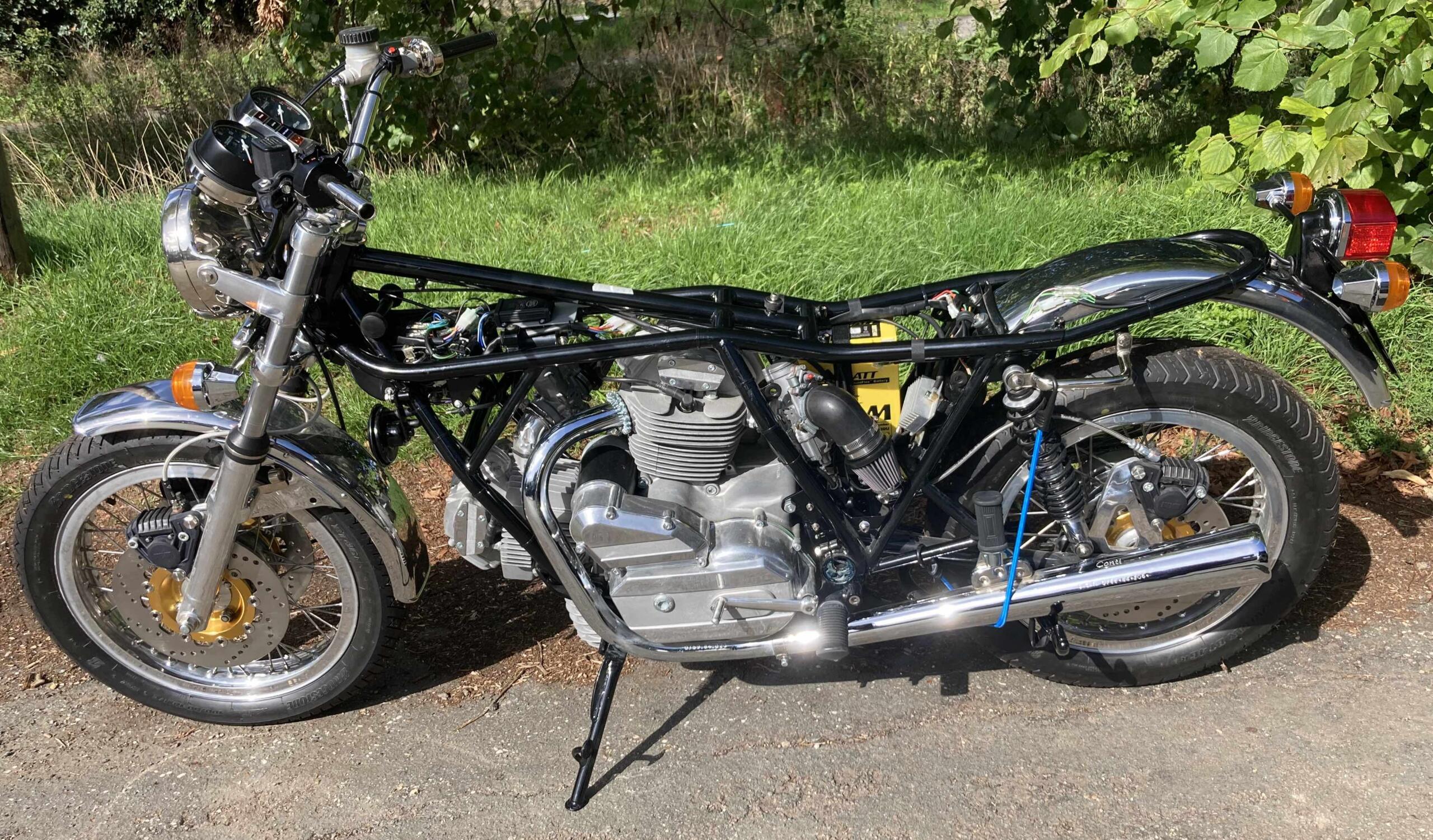
Paul has made a great job of building his Darmah. Not far to go now