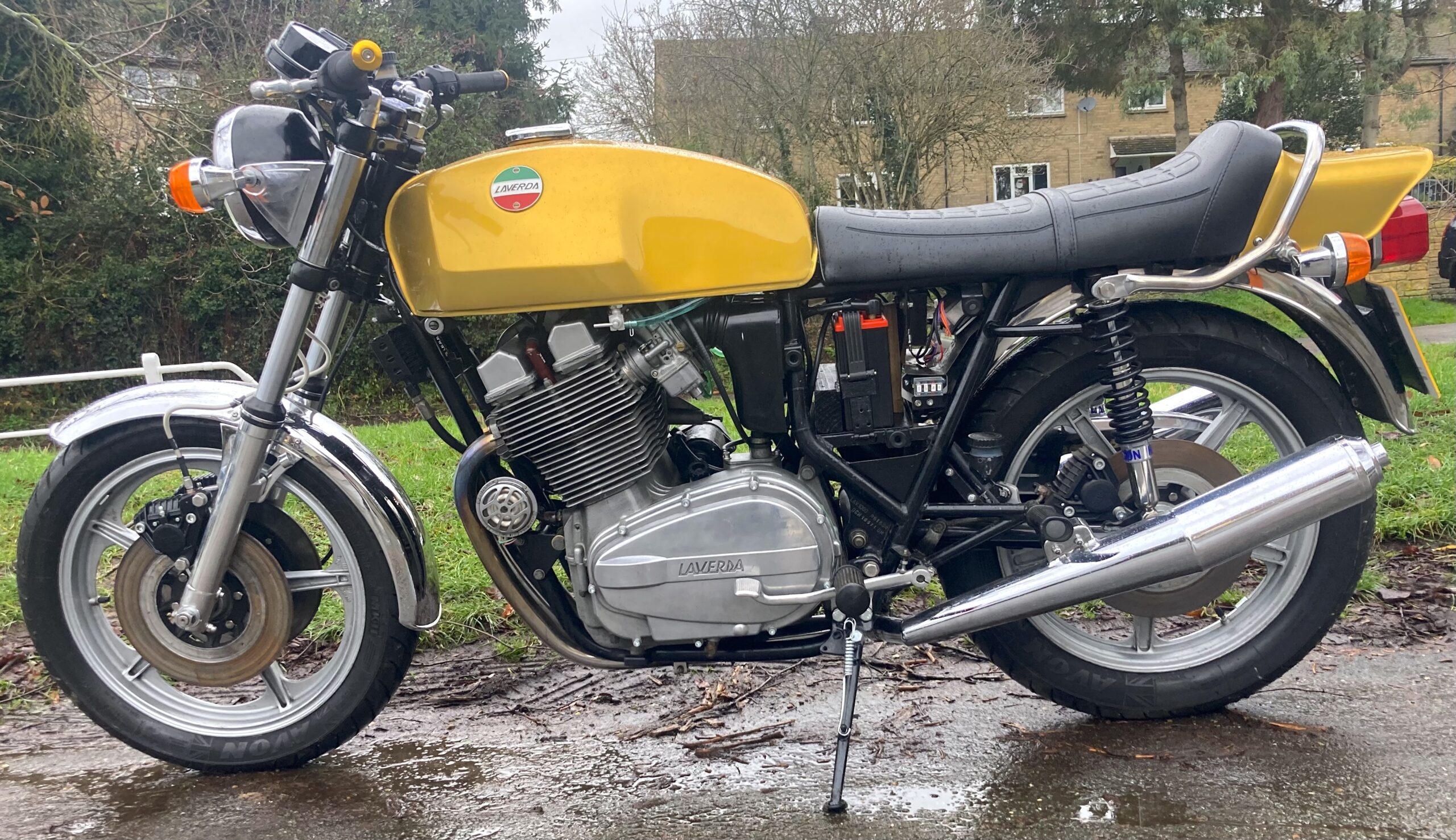
Fresh gold paint suits it rather well
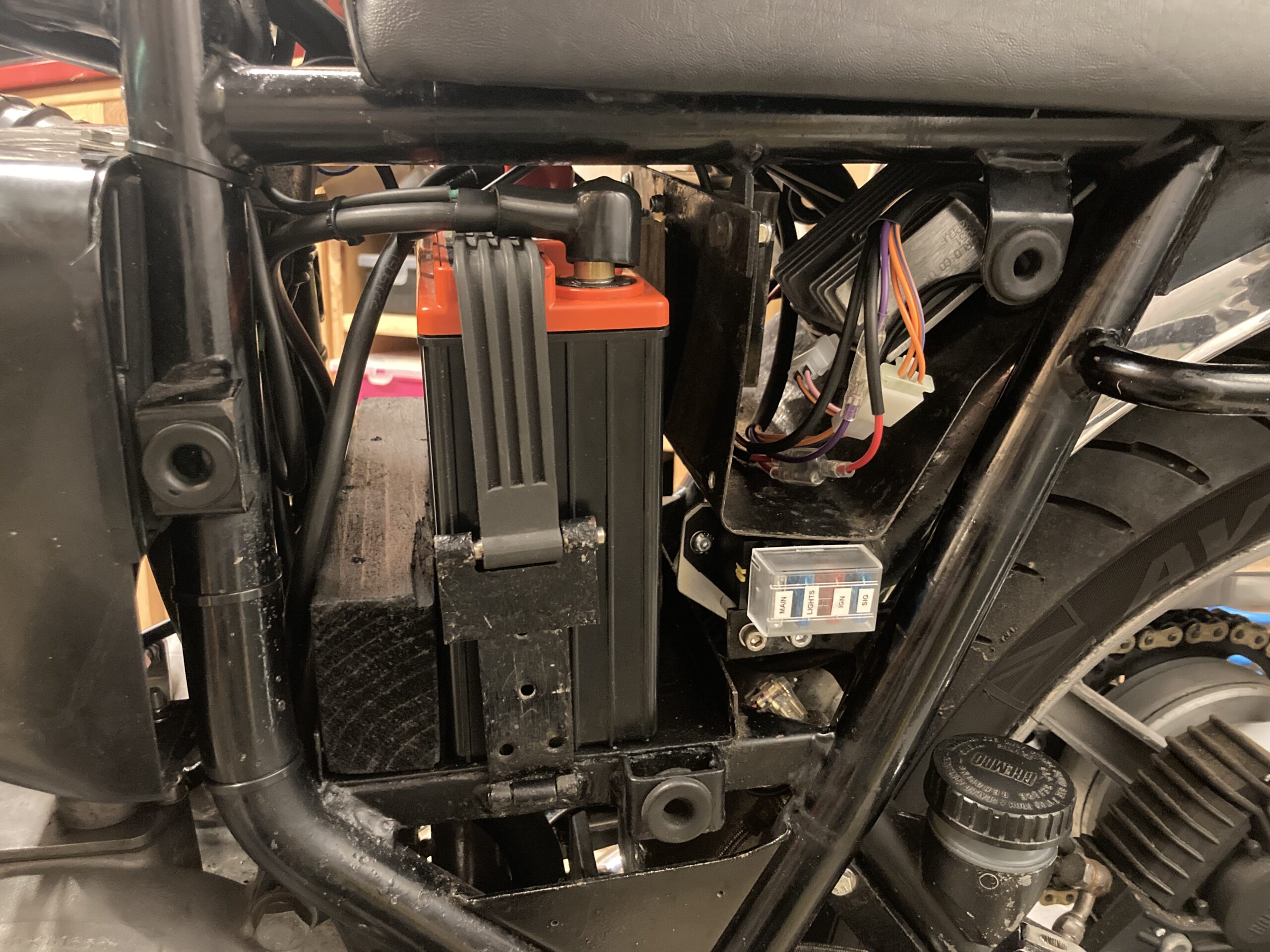
Reg rec hiding under the seat. Fuse box found a home below the tool tray, mounted on a convenient bracket originally intended for something else
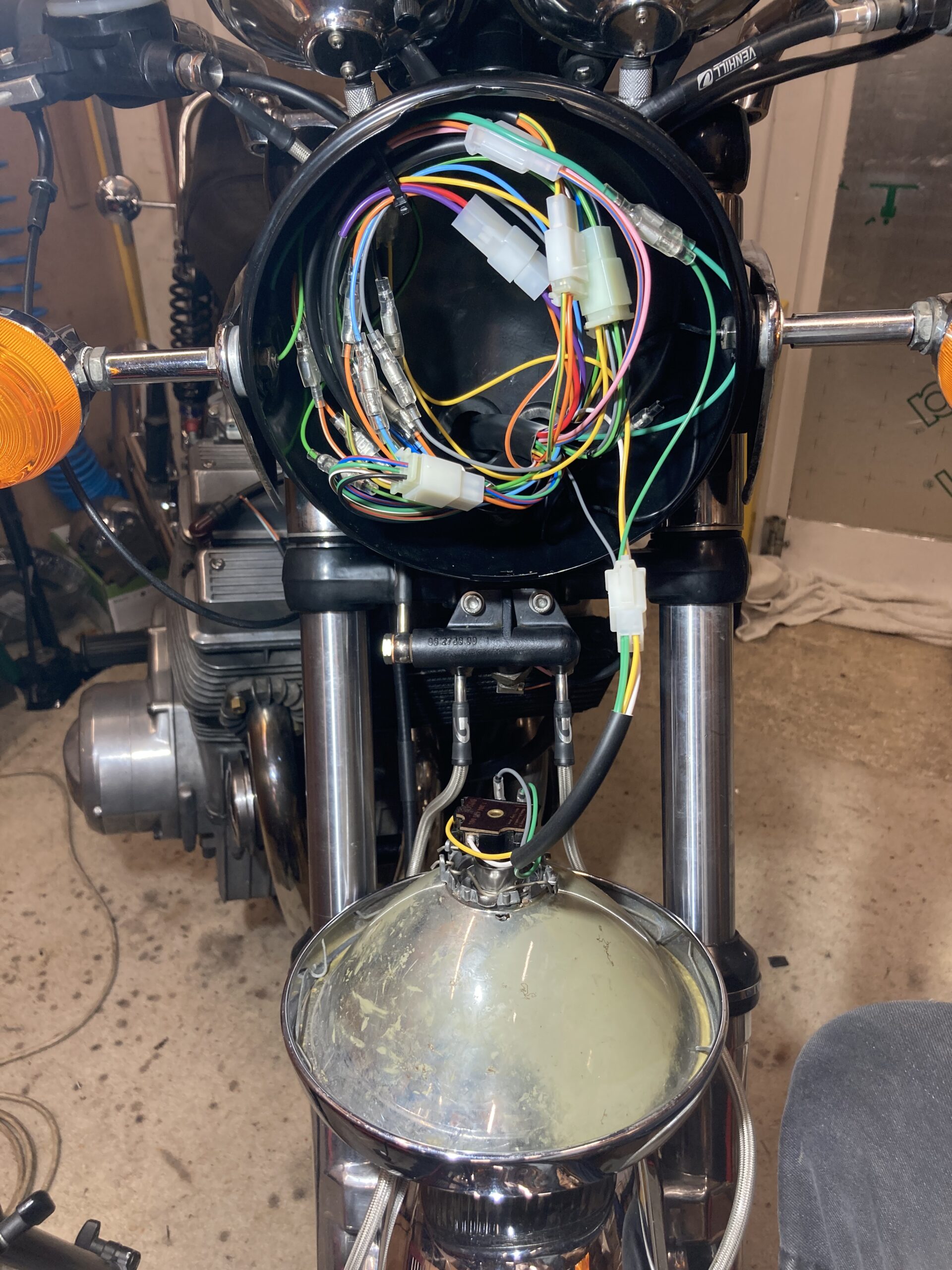
The coils used up most of the space under the tank, so I made all the connections in the headlamp. The headlight is easy to detach
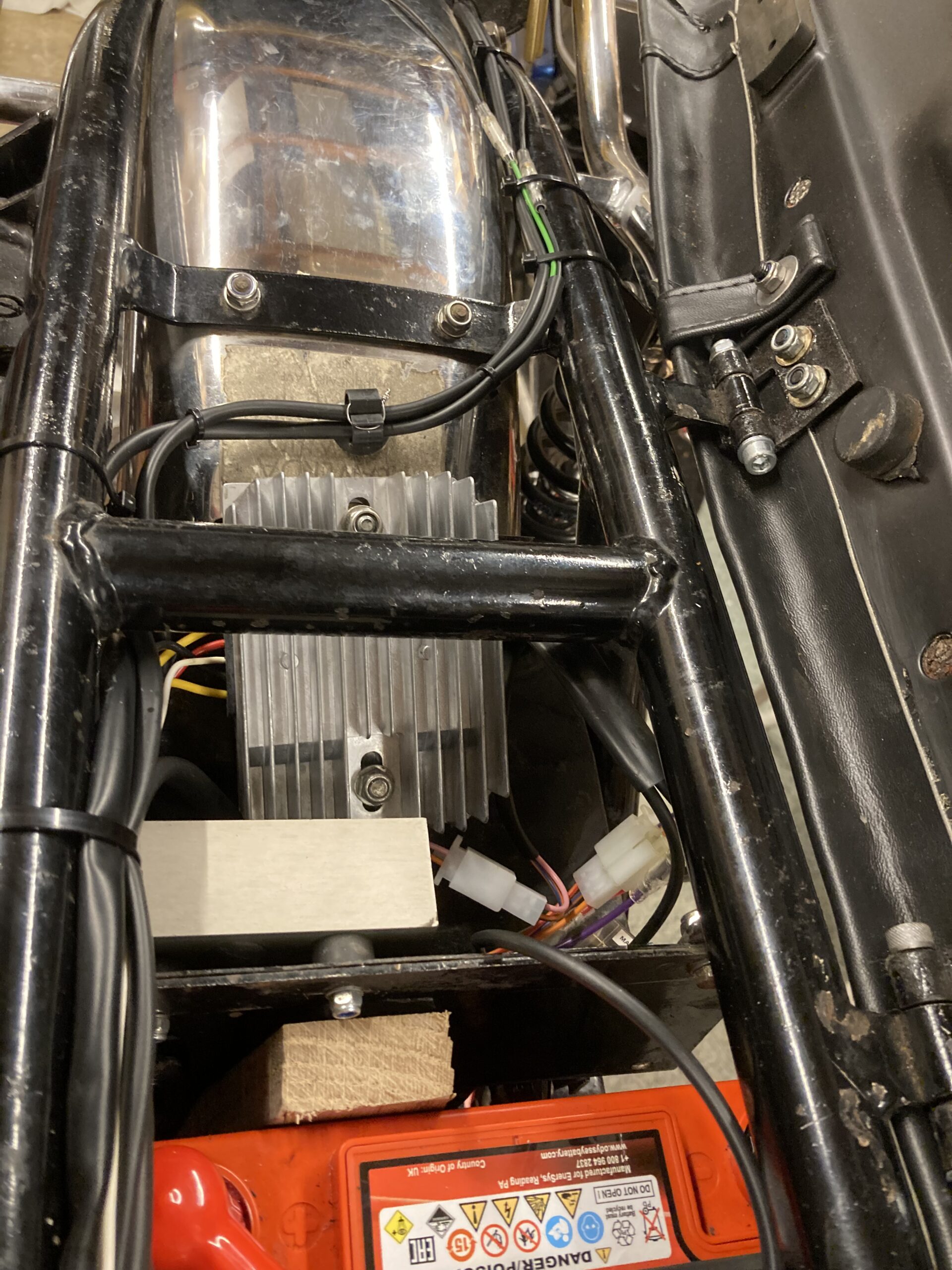
Reg rec sits on a custom plate, slightly angled to get a better route for fuse box wires coming up from below on the right as you look at this pic
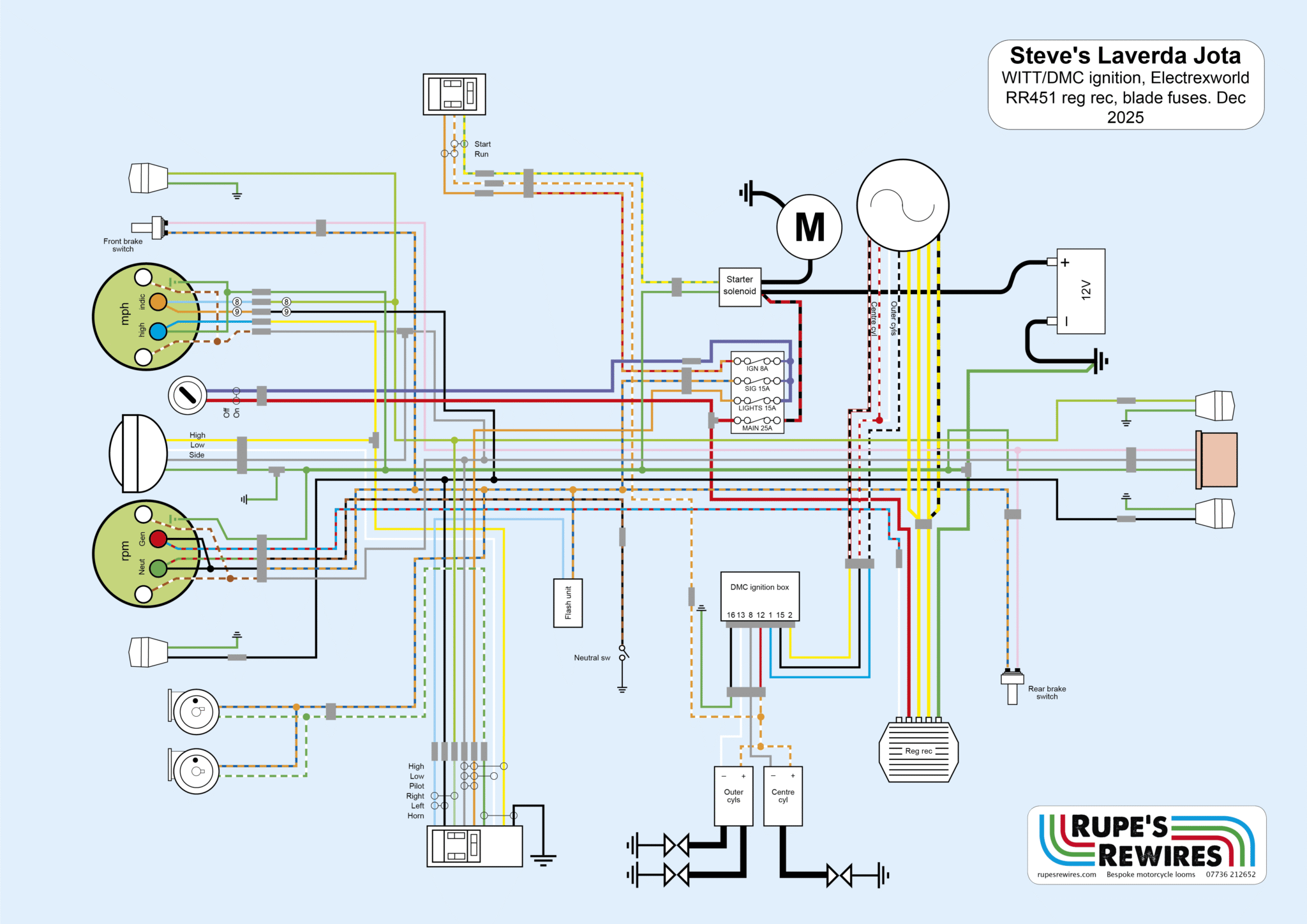
Steve’s Laverda Jota
It’s always good fun doing a Laverda. They are such logical bikes, with plenty of room for the electrical stuff they need.
But they do vary. This is the first time I’ve seen double wires from the stator, and the left handlebar switch (which had already been nicely rebuilt – cheers Steve) had its colours swapped around. There’s also the Witt ignition, which is less common than the Ignitech a lot of people use these days. This had already been fitted, so it dictated where the other gubbins ended up.
The big thing with any Laverda triple is the battery. Back in the 1970s the battery was a colossal lead-acid thing that occupied most of the space under the seat. Today, you can’t get such a thing (and you wouldn’t want one even if you could). So you end up with a much smaller battery in a huge battery box. I’ve finally decided the easiest way to pack it out is with wood. Easy to cut and screw together, and easy to spray black afterwards.
Steve had been running the bike on its original bridge rectifier, which is not bad going for 47 years. But he agreed we needed to go a bit more modern, so I rang up ElectrexWorld to get the usual RR51. They didn’t have any in stock, but fortunately they also do another suitable reg rec called the RR451. Like the RR51, it has a charge warning light wire. It’s bigger than the 51, but as you have to custom fit it anyway when you build a new loom it doesn’t matter.
I mounted it slightly skewed, to make room for the fuse box cables emerging from a grommeted hole in the tool tray. The jaunty angle offended my eye, but it seemed the best solution.
The bike fired up instantly, which is always a good sign. And the charge warning light went out instantly too. All good.
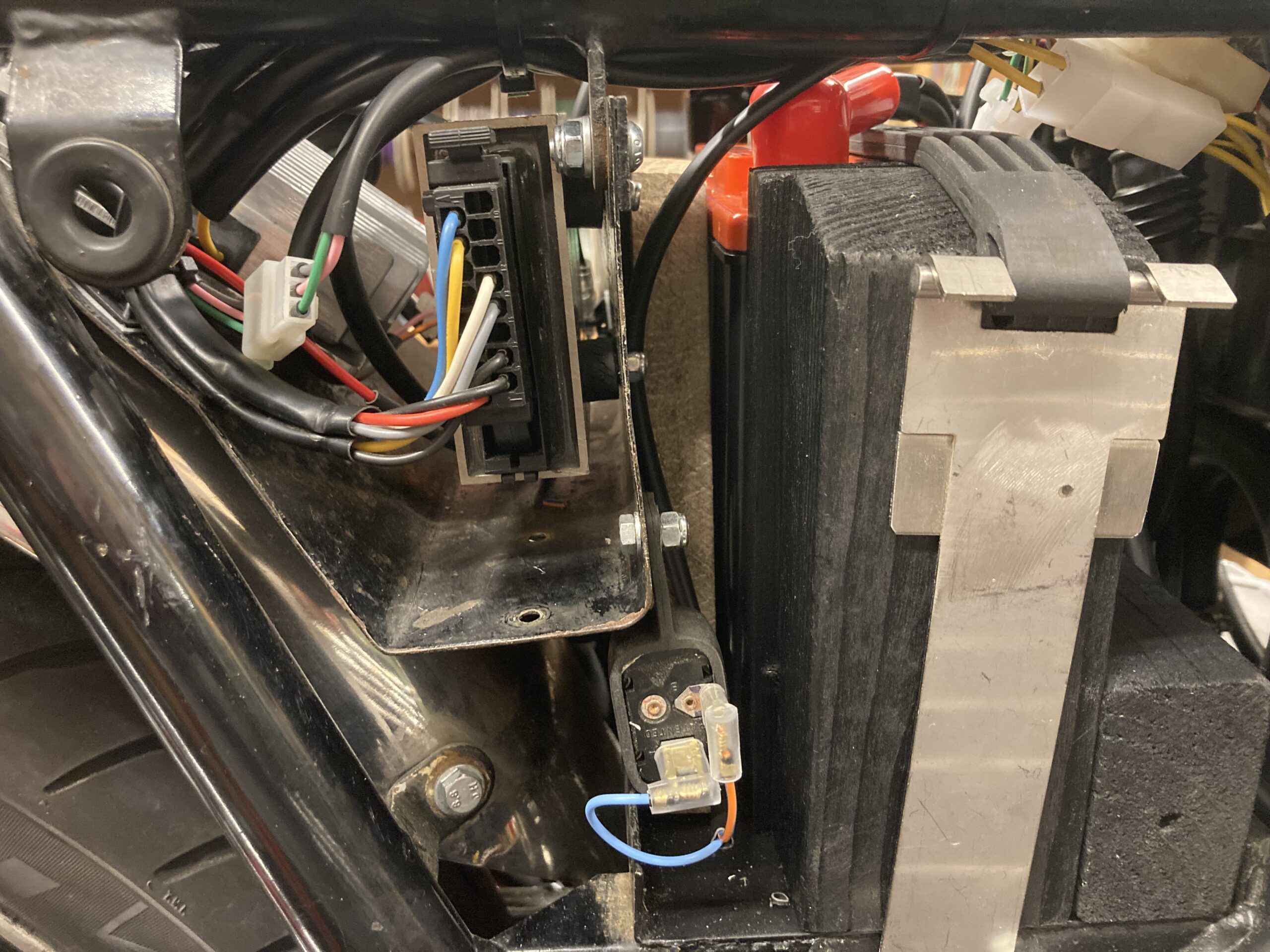
Black box (with blue, yellow and white wires) is the Witt ignition. I had a Lucas rubber mount for the flasher unit (below it) which fitted perfectly
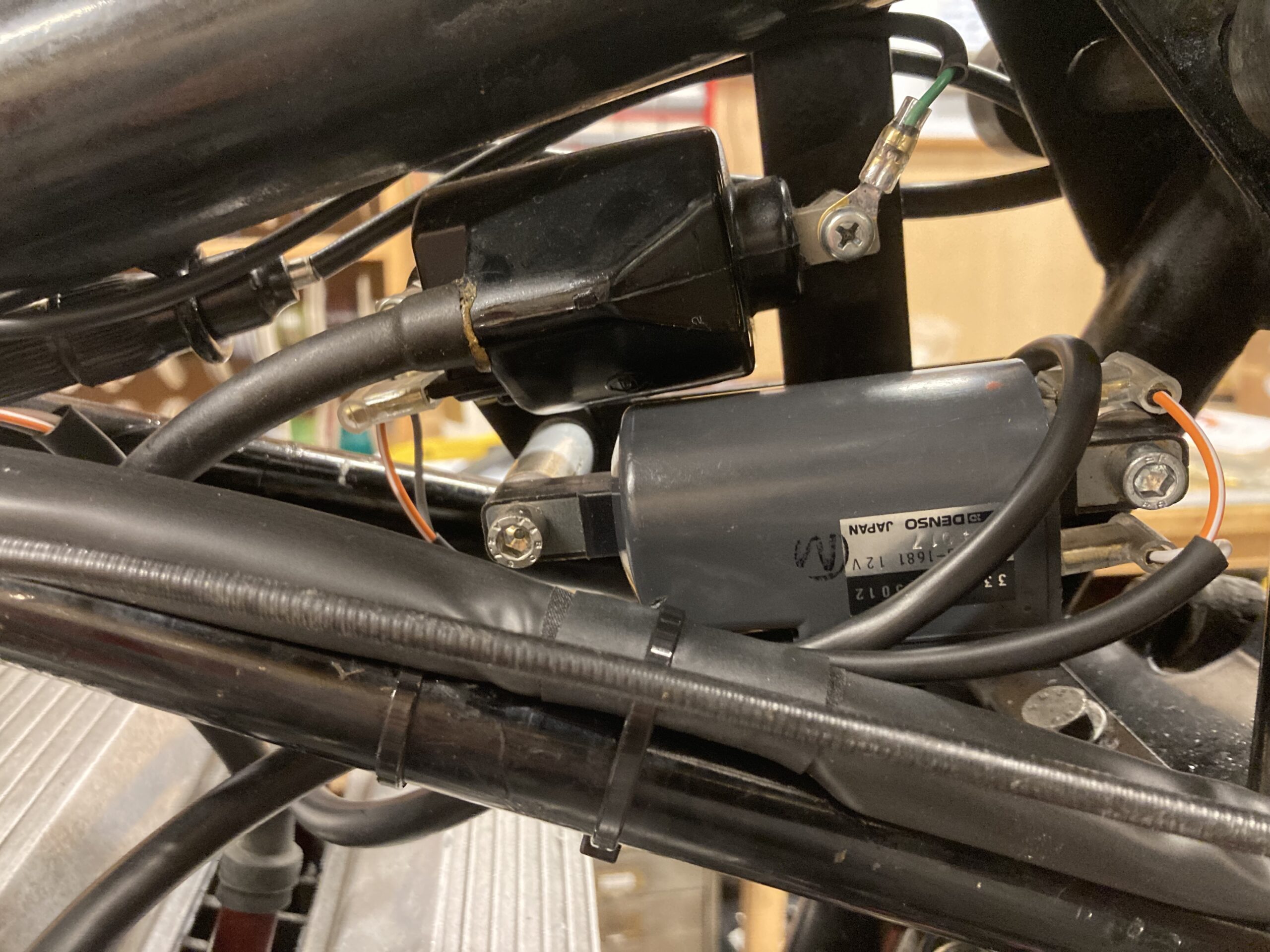
Steve’s bike uses two different makes of Japanese coil. The top one does the middle cylinder; the lower handles the outer two
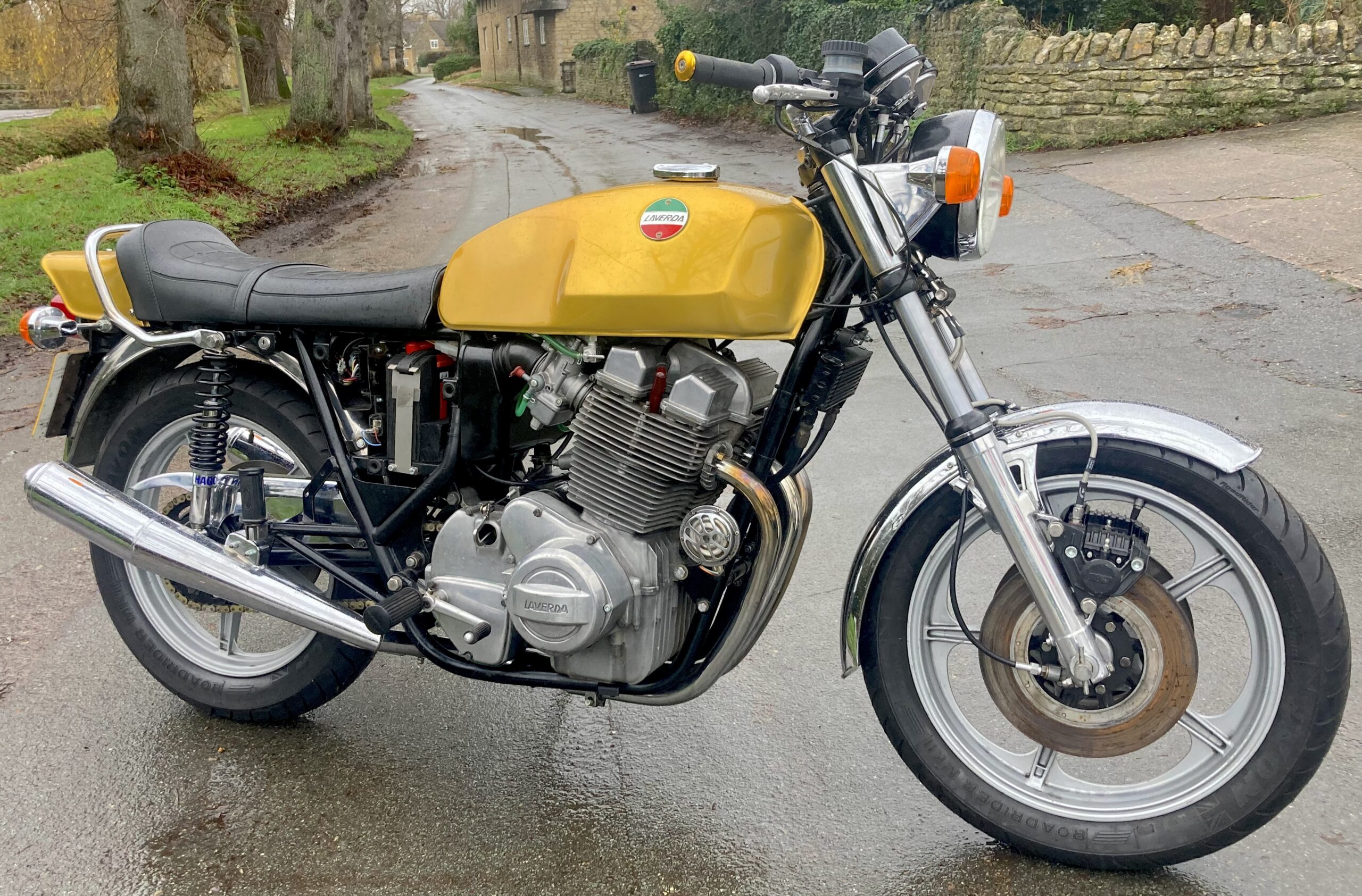
Ready to rock (once the side panels are back on). Macho vibes