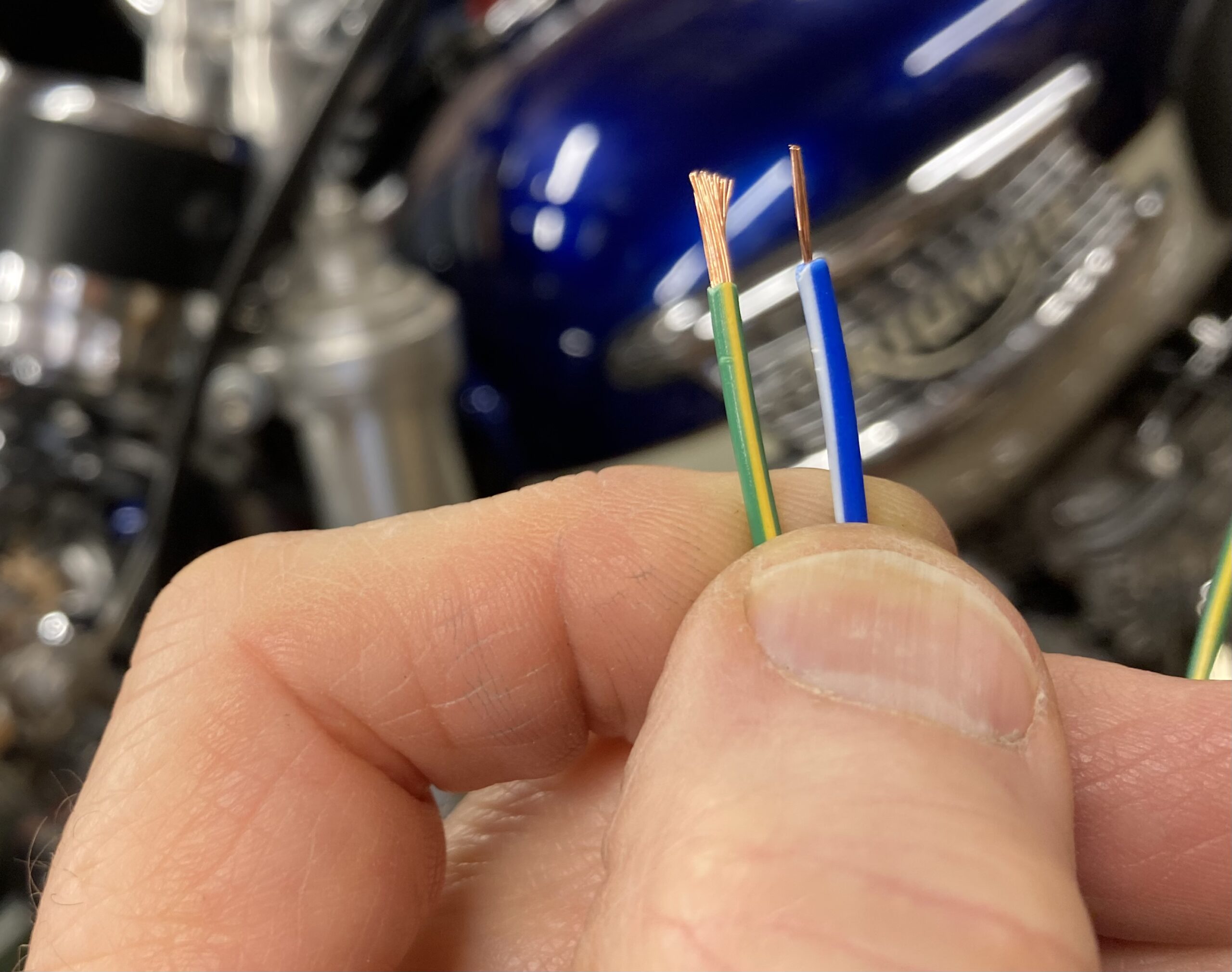
The cable on the left can carry 16 amps. The one on the right, sold to use on a motorcycle ignition system, can carry 3.5 amps. That’s not really enough
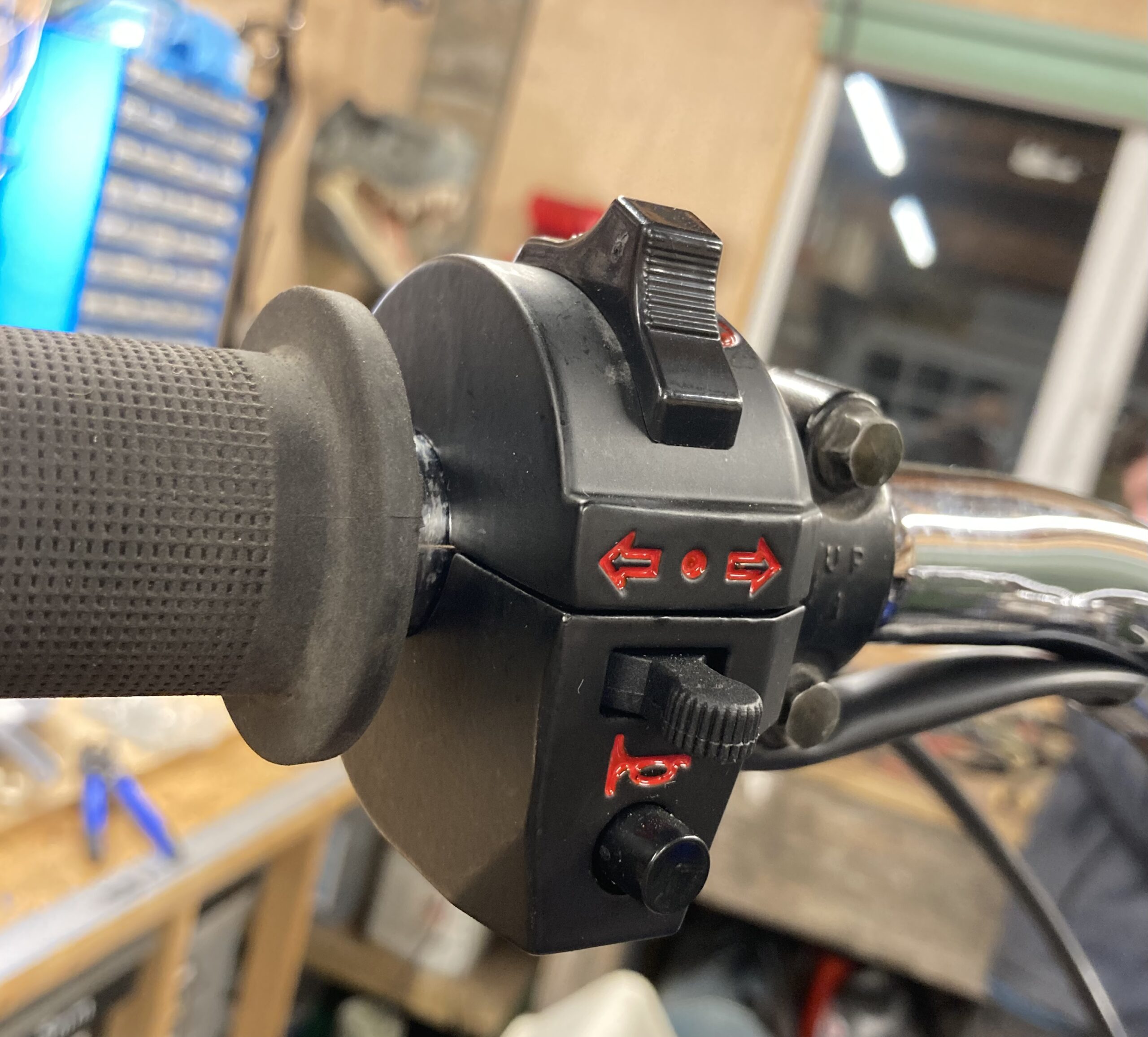
A perfectly adequate handlebar switch. With wires that are only fit for LEDs. So why doesn’t the seller mention that?
Wire on the left can carry 16 amps. The one on the right can carry 2 amps. Not enough for a headlight bulb
A waste of everyone’s time
The modern world has brought us many amazing things, but cheap electrical parts for motorbikes is not one of them.
In my experience, cheap LED indicators turn out to be dim and go ‘phut’ after a short while; cheap USB sockets and bulbs also die quickly; and cheap tail lights are invariably dimmer than you would want for a road vehicle. You get the idea. Factor in the hassle of replacing them, and the cheap stuff isn’t cheap at all.
But it’s the switches that really get my goat. A few months ago I ran into bother with a £7 starter button. Beautifully made, nicely designed. The Chinese factories are really good at this sort of thing. But the cables it came with contained 17 x 0.15mm thick copper strands. If you ask the internet, that’s enough to carry between 1.5 and 3.5 amps. A typical solenoid needs 3.5 amps, so that’s zero safety margin. The minute those cables (or their connections) get a sniff of corrosion you’ll get heat buildup (because of the extra resistance) and eventual failure.
All the bike manufacturers build in lots of headroom in their cables. As a result an old Yamaha (for instance) can still work, even though its connector blocks carry decades of corrosion. (It’s also why the first bit to burn on an old loom is the plug between the alternator and the regulator rectifier – that’s the bit that carries the most current).
I have dealt with rubbish from eBay so often. And I was having a bad day. So I left a bad review on the seller’s eBay page, to warn other buyers. The seller immediately refunded me, and asked me to remove my review. I declined, on the basis that they were asking me to tell a lie, or at least to recreate a deceitful absence of truth. A few days later they messaged again: “Please, your bad review is really hurting my business.”
Yes, mate. That’s how it works.
But this stuff still sells. I first saw this handlebar switch for sale on eBay ten years ago. It was supplied by a customer, Harvey, for his CB750. I fitted them anyway, with a recommendation that he switched to an LED headlight bulb.
To my amazement, this exact same switch is still out there, and turned up on another customer’s bike.
This particular one had two types of cable in it. The headlight feed cable was 7 x 0.2mm strands (about 1.4 amps). Same for the low beam cable. The high beam was 10 x 0.15mm strands (about 2 amps).
Well now. Volts x amps = watts. So a 55/60W headlight bulb draws about 4.6 amps on low beam, and about 5 amps on main beam. If the battery or wiring is sub optimal, that current draw goes up.
I wrote to eBay and asked why its customers are expected to do the product testing of stuff on their platform. The reply was the usual waffle: “Not our fault, guv.”
Years ago there was a law called the Sale of Goods Act. It said that stuff in the shops had to be fit for the purpose for which it was being sold. That law was first swamped, then drowned, by the internet and globalisation. What we have now is the Wild West.
Which is fine, as long as you know. After trying two other switches I went back to the eBay one, combined with a £53 Axel Joost Mini Headlight Relay. As I said, cheap stuff ain’t cheap at all.
Here ends the public service announcement.
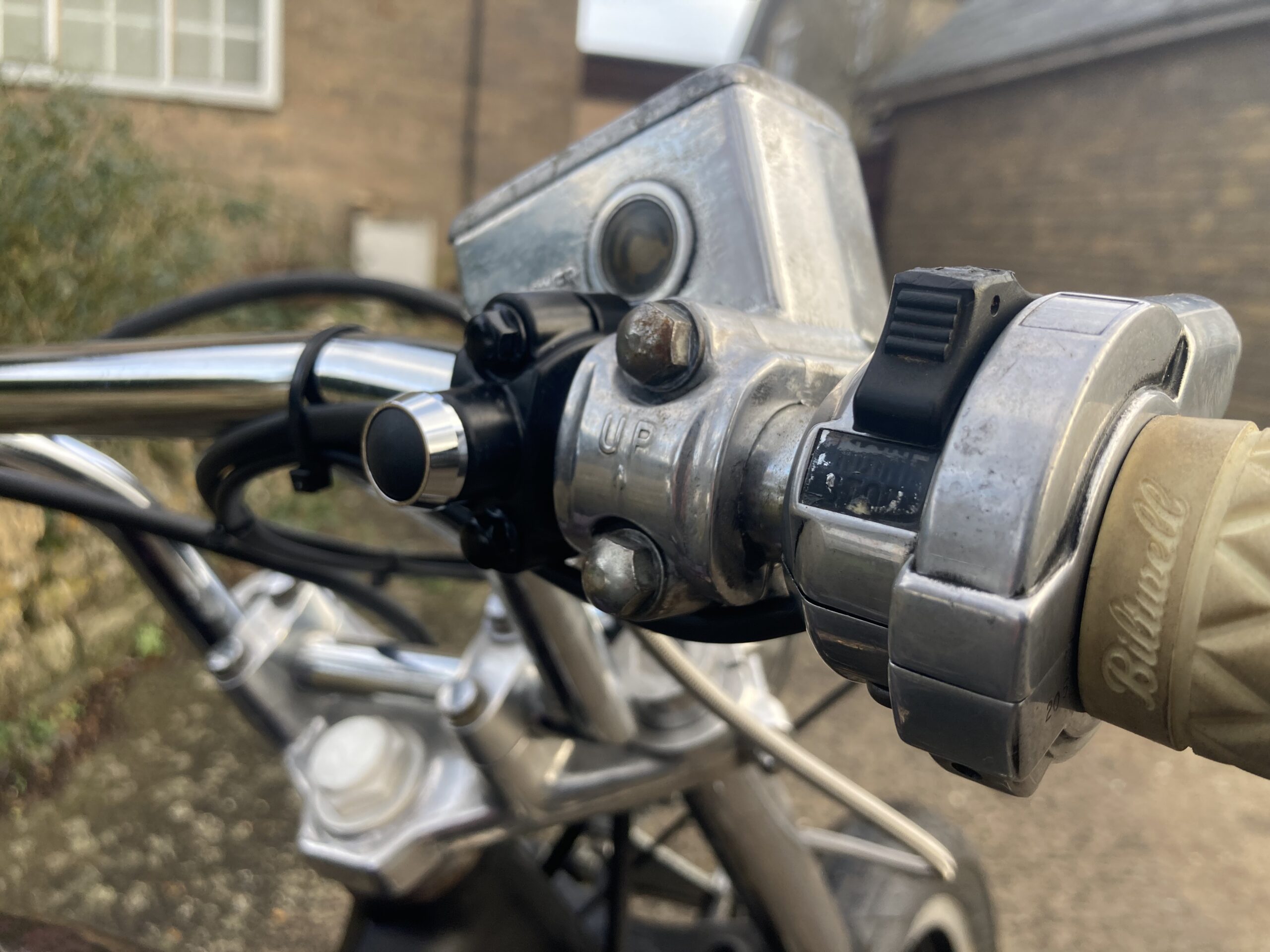
Here’s the offending switch: beautifully made, but with the wrong cable rating