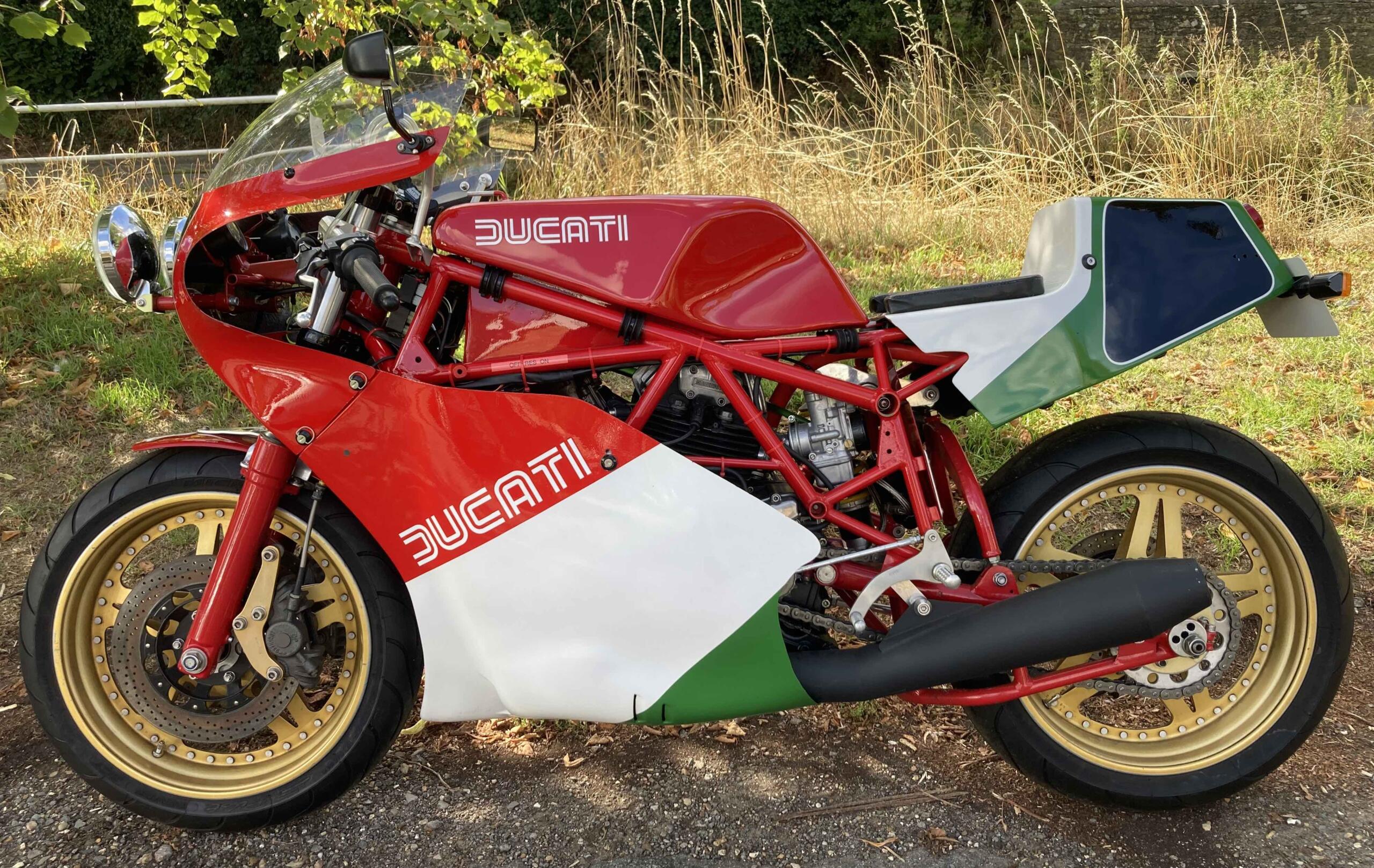
If this motorcycle doesn’t look completely delightful, there is something wrong with you
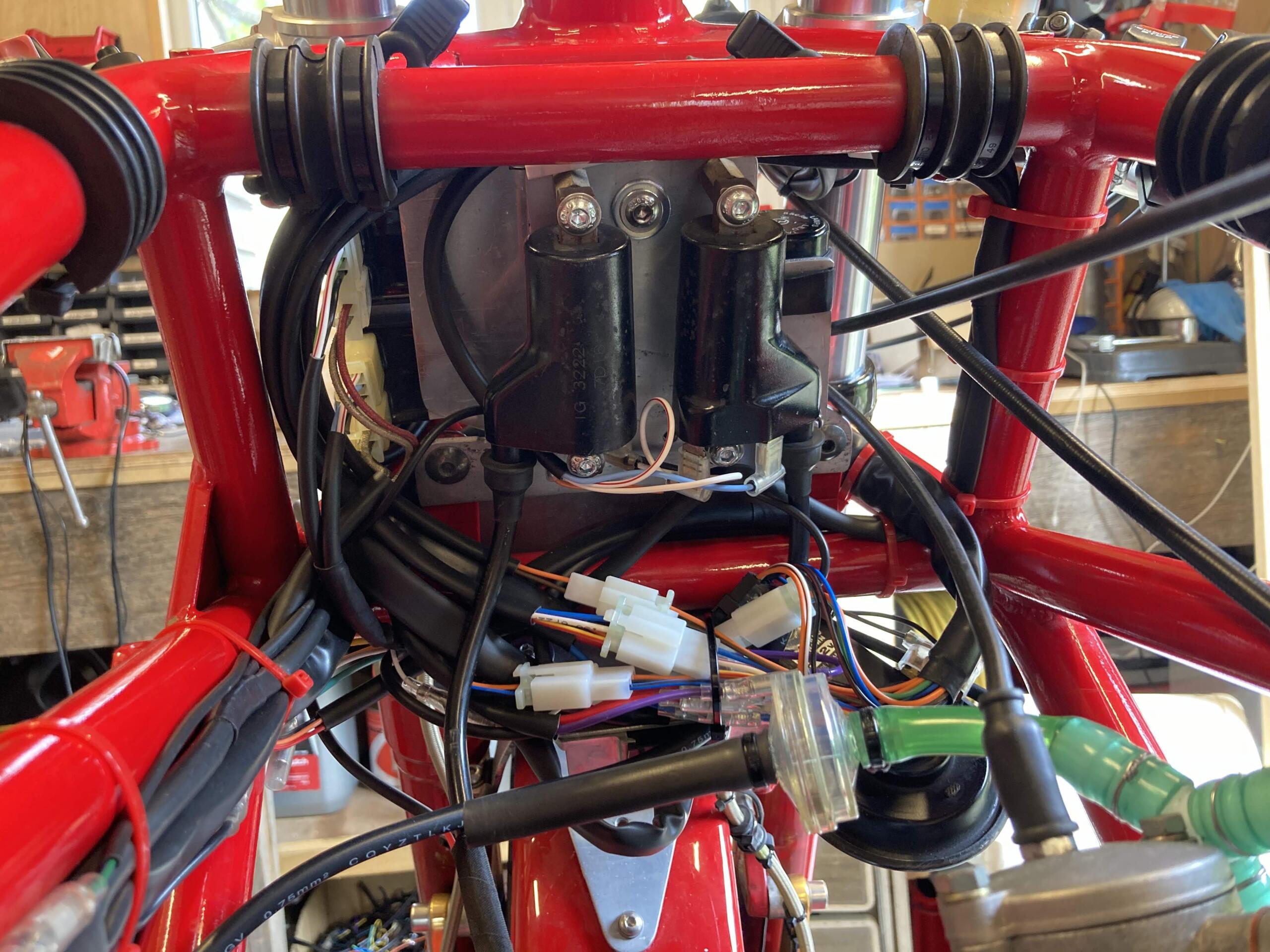
It took a long time to figure out how to organise the many connector plugs. In the end I put most of them under the coils
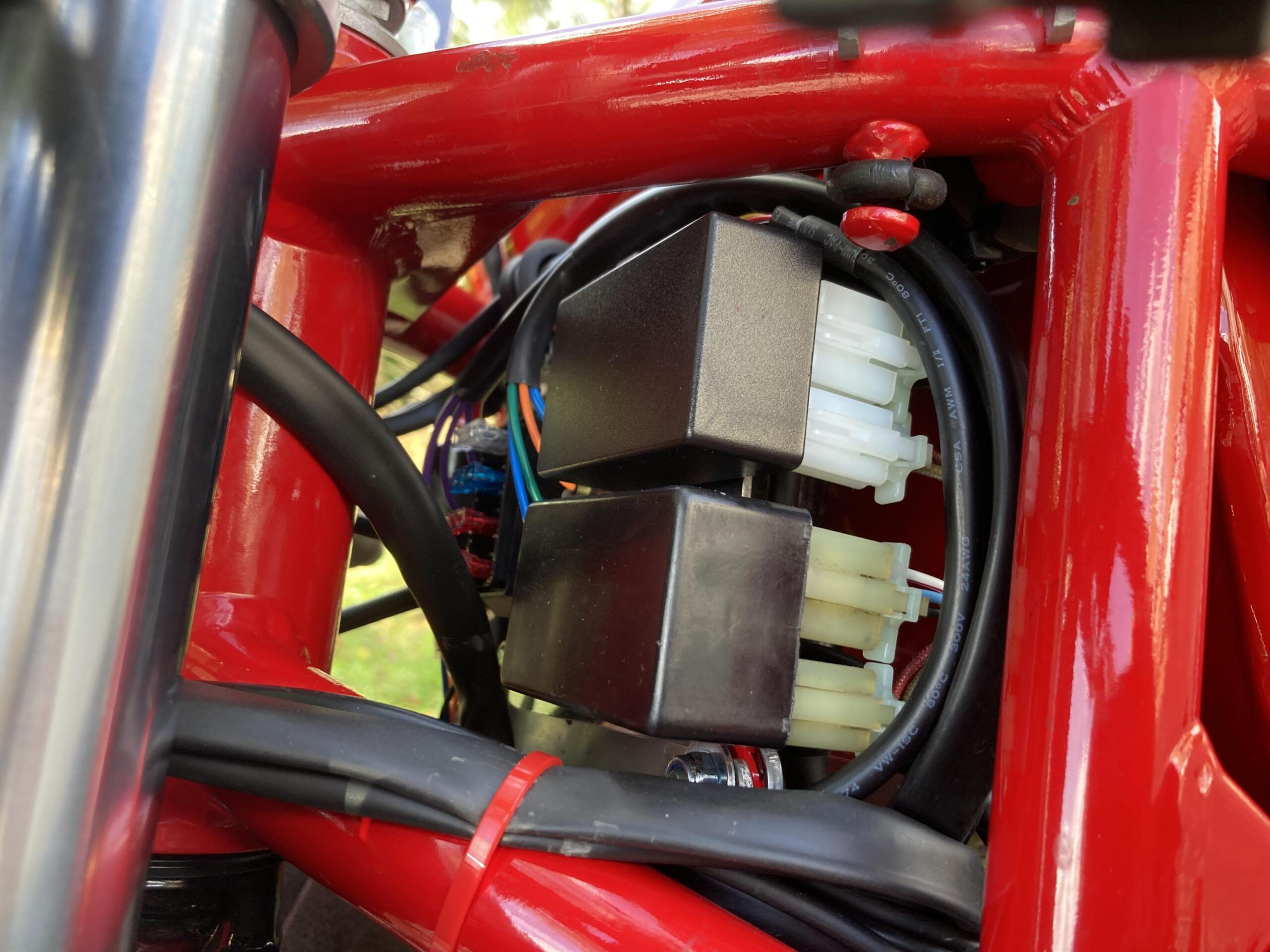
The BB1105 ignition units (one old, one new) are held onto their mounting plate with Dual Lock. Fuse box is just behind them
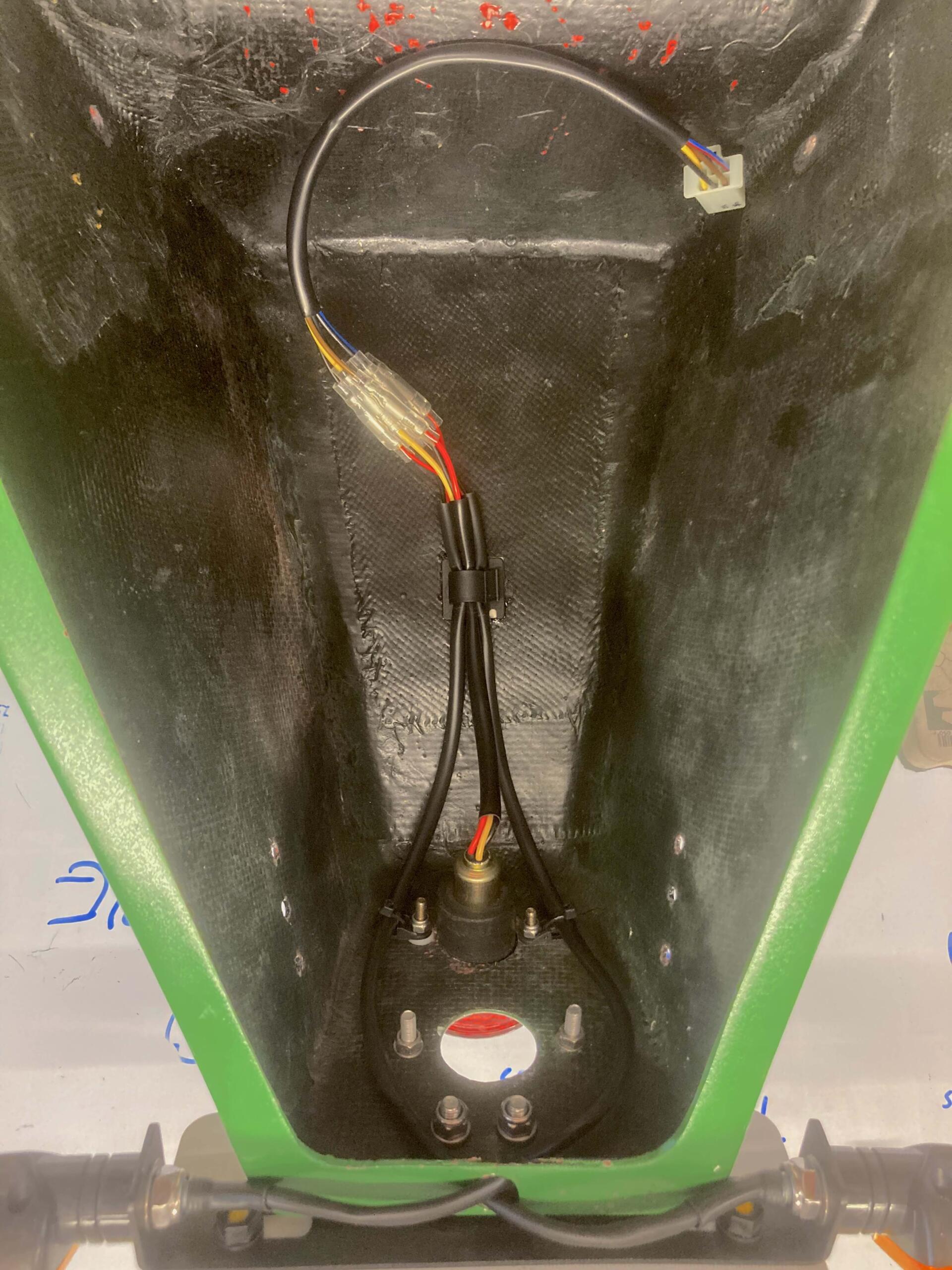
Tail unit electrics are organised to disconnect with one plug. But the bullets allow the indicators and tail to be removed individually
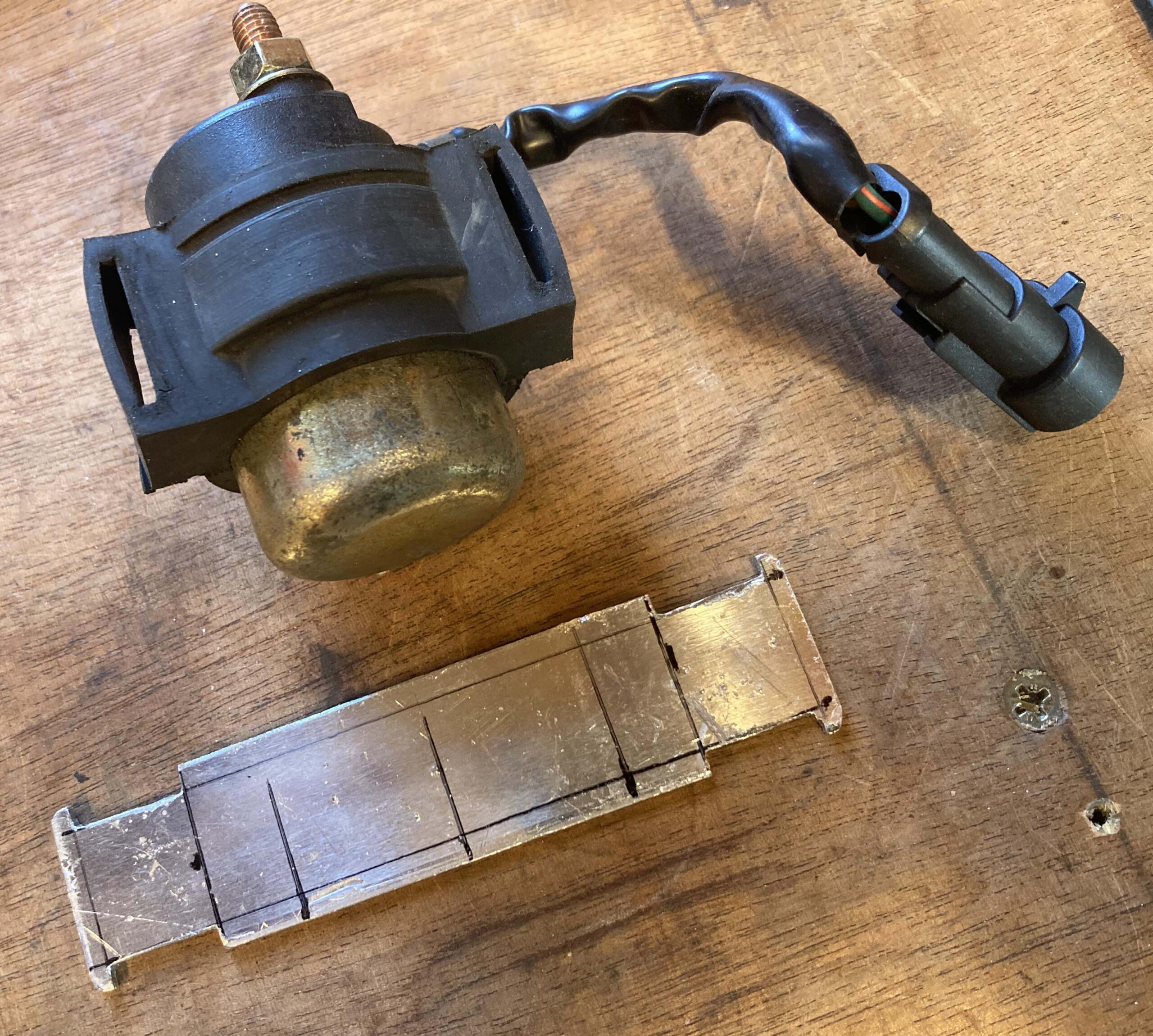
The existing starter solenoid was on a quick’n’dirty bracket. I made one with retaining tags…
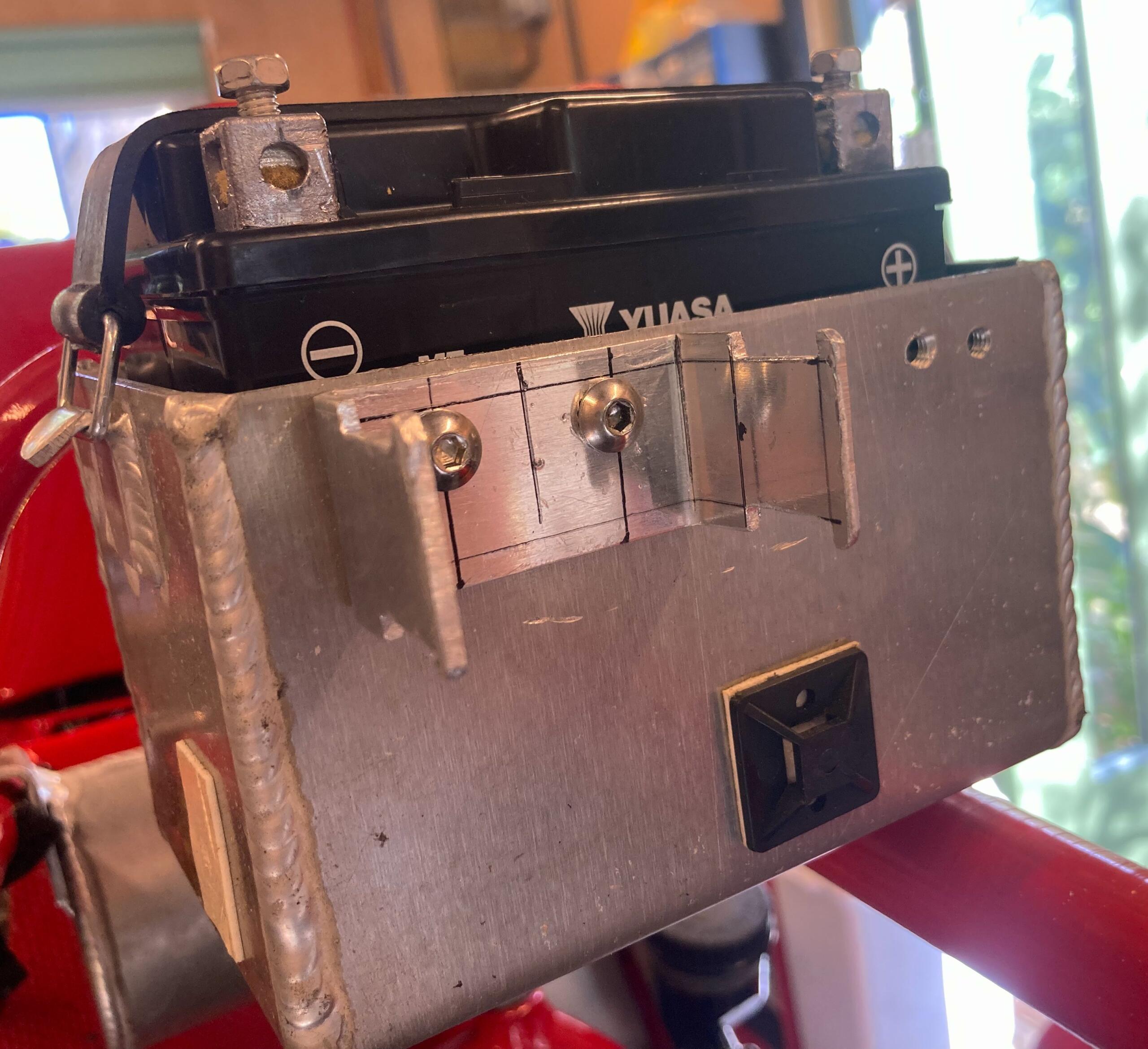
…which, when suitably folded, looked like this. For the screws, I used pre-existing holes in the battery box
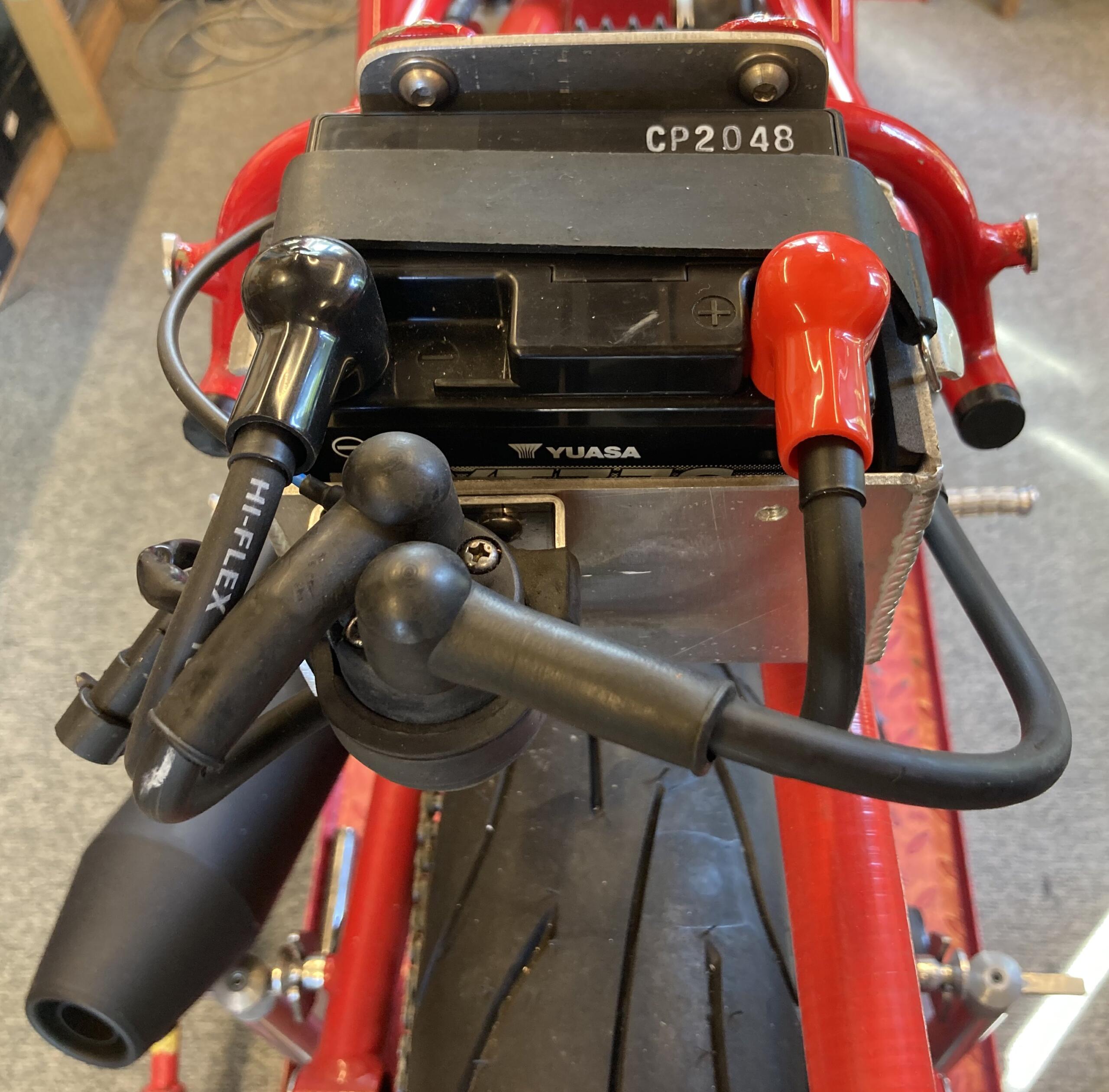
And here we are with the new custom battery cables hooked up. Working out how all this is going to bend and fit under the tail unit takes a while
Richard’s TTF2 Harris Ducati
I got a bit of a shiver with this one.
My first day as a motorcycle mechanic, 44 years ago, was at Sports Motorcycles in Bollington, near Macclesfield. As I walked, wide-eyed and clueless, into the freezing workshop, the legendary Steve Wynne gave me my first job: “Strip that bike.”
It was a TTF2 Ducati with ‘Trevor Nation’ written on the screen. Back then, F2 bikes were road engines with super-trick chassis. They raced at the Isle of Man and Daytona, as well as in their own local and World championships.
Fast forward to 2026, and Richard, owner of this gorgeous road-spec racer, drops the bike off and tells me it’s got an ex-Trevor Nation frame.
Wait… could it be the same frame I worked on in 1984?
After much head scratching, I think probably not, dammit.
Richard reckons Trevor used two TTF2 Harris frames. This is the later version, with a bell-crank rear linkage like a 916’s. The earlier version was a Harris Verlicchi copy with a simple cantilever (and better access to the rear spark plug). And the TTF2 bikes I was building for Steve when Echo and the Bunnymen were in the charts were the cantilever ones.
The frame is the only Trevor Nation bit on this bike. The rest was built by Richard’s Dad’s friend when he transformed it from a 1983 600 Pantah (which he’d done 75,000 miles on) to a race rep. That transformation started in 1987, and continued over the next few years as funds allowed.
After another 75,000 miles (yes, you read that right), Richard took ownership of the bike. He got the 150,000-mile motor rebuilt by a friend, Jason, who obviously knows his Ducatis. It’s now got most of a 750 Monster gearbox (I suspect for the better gear dog design) and is bored to 640.
Richard spent a fortune getting the chassis and detailing working really nicely, but the electrics were still a mess and he’d only managed a couple of trips out. By the time I got it, one of the ignition modules had disappeared.
With a bike like this you can either try to optimise what has already been done, or start from scratch. I prefer option 2, because it gives me the chance to think about the best way to organise the loom for minimum bulk. On a racer, this really matters because there is sod all space.
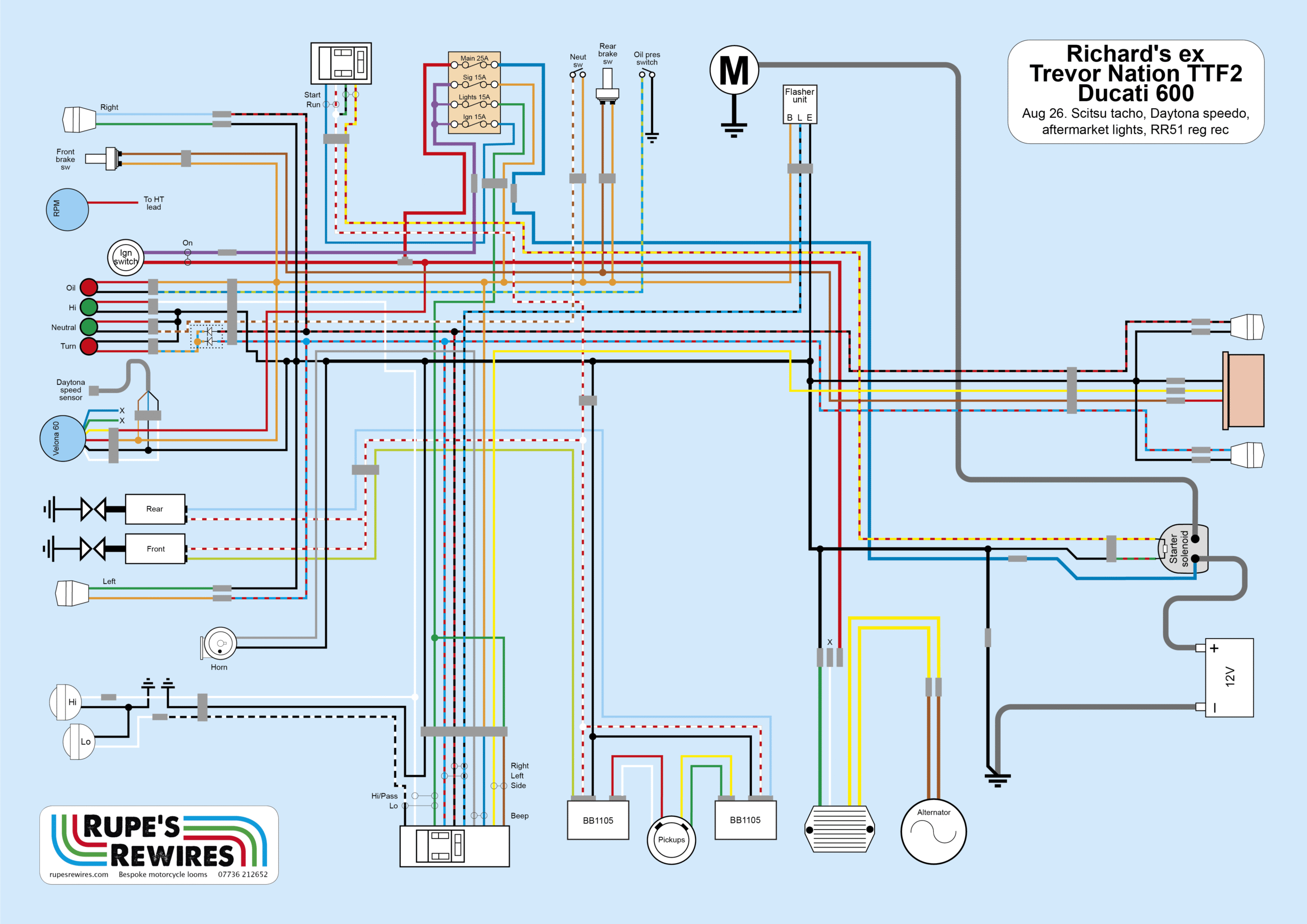
I spent a long, long time figuring things out: what equipment we were dealing with; whether it worked; where to put everything; and what mountings or sub looms I need to make to put them there. Obviously I had to leave the battery at the back, and it made sense to keep the solenoid near it too. But everything else had to be at the front.
This sounds fun, but it isn’t. In an ideal world you want the loom’s many branches to be evenly spaced. It spreads the bulk out. When 85% of the connections have to happen in an area the size of a yogurt pot you need to be able to think nine moves ahead. In 3D.
I can’t do that. Nor, I suspect, can anyone else. So I just did what I could.
It was a beautiful moment when I pressed the starter and the motor burst instantly into life. And I couldn’t resist a short test ride.
It’s epic. You would never know it’s just a 600. The bike is so light and punchy it feels like it wants to go go go.
Richard is taking it to the Worship show this month. If you’re anywhere near Leeds, and you like cool sports bikes, why not come along?
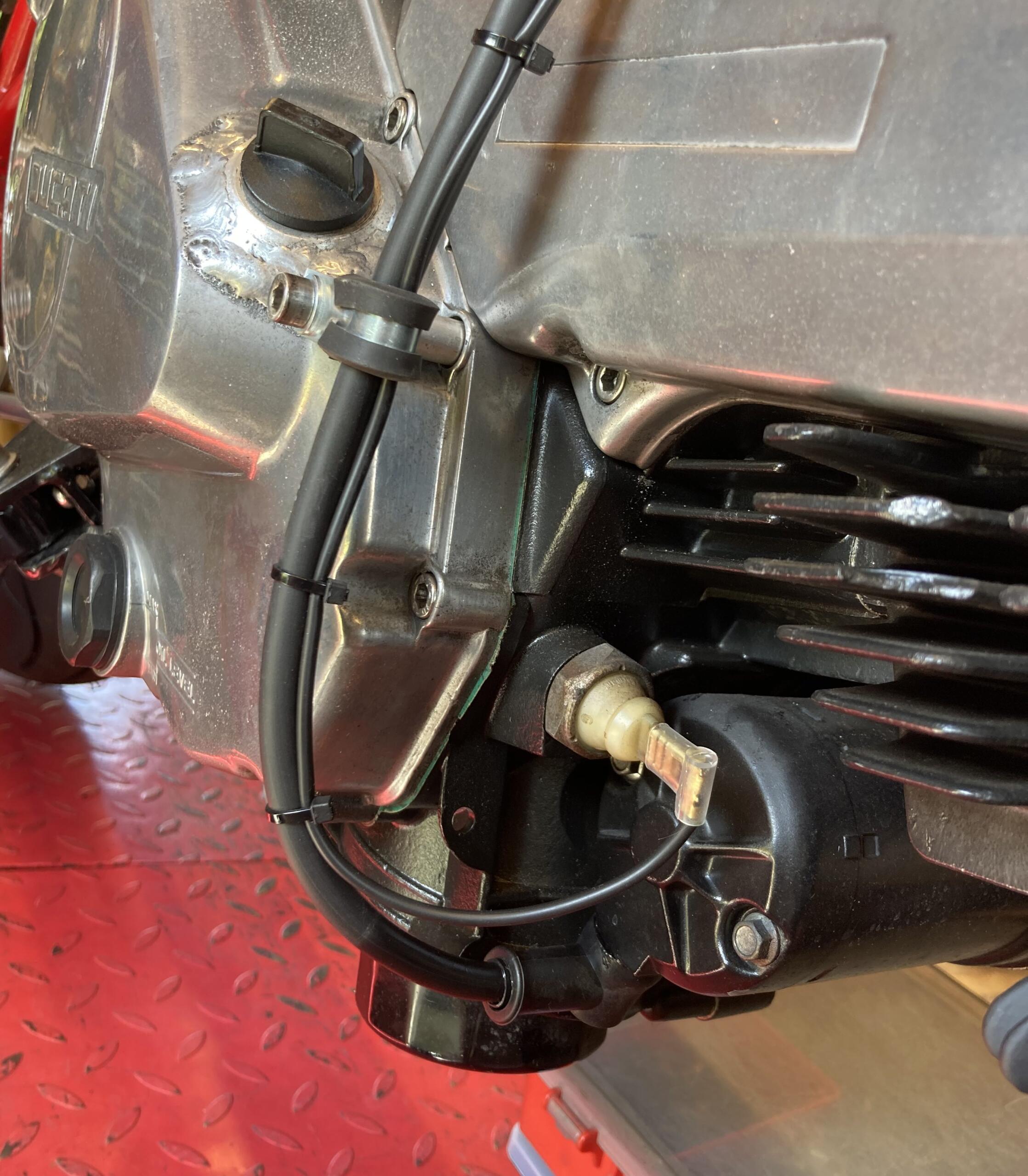
A custom spacer and P clip is one way of securing the starter cable on a Ducati. The smaller cable is the oil pressure switch
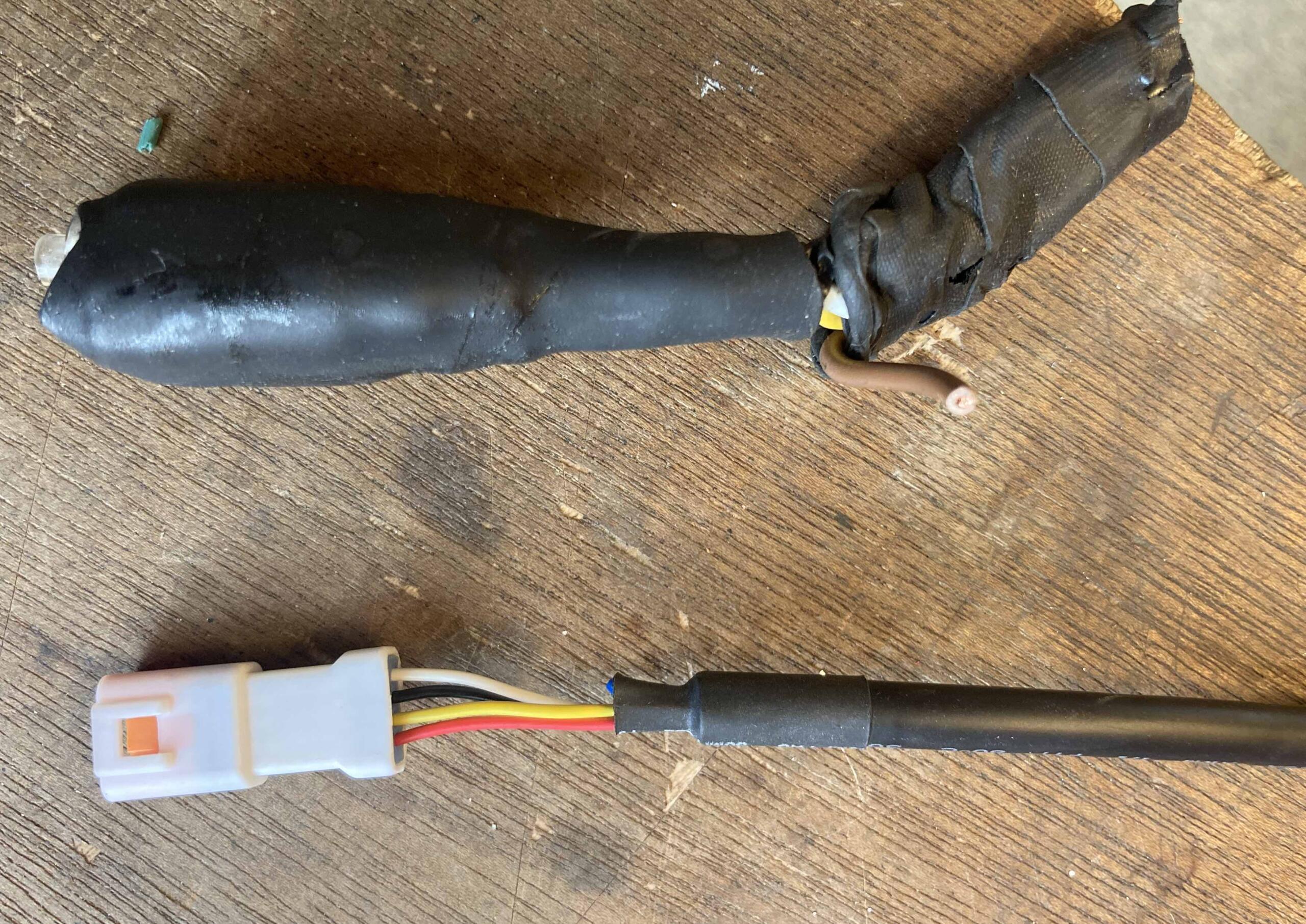
The speedo uses four wires. Above: the original arrangement. Below: my solution. The plug is a JST – a tiny thing because the speedo uses very little current. Decisions like this help you keep the electrical bulk down
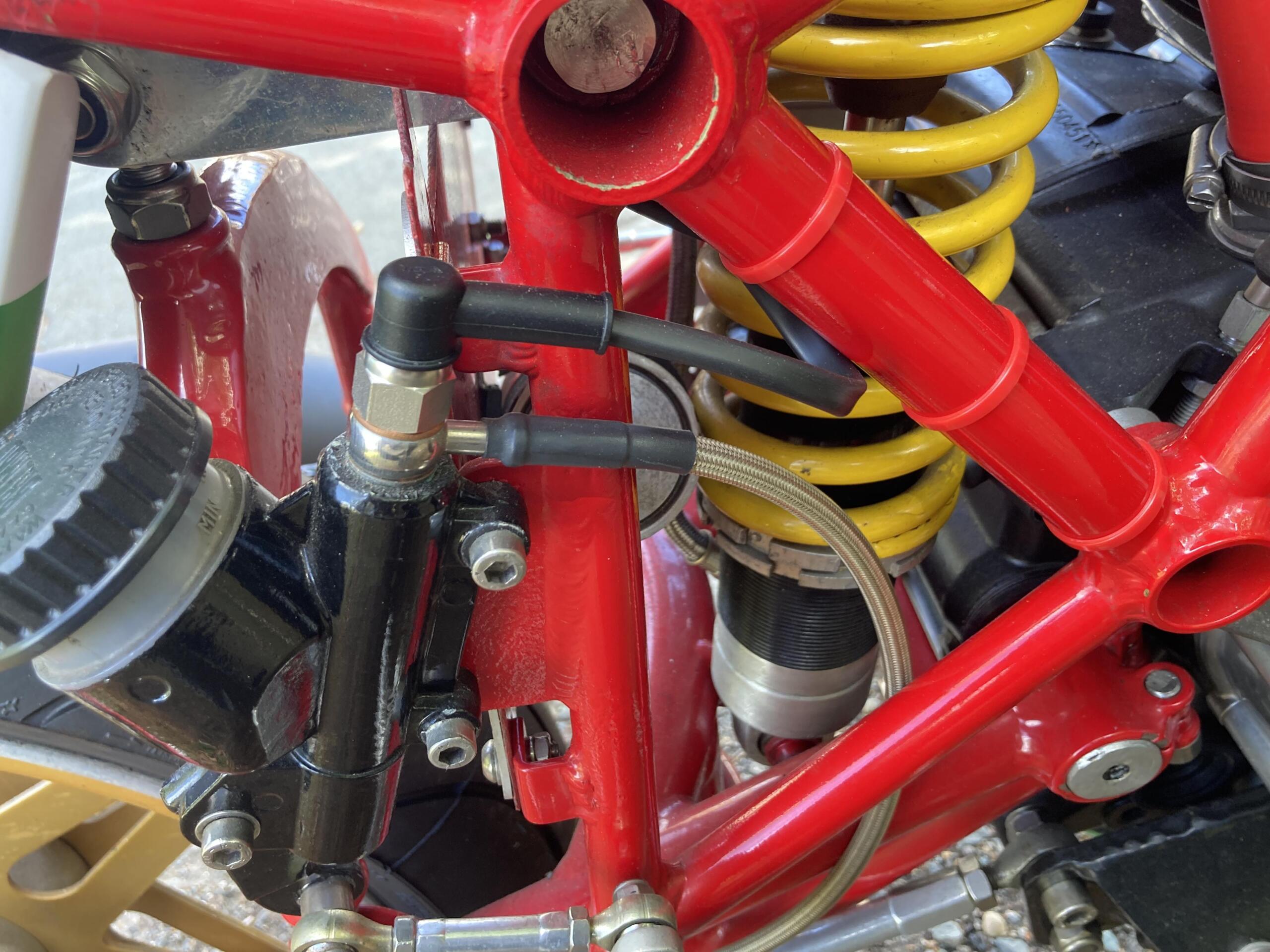
Reworked rear brake switch. The rubber boot is glued in place with silicone sealant
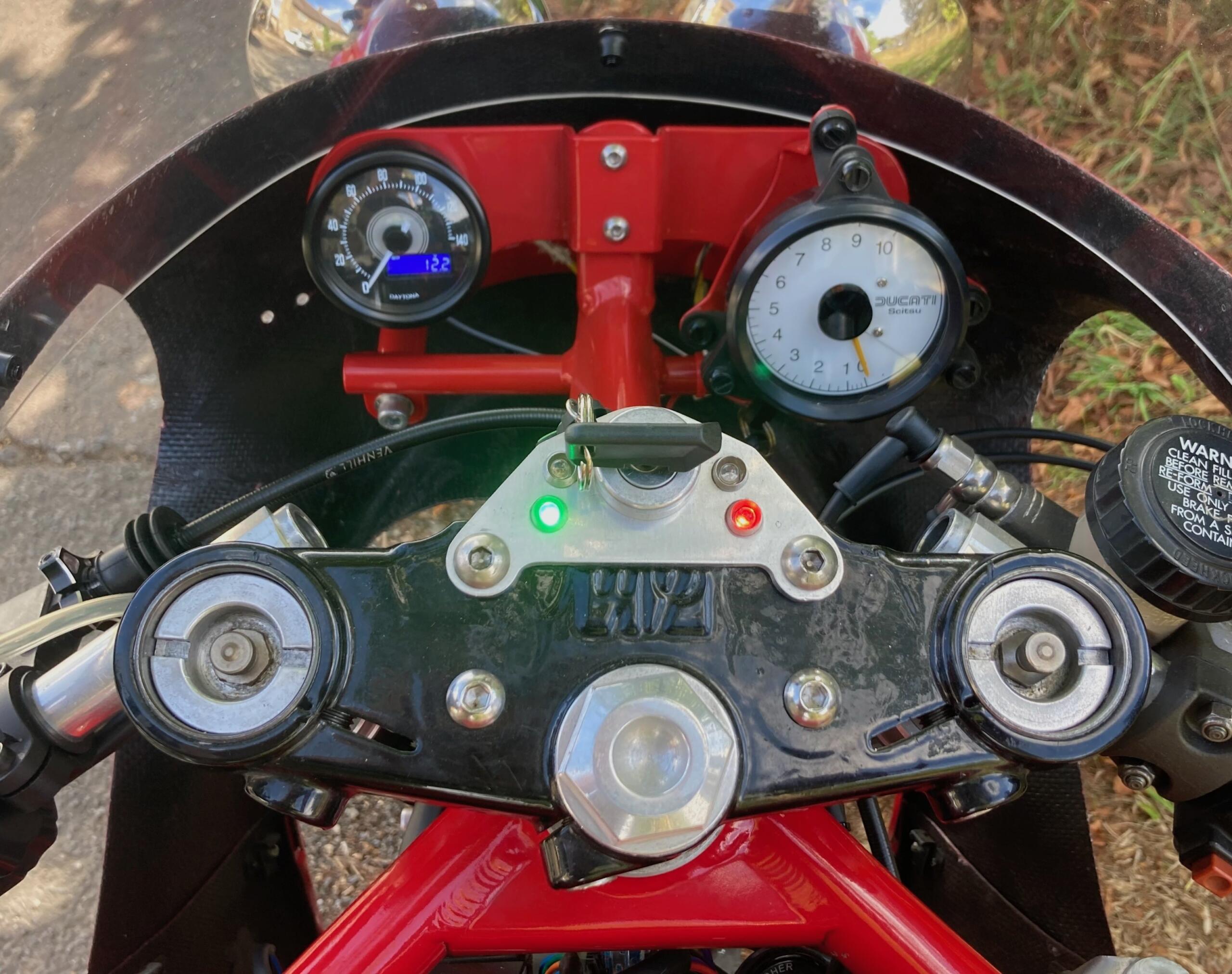
Speedo on the left is a basic Daytona; tacho on the right is an old Scitsu rechargeable. Warning lights are basic LEDs
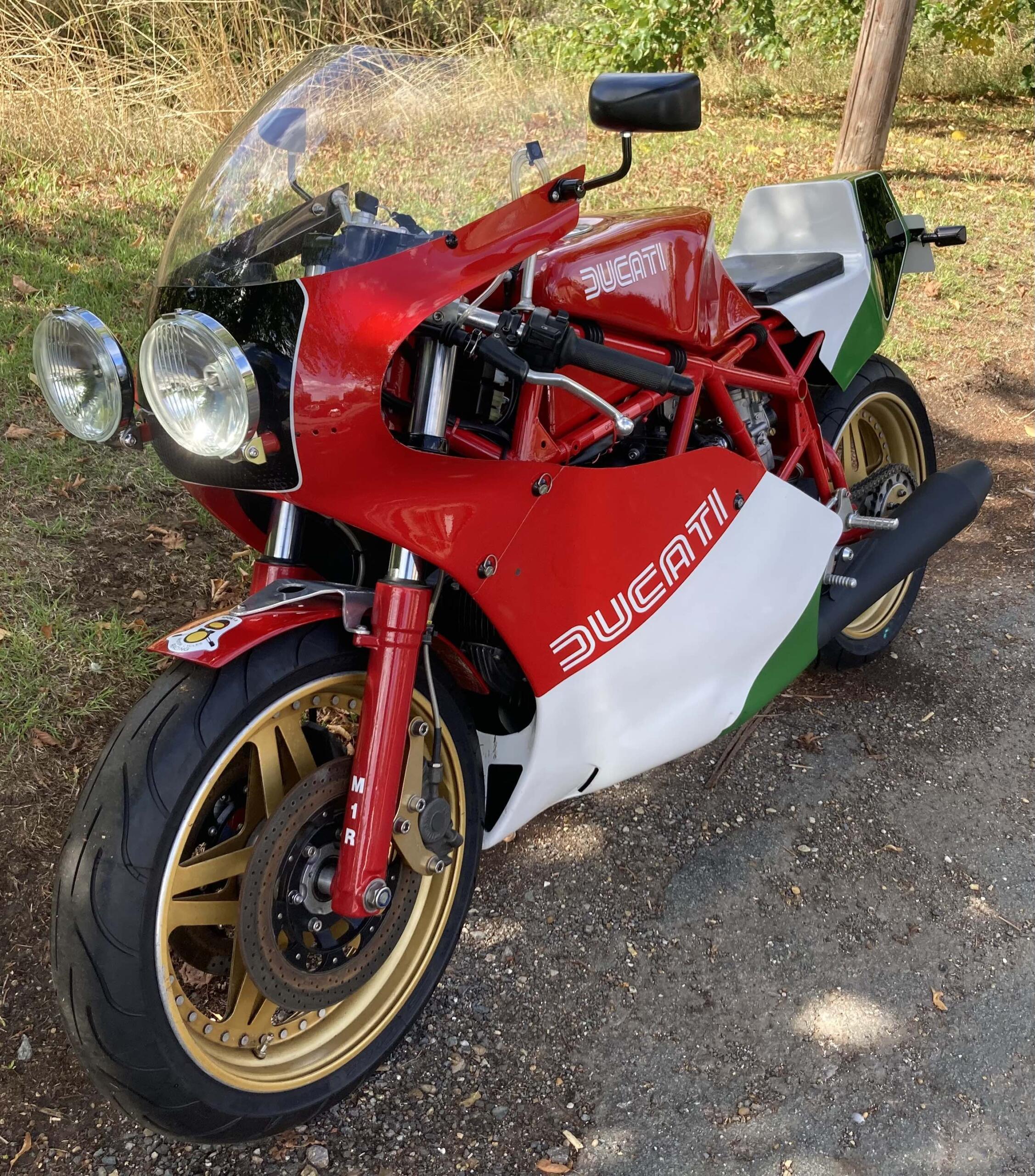
How about this for a fun, beautiful motorcycle? Front indicators will be added after further thought