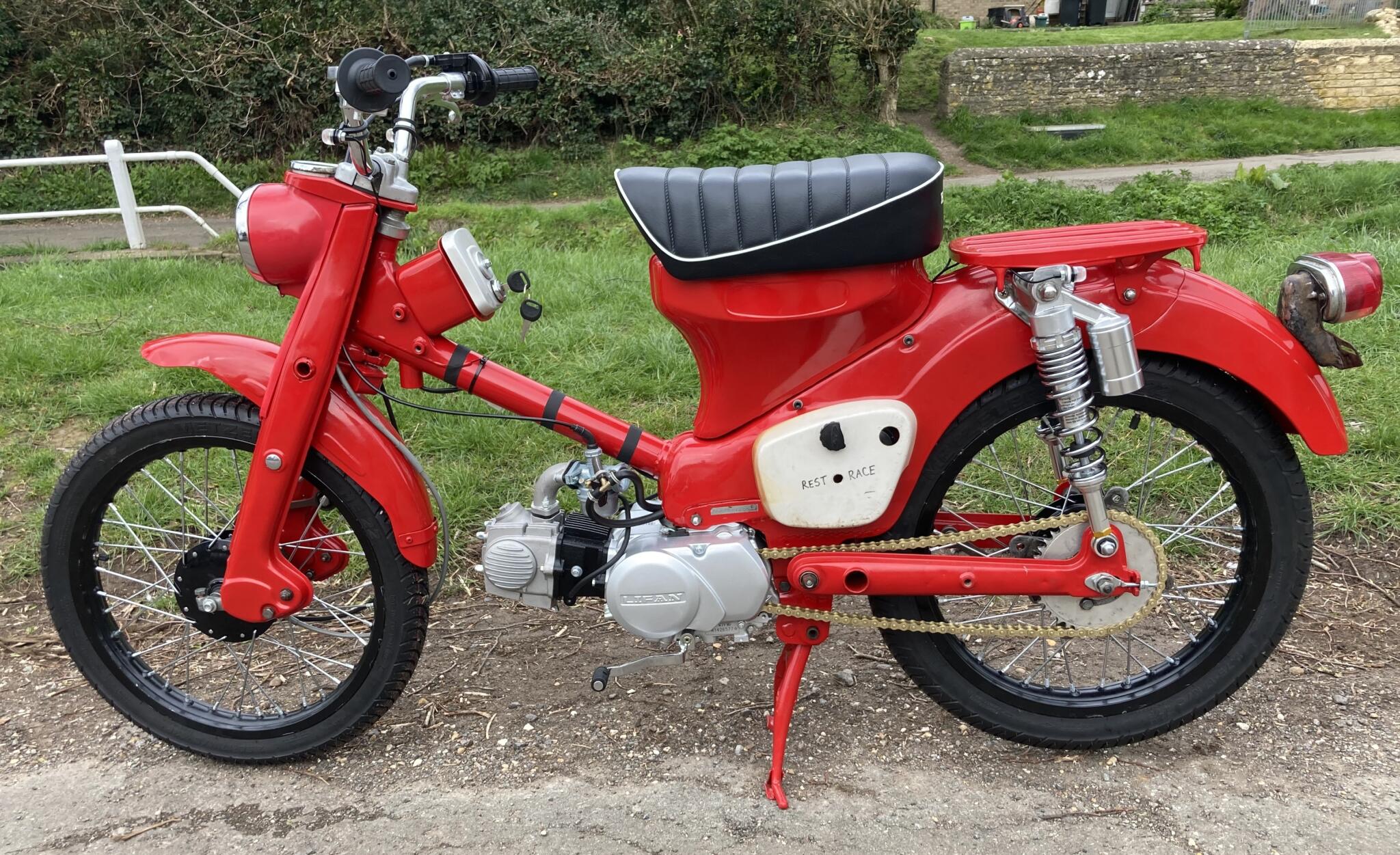
The Chinese Lifan engine is based on a Honda original. It comes with a carb and too-tight throttle cable
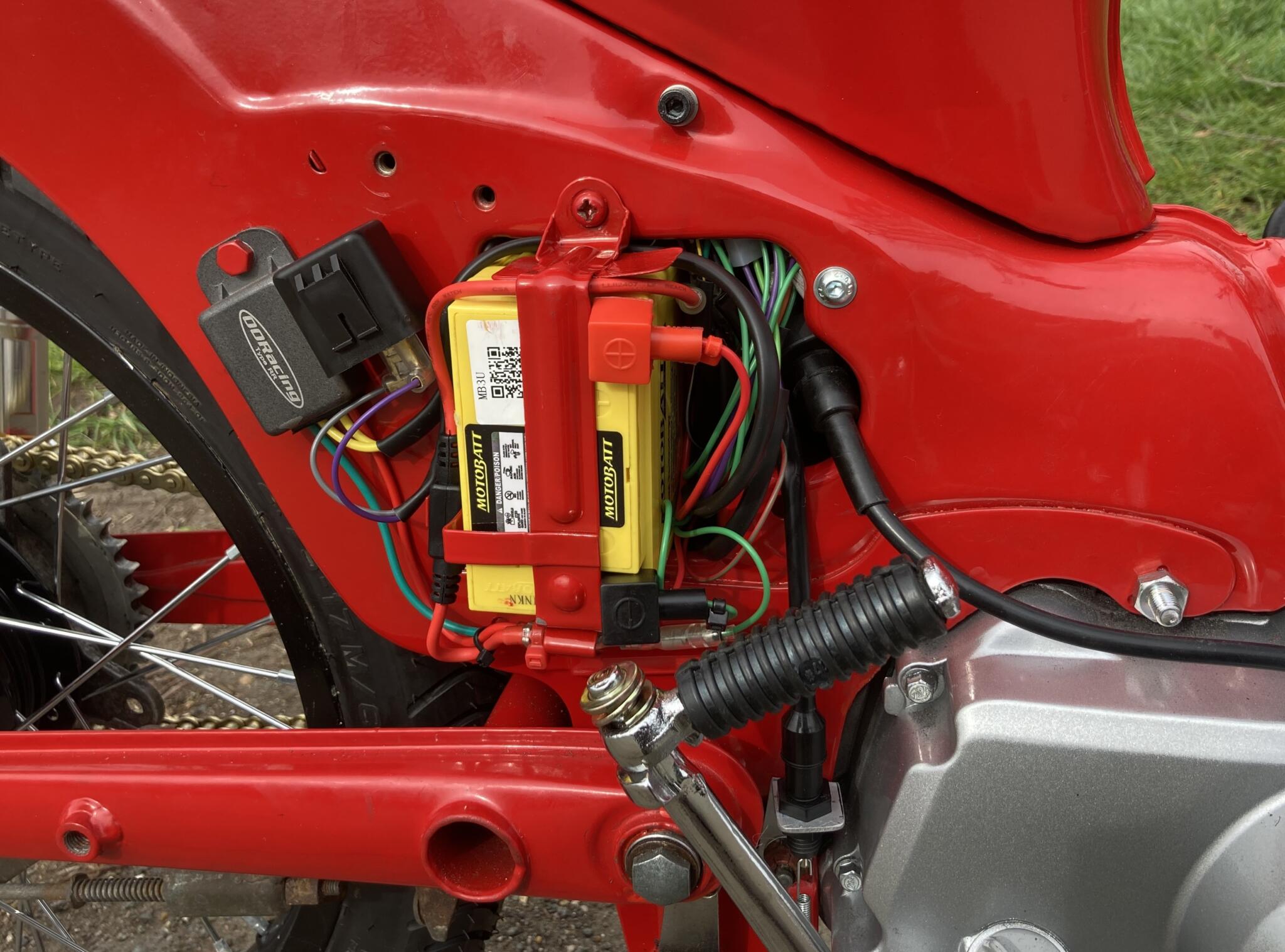
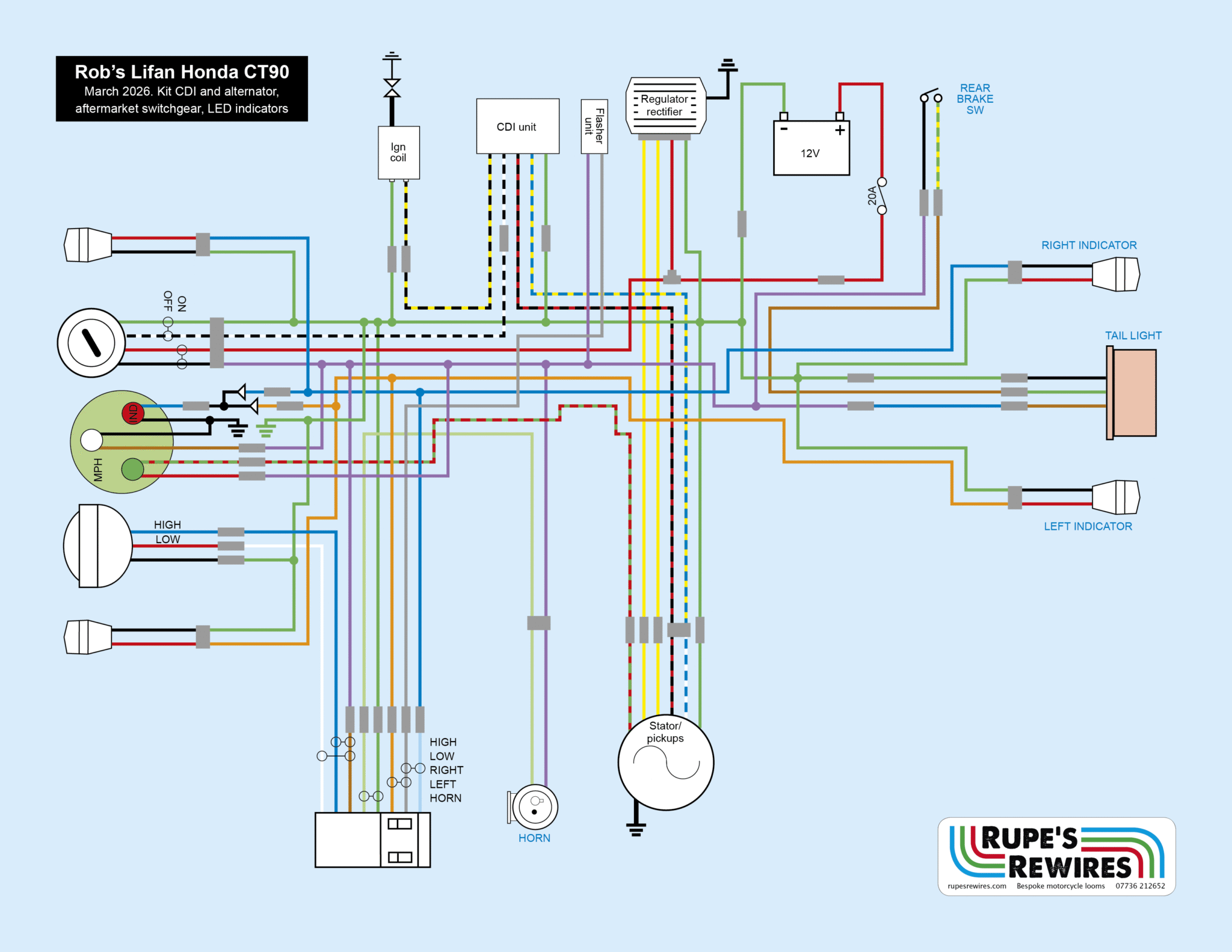
This was the tricky bit. The modern ignition and charging needs more wires than Honda made space for. The modern battery is bigger too. But it all squeezes in
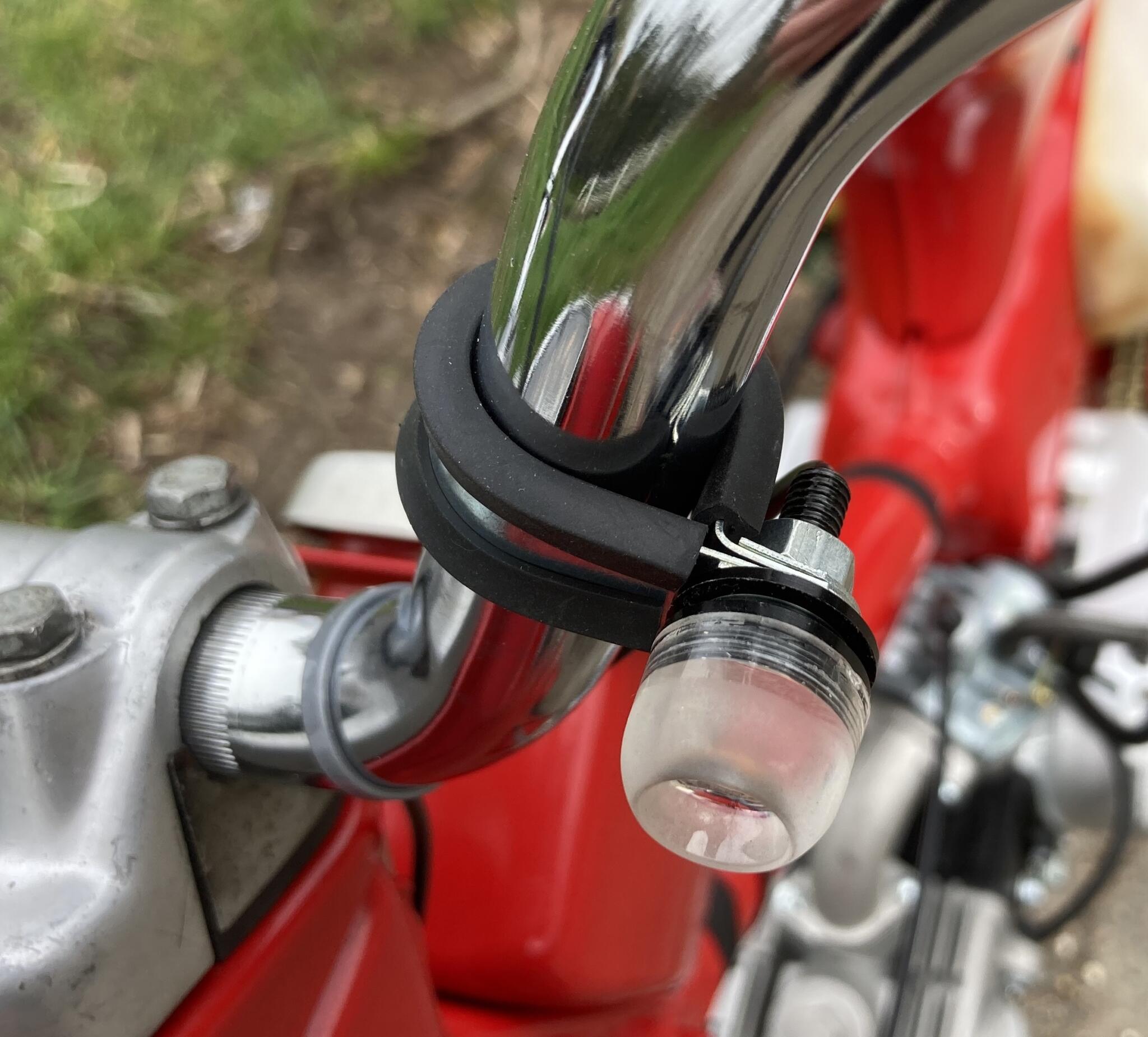
Tiny LEDs blend in to the overall look quite well
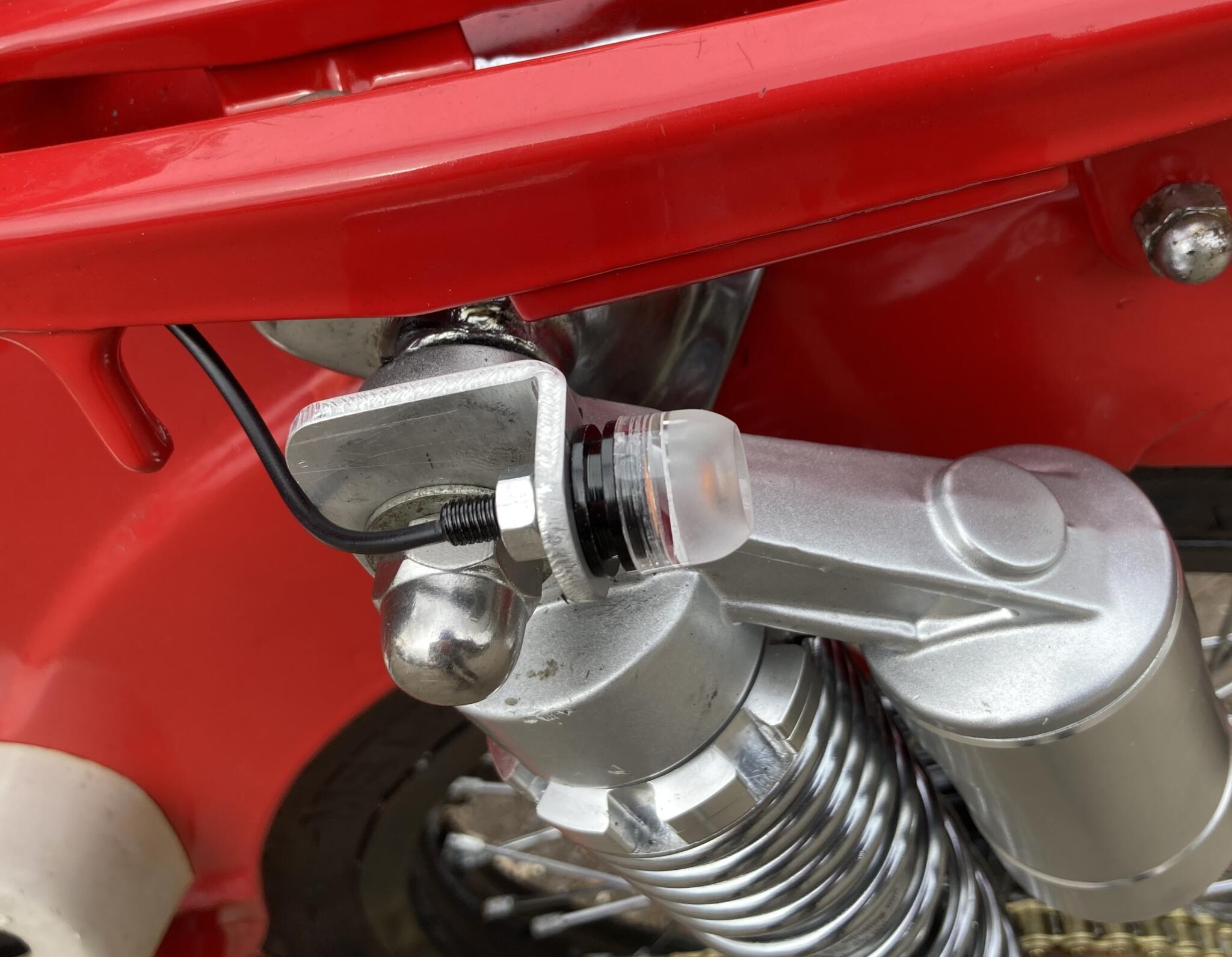
The rear indicators sit happily on a custom bracket
Rob’s Lifan CT200 special
Rob’s an old hand with big, scary modern bikes, but this is his first restoration. Or, as he calls it, his mindfulness project.
It’s a 1965 Honda trail step-thru, the ancient ancestor to today’s X-ADV.
It arrived lying on its side in the back of the car, with wires everywhere, and an intriguing story. It’s quite hard to find engine parts for a CT200, but you can bolt in a Chinese engine kit instead.
The new motor is a Lifan 110 which, with a bit of grunting and filing, had slotted into the Honda pressed-steel frame. Rob had also bought a loom kit, and got the motor running briefly. But he couldn’t help noticing the loom wasn’t going to work.
On top of that he’d bought a vintage-looking aftermarket handlebar switch, some LED indicators, and a 12V lithium battery. The other electricals were either fitted already, or in a box.
We had a chat about how this was all going to marry up, and decided it would be fine as long as we threw the loom away and fitted a different battery. Which, after a bit of research on Tayna’s website, proved to be a Motobatt MB3U. You can still get a battery that fits the CT battery cage, but only in the original 6 volt form. Rob wanted 12 volt, as any reasonable person does.
The MB3 fitted in the original space with a plywood-and-closed-cell-foam packer. There was also room under the right side panel for the reg rec and flasher unit. I had previously made homes inside the frame monocoque for the CDI unit and HT coil. After some experimentation, the horn squeezed in under the left side panel.
Some online research showed how the rear brake switch fitted, so I made up a bracket and plonked that on too. Finally, I rebuilt the tail light. Many people skip this because it is tedious and messy, but it is the only way to be sure the pixies are going to get in and out of the light bulb.
Emboldened by success, I realised the LED indicators would fit on the handlebars with P clips, and on the shocks with little folded brackets. That just left the ignition switch, which had been fitted to the somewhat abused air filter cover. I made a fitting to neaten it up. There was no need for an air filter with the new engine because it came with a carb and foam filter.
The original speedo had two warning lights: neutral and oil. The Lifan doesn’t have an oil light, so I made a tweaker diode pack to convert the oil light into an indicator warning light instead.
When the bike was ready Rob and his son picked it up – literally – and put it back in the car. He’s got a few jobs left before it’s a runner, but it should be a hilarious and reliable pub bike.
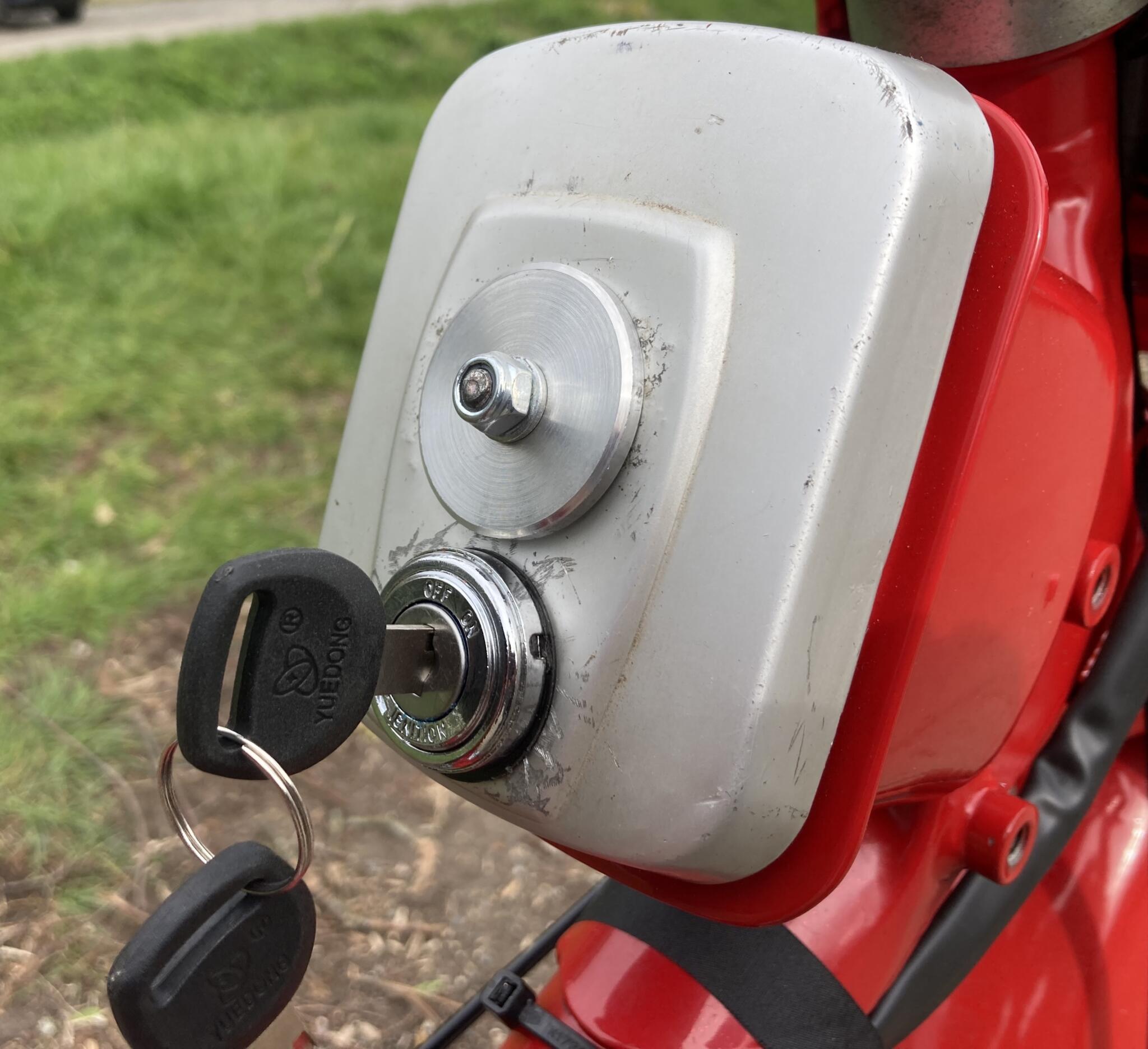
A previous owner had made a big hole and covered it up with a stack of washers. This aluminium disc is a bit neater
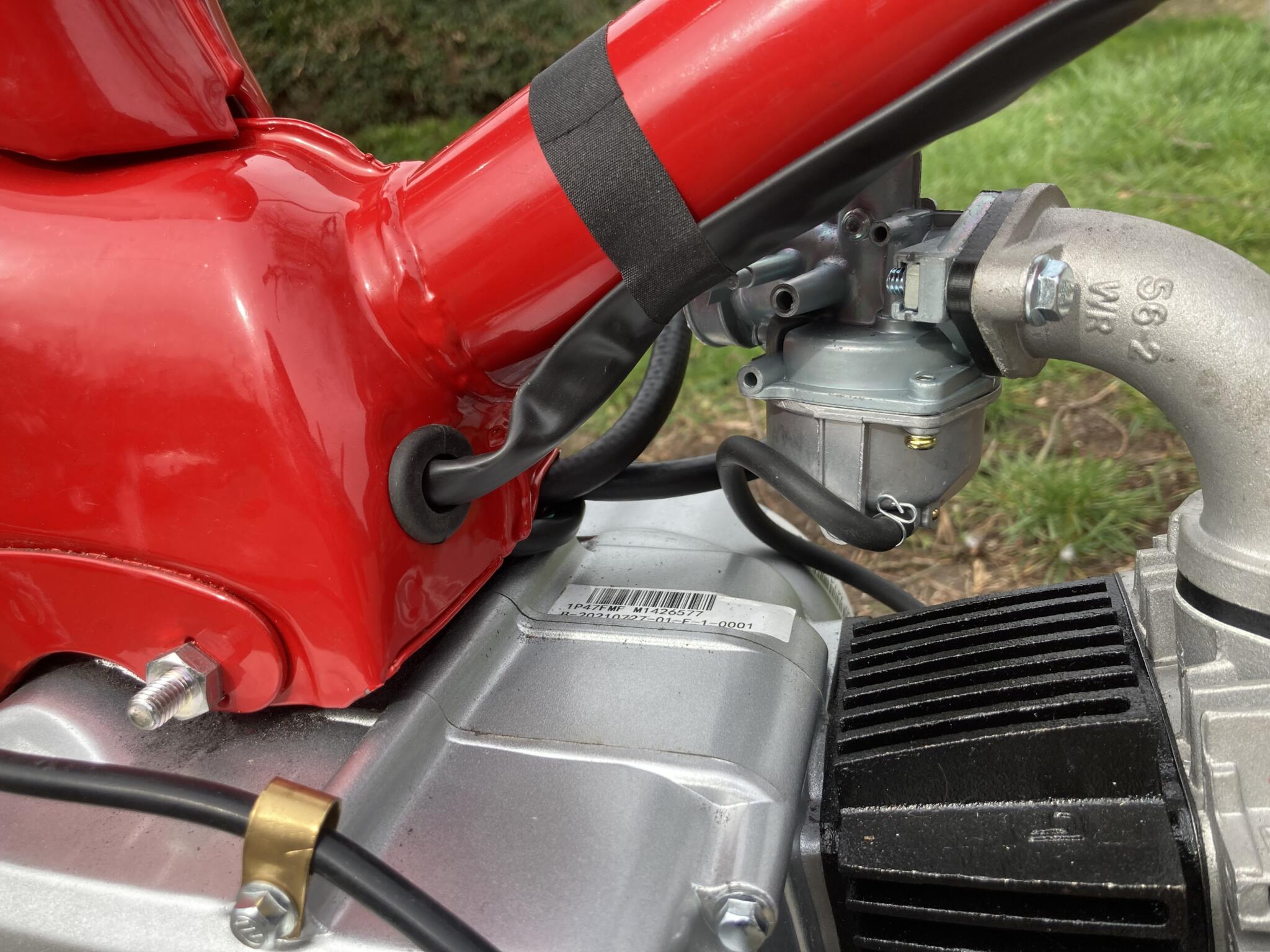
Originally the throttle cable went through this hole. As the cable was now on the left, I couldn’t resist running the loom through the hole instead
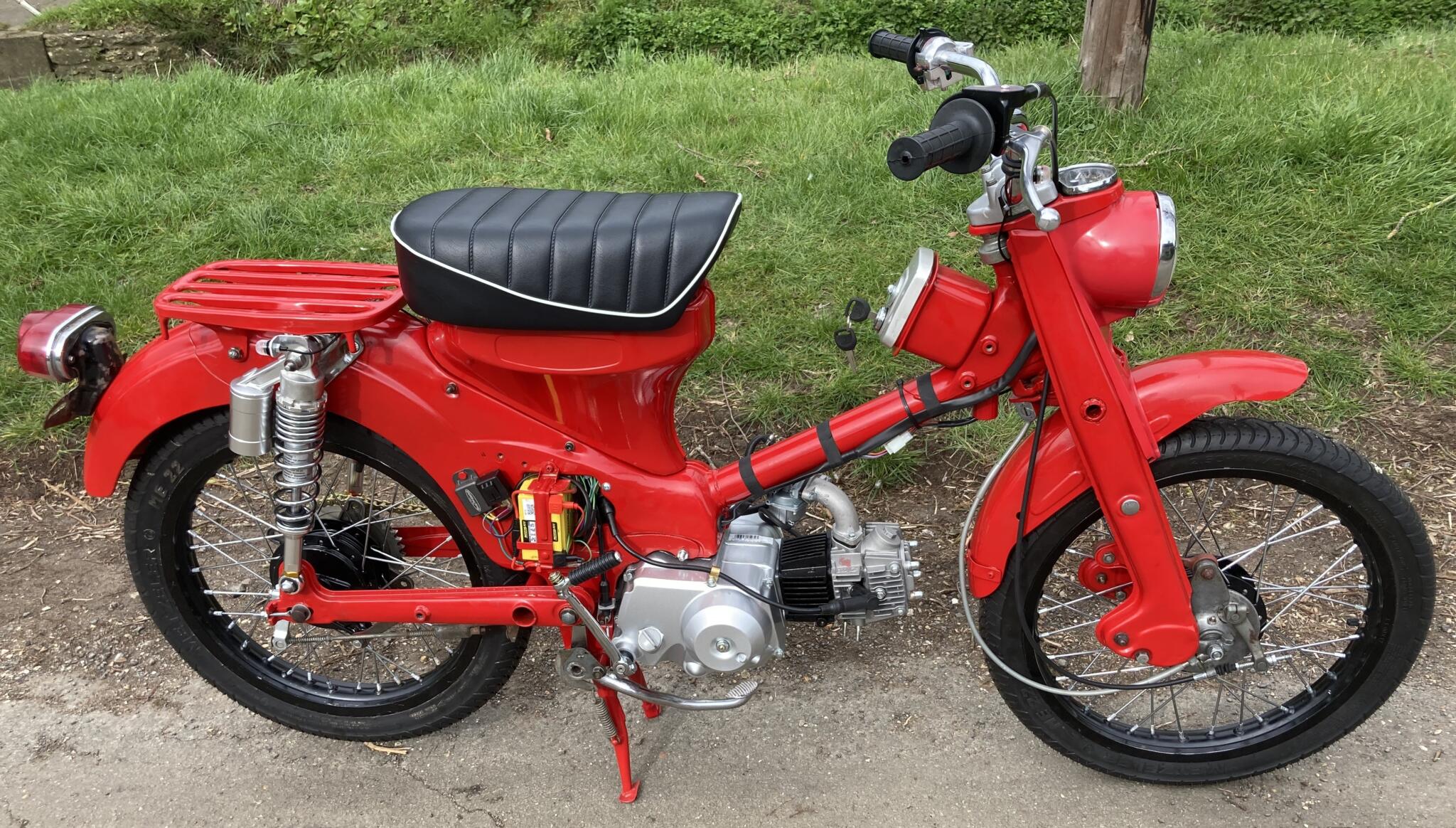
A very agreeable little thing. Rob is a 3D printing whiz, so will design some of the final components the bike needs