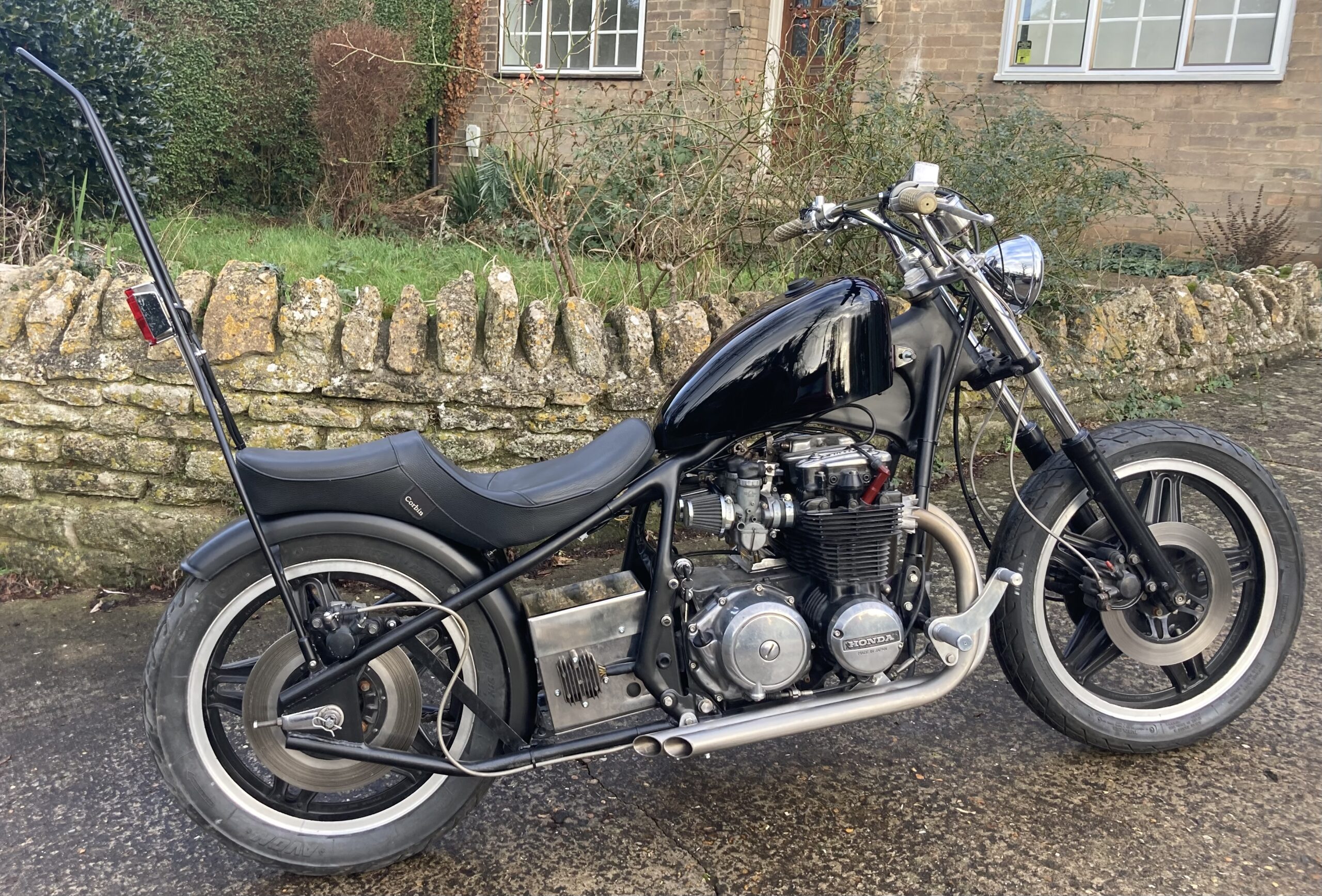
Chris bought the bike because he liked the stance, which comes from using the standard head angle. He spent a while sorting out various problems before bringing it to the RR shop
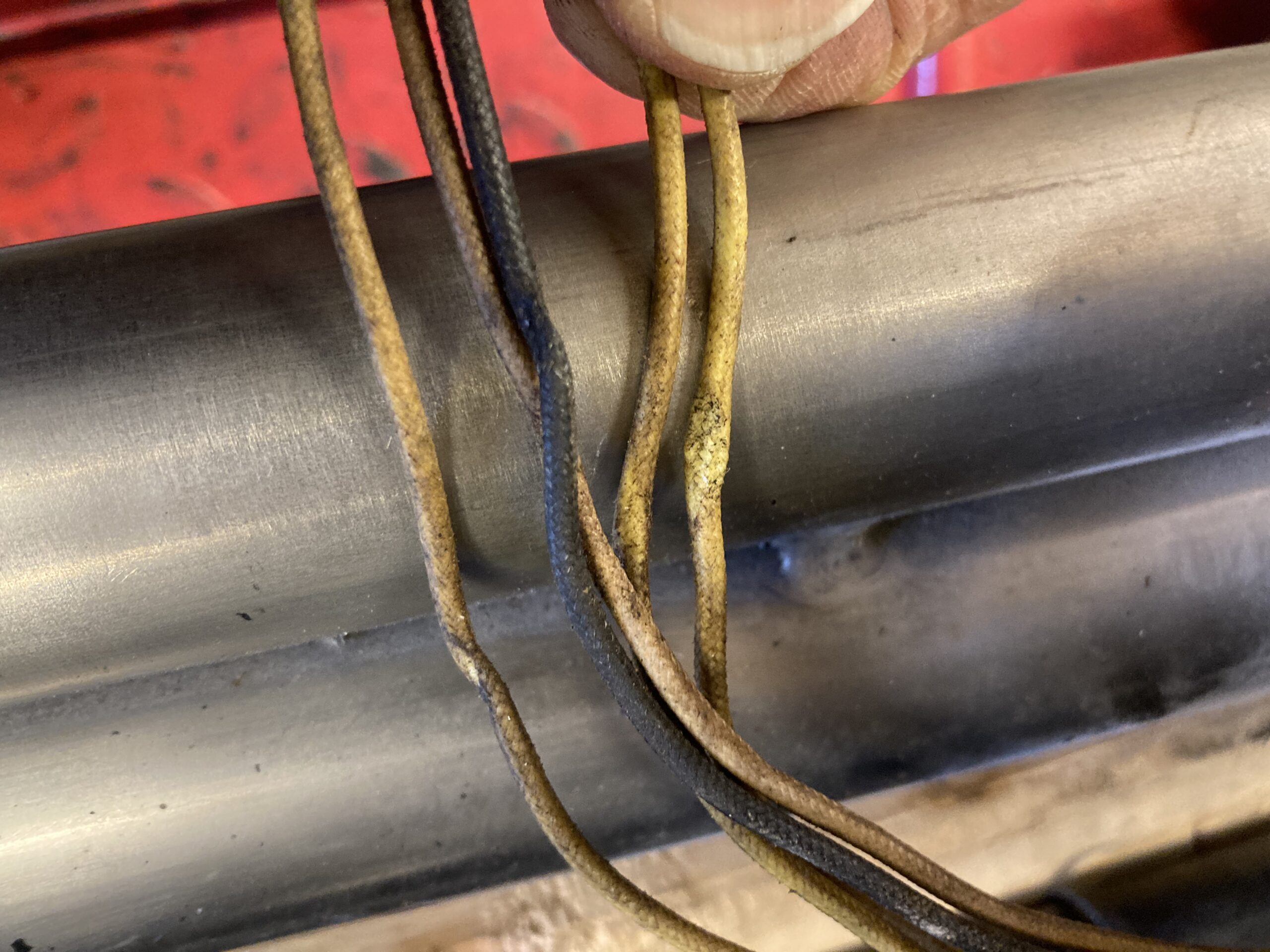
Old bikes tend to harbour hidden horrors. Here’s an example – crush damage on the stator cables
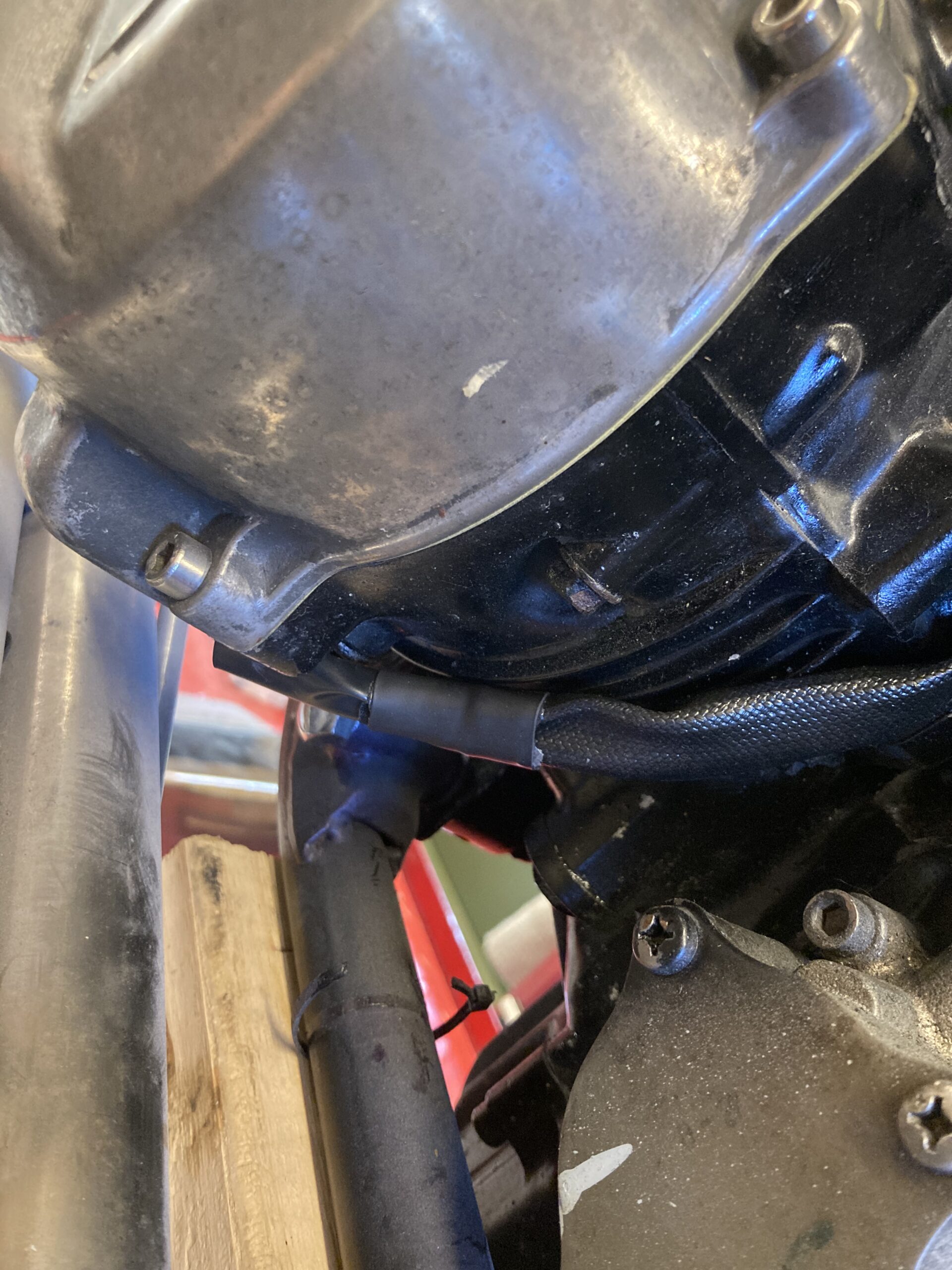
I fixed what I could and re-sleeved with heat resistant sleeving, sealed with adhesive heat shrink
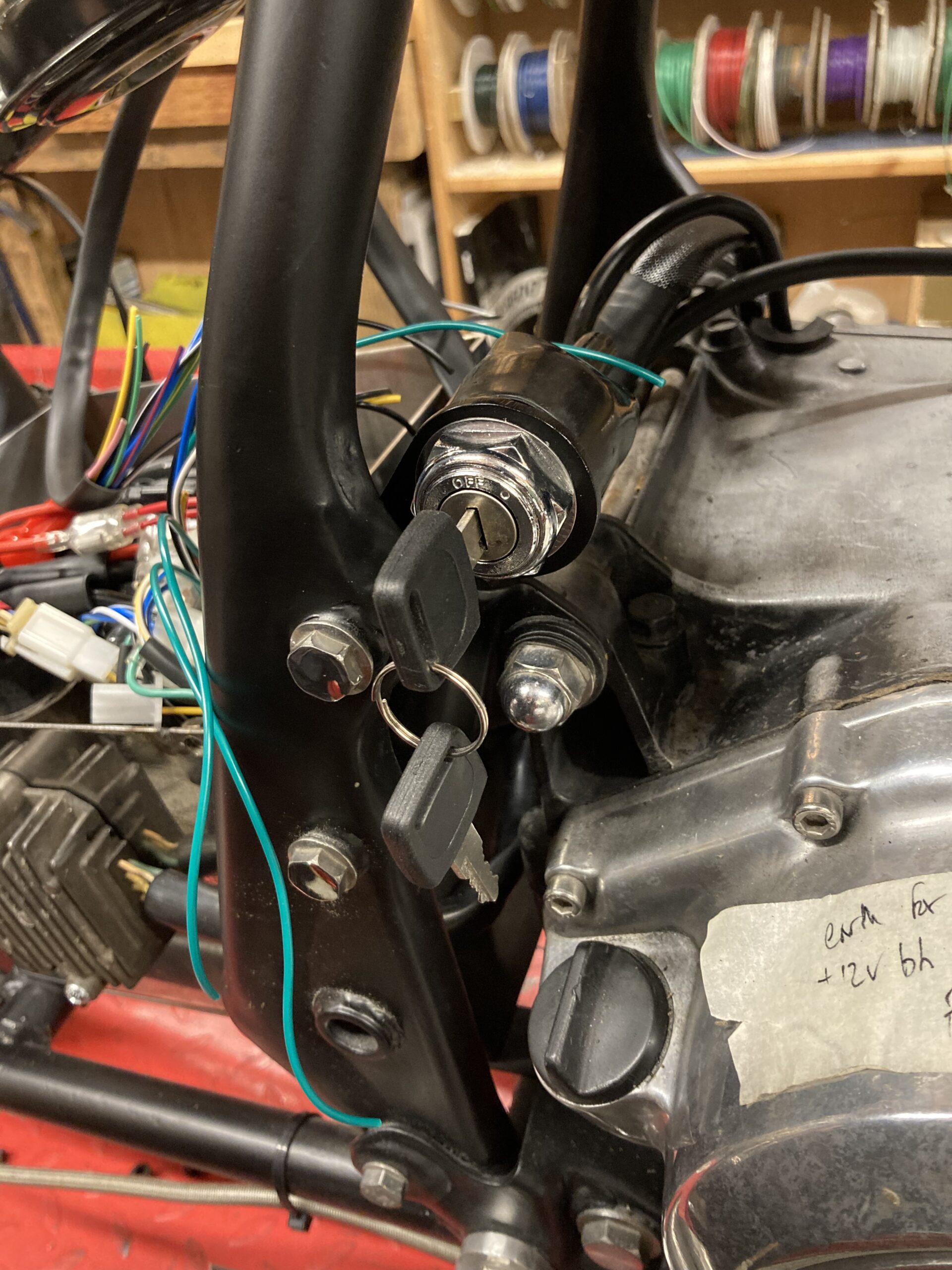
The original ignition switch, installed by a previous owner, was at the bottom of the electrics box. A hopeless location. I made a bracket and fitted the switch somewhere a bit easier to reach
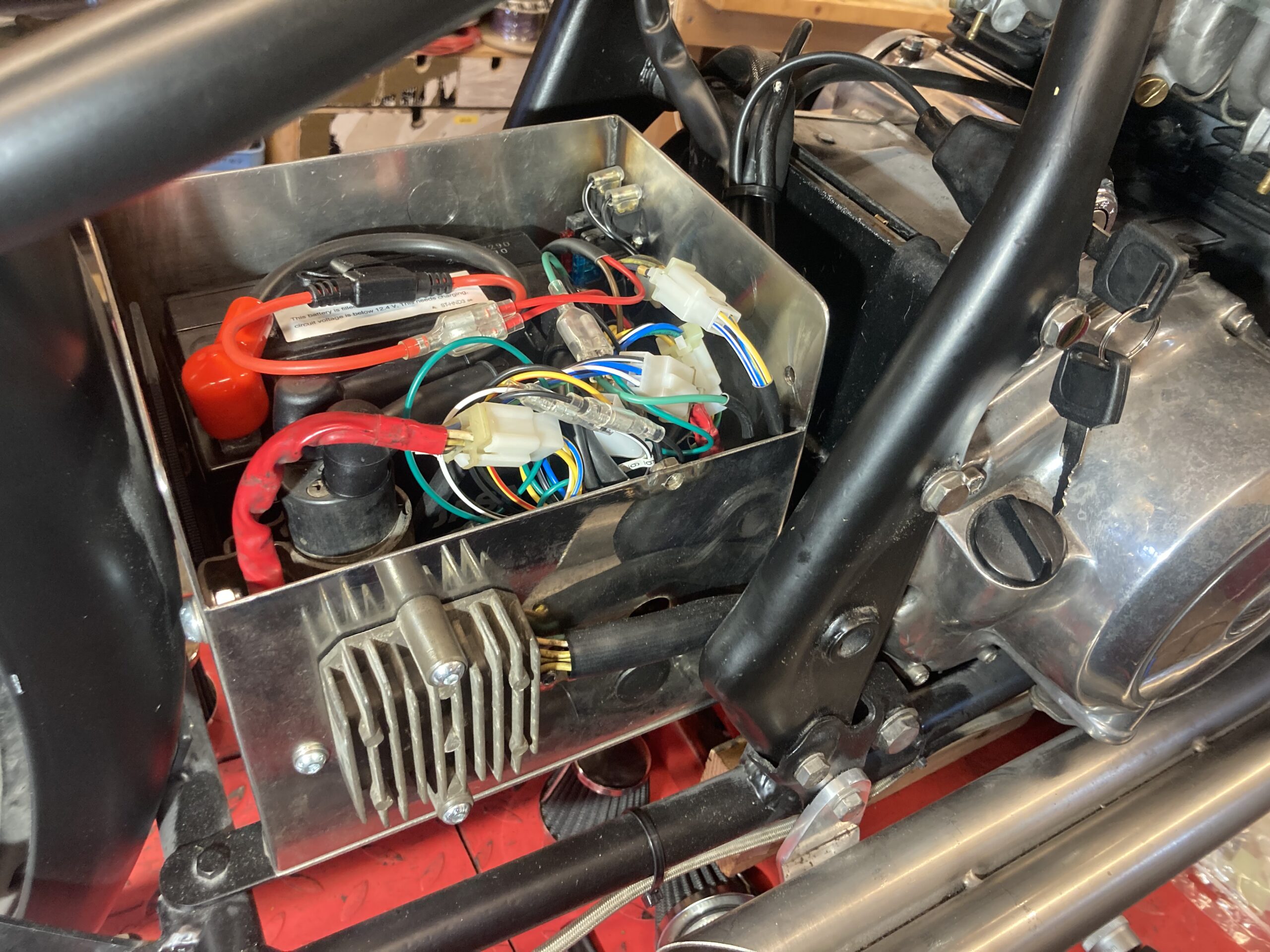
Every chop seems to have an electrics box as a way of shoving all the wires out of sight. Sounds great, but it’s actually very tricky to organise and build
Chris’s Honda CB650 chop
Chris bought this honest, low-budget chopper as an entertaining project and a fun summer ride. It was roughly built, but needed a fair bit of tidying and modification before he turned his attention to the electrics.
As with just about every chopper I have seen, the electrics were horrifying. I guess there are people who can weld frames beautifully AND do wiring, but maybe there aren’t that many of them. I’m certainly not one.
At any rate, improving on what was in that electrics box was like shooting fish in a barrel.
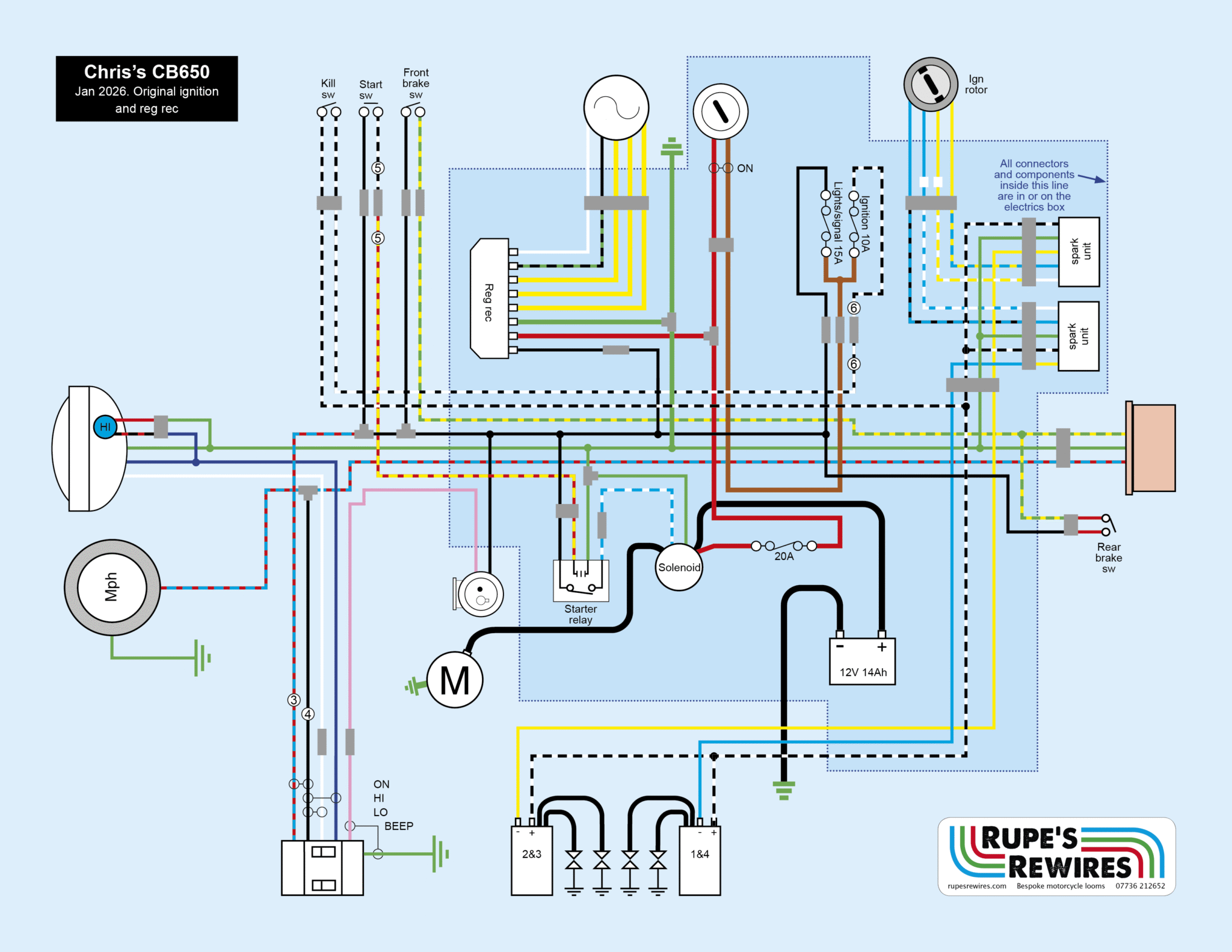
The bike still had its original ignition and charging systems. The good thing about this is it saves spending maybe £500 on new bits. The less good thing is that even when you renew their connections, they are still very old things.
After a discussion with Chris, I moved the regulator rectifier out of the box (so it could benefit from a bit of cooling), and relocated the ignition switch from ground level to just below the seat on the right hand side. I also removed the start switch from ground level to the handlebar, where it should be.
That was the obvious stuff. There followed a long process of restoring and repairing every other component on the bike. This took maybe eight times longer than building the loom, but it’s necessary if you want the electrics to be as invisible as possible, with the plugs and connections out of the weather.
For a new starter button, I pressed another eBay cheapie into service. As usual, the cables were too skinny to carry the 3.5 amp current of a starter solenoid, so I ran the button via a relay.
Normally, with every bike, I build custom high-capacity battery cables. With the CB650 (as with early Z900 Kawasakis) the cable from the starter motor to the solenoid was impossible to renew. Its terminal was buried so deep I would have needed an engine strip to reach it. So with reluctance I re-used it, even though it was old and stiff. Fortunately it still conducted starter current quite happily.
The bike fired up on its ancient ignition units, and even charged the battery nicely. Chris was delighted. So was I.
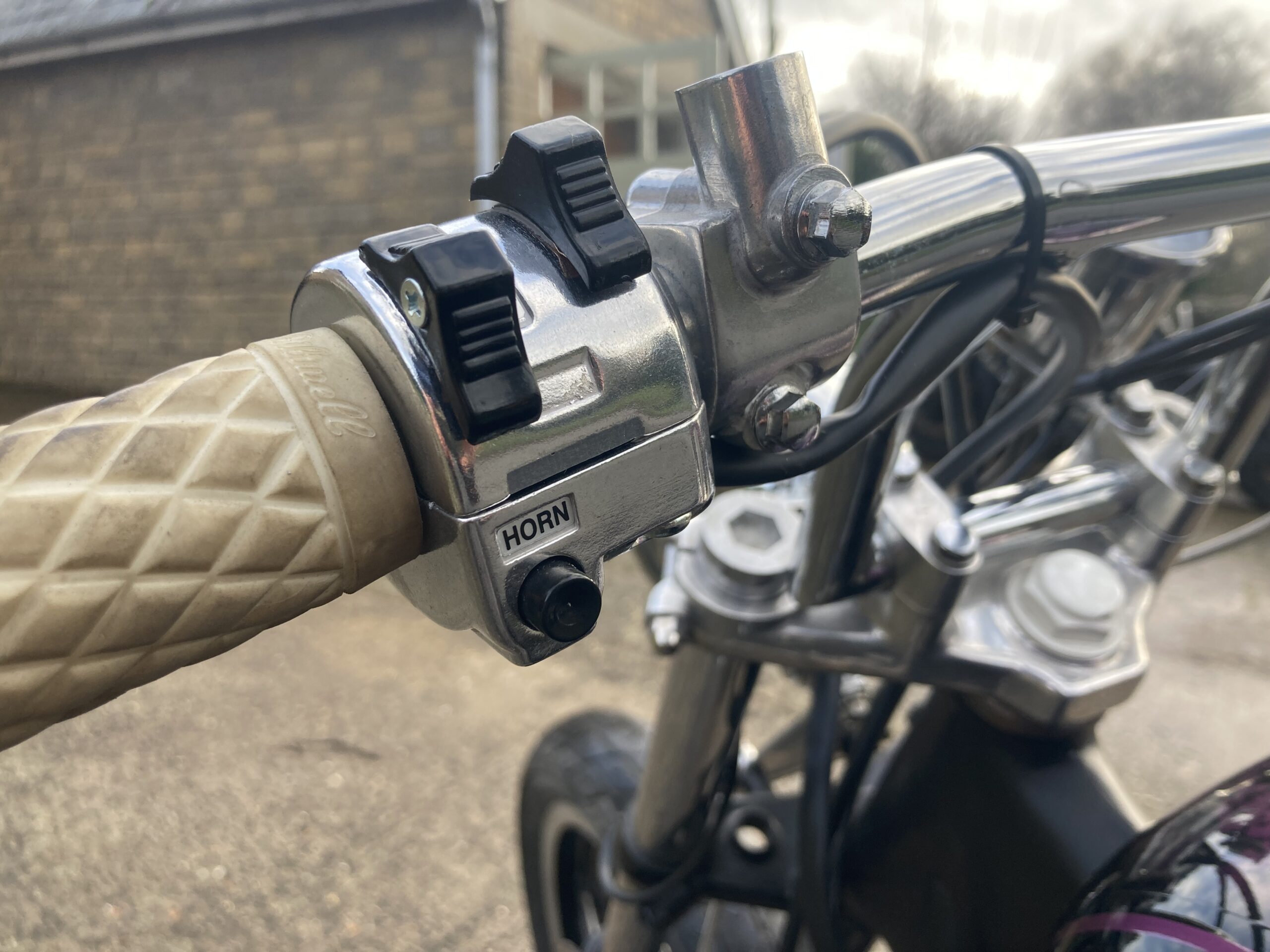
I sourced a replacement left switch, intended for a Suzuki. Chris didn’t want indicators so the left/right toggle slot is filled with JB Weld
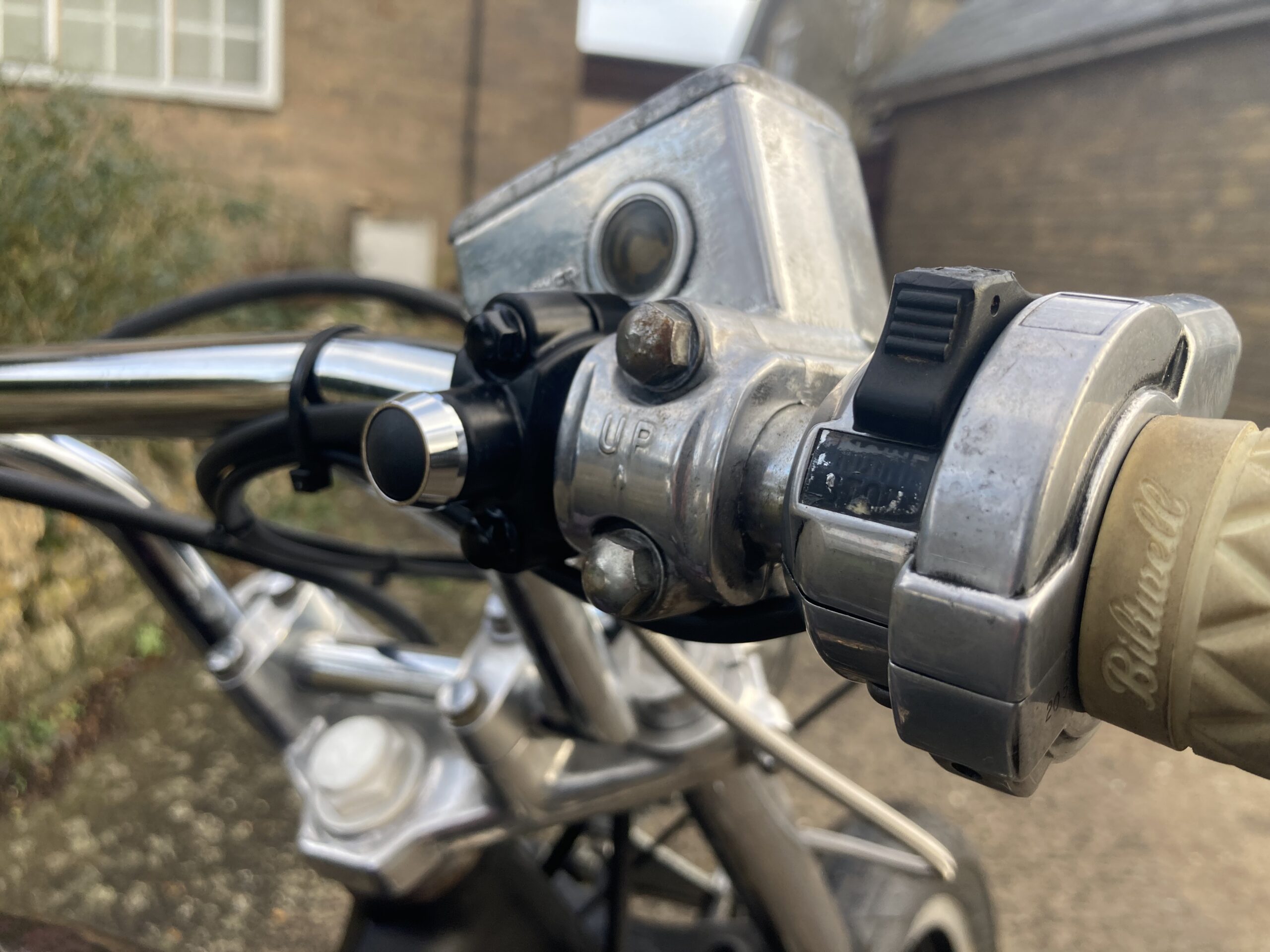
Meanwhile, on the right, I lovingly rebuilt this tatty Honda kill switch, and added an eBay start button. Shame they don’t come in bare aluminium
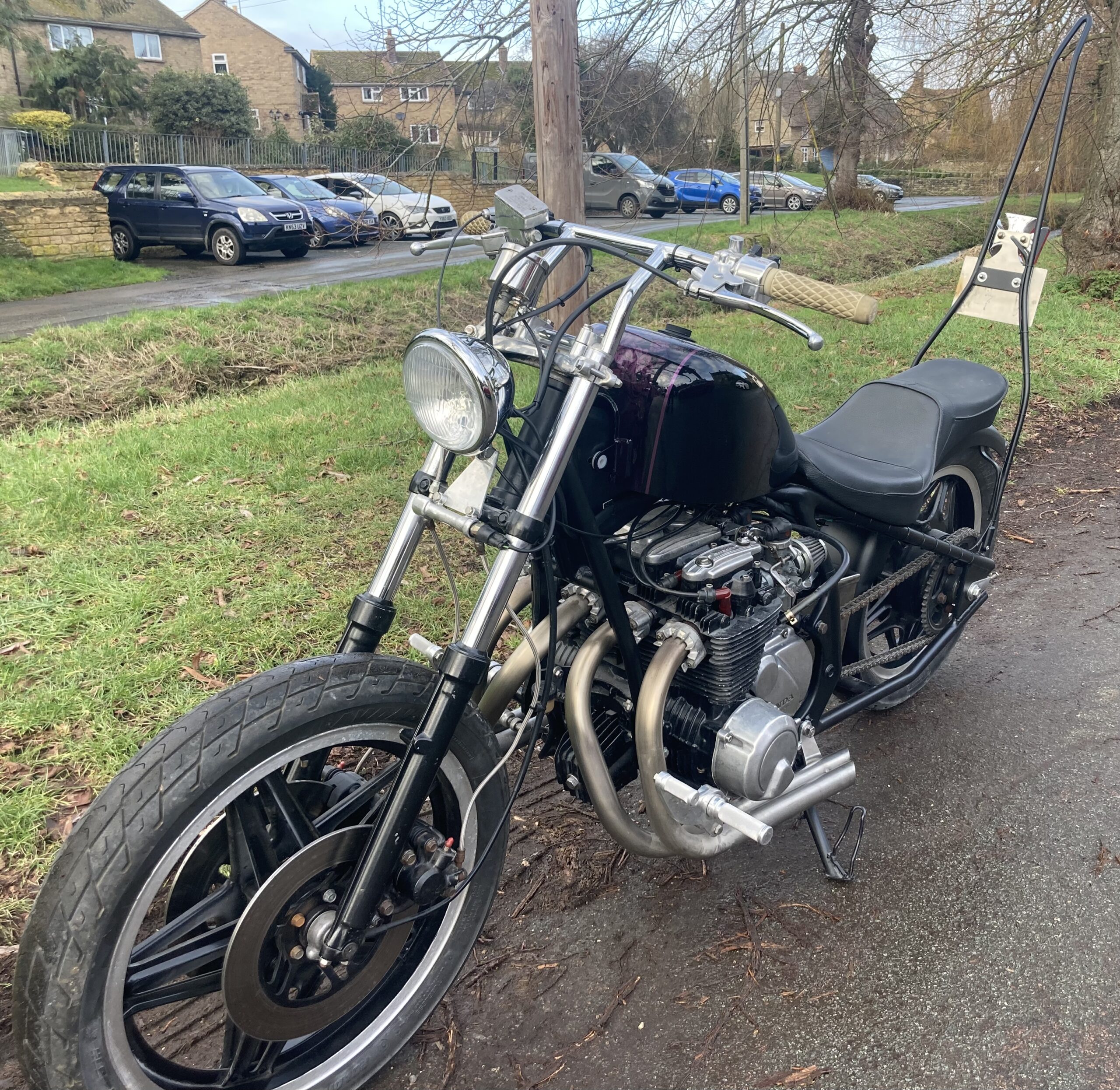
And here we are, almost ready to rock. Just a bit of tidying and tank fitting to go
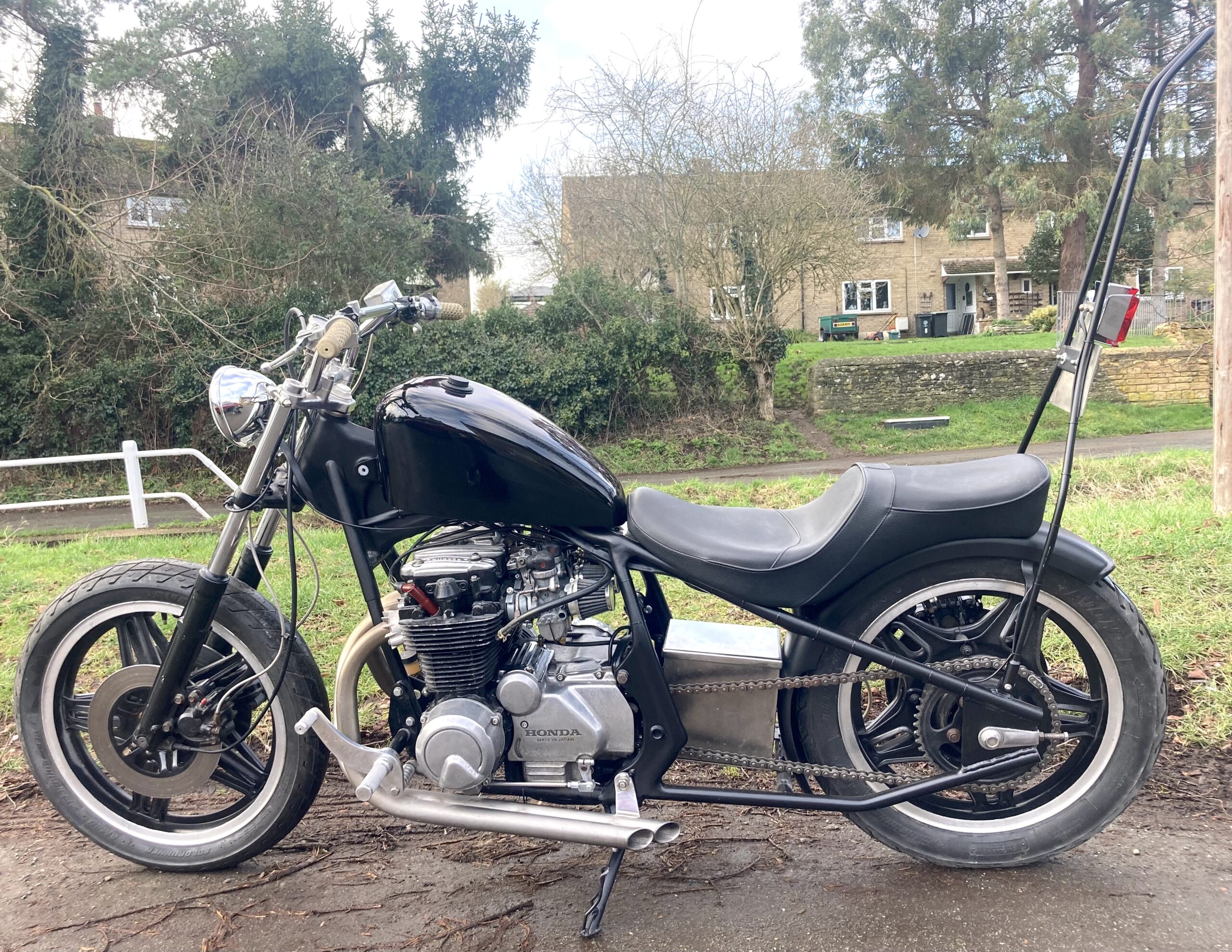
From this angle, it seems faintly reminiscent of Suzuki’s mid-1980s 650 Savage