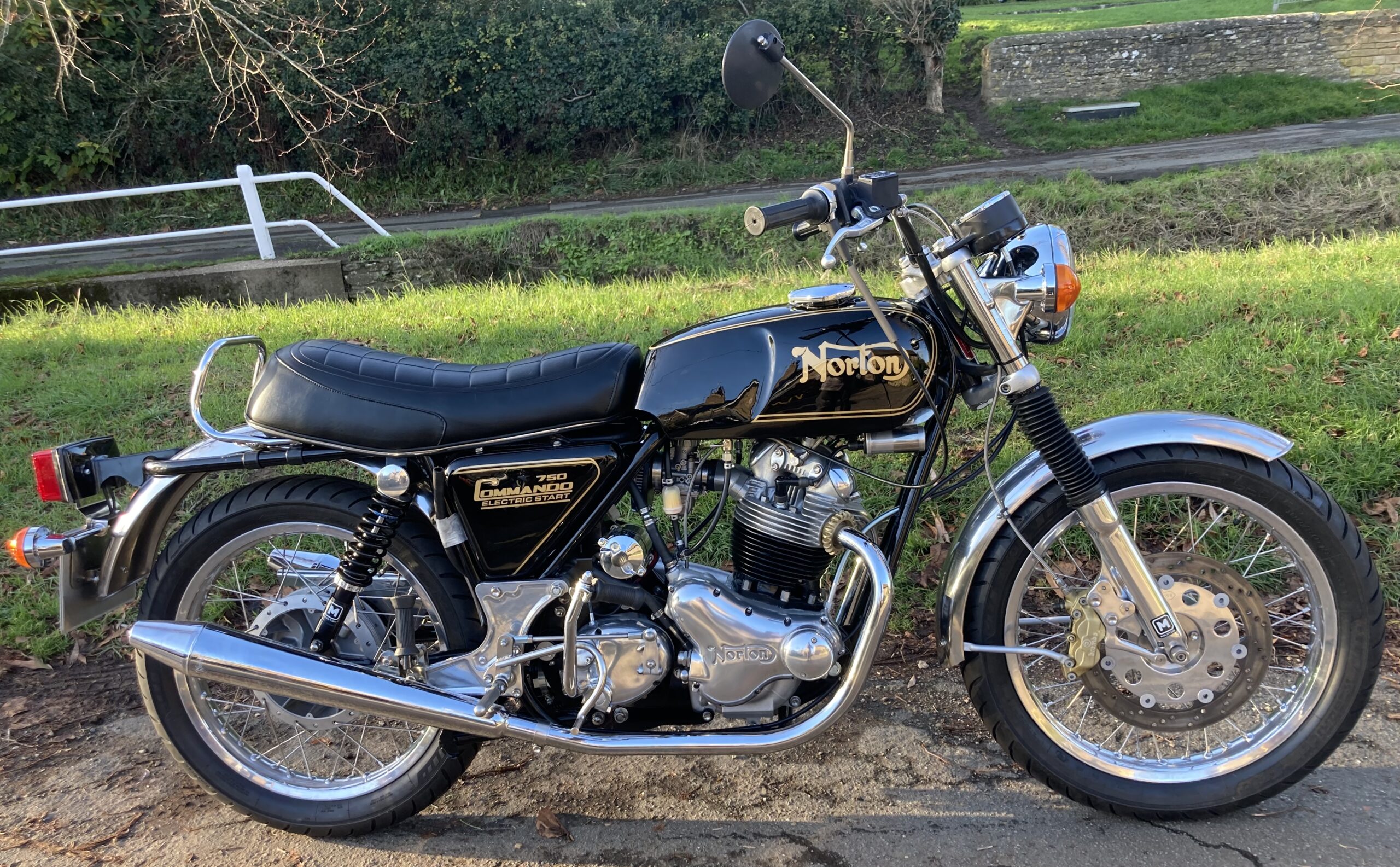
How to keep an old Brit bike in regular use: make it easy to ride and look after
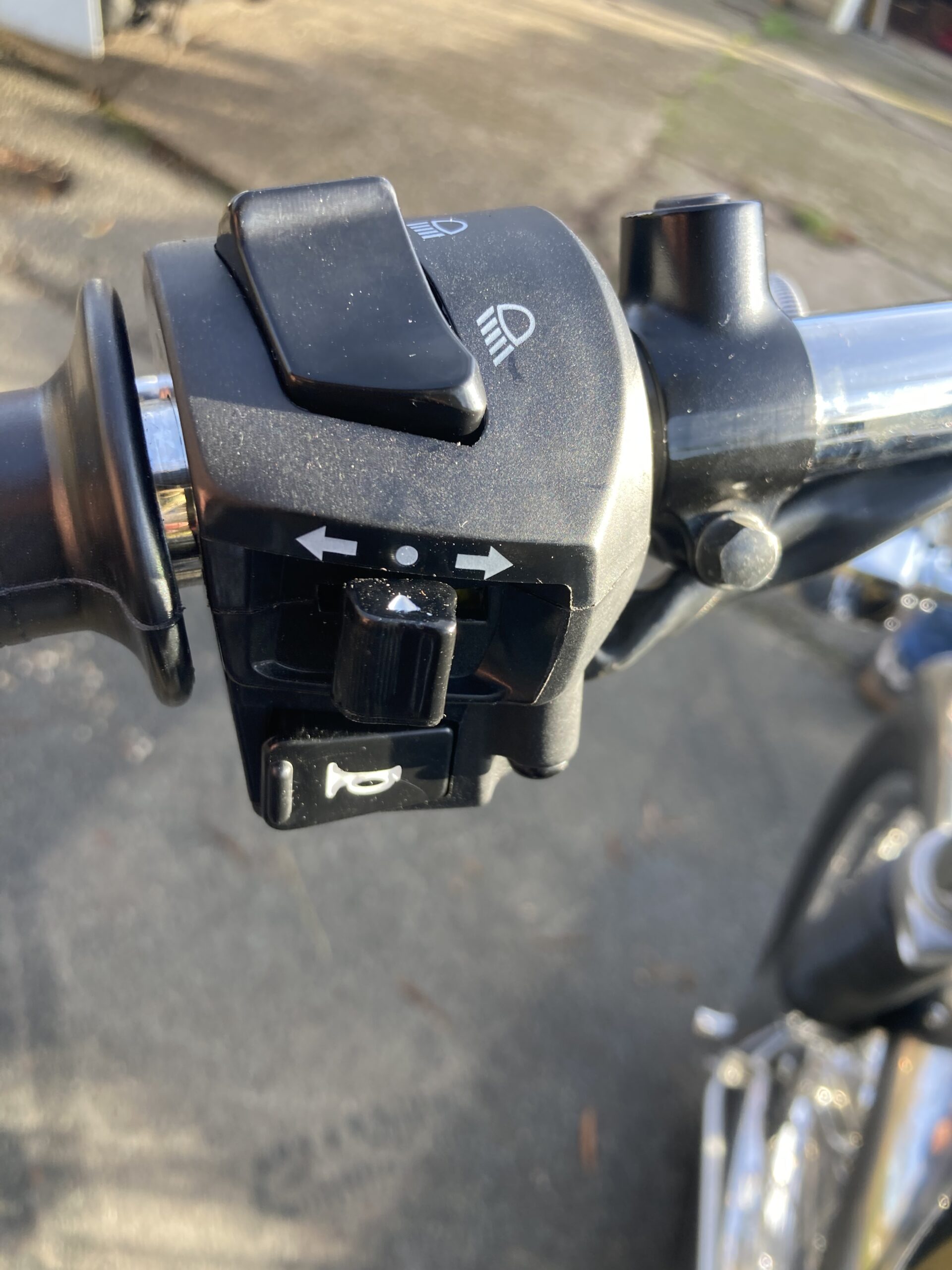
Original Commando handlebar switches are pretty ghastly. Adrian used modern ones instead. This side: from a LexMoto scooter. Other side: a Suzuki of some sort
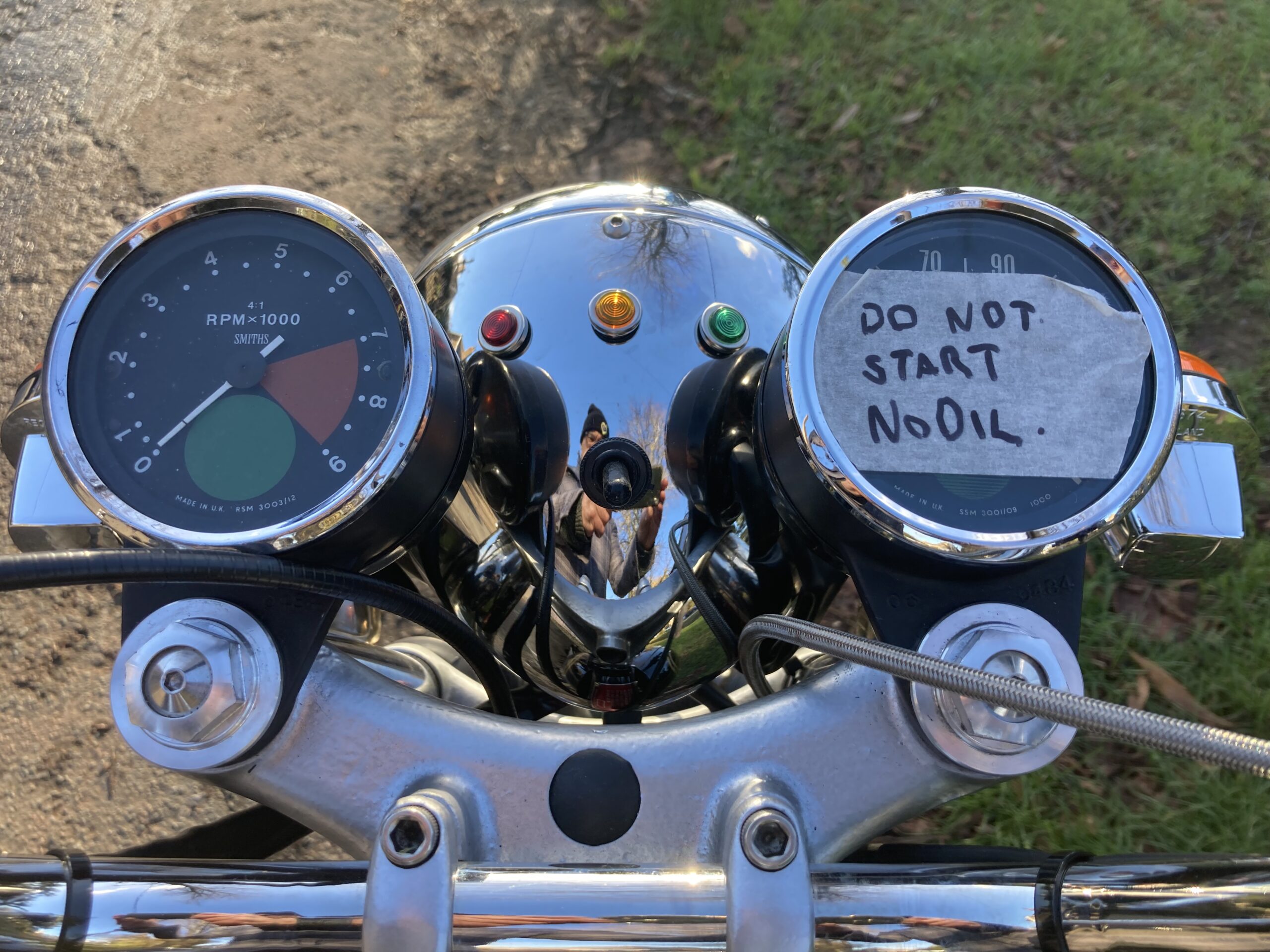
Clean lines. The three warning lights are classic Lucas – they sort of fit in the headlight, but don’t really
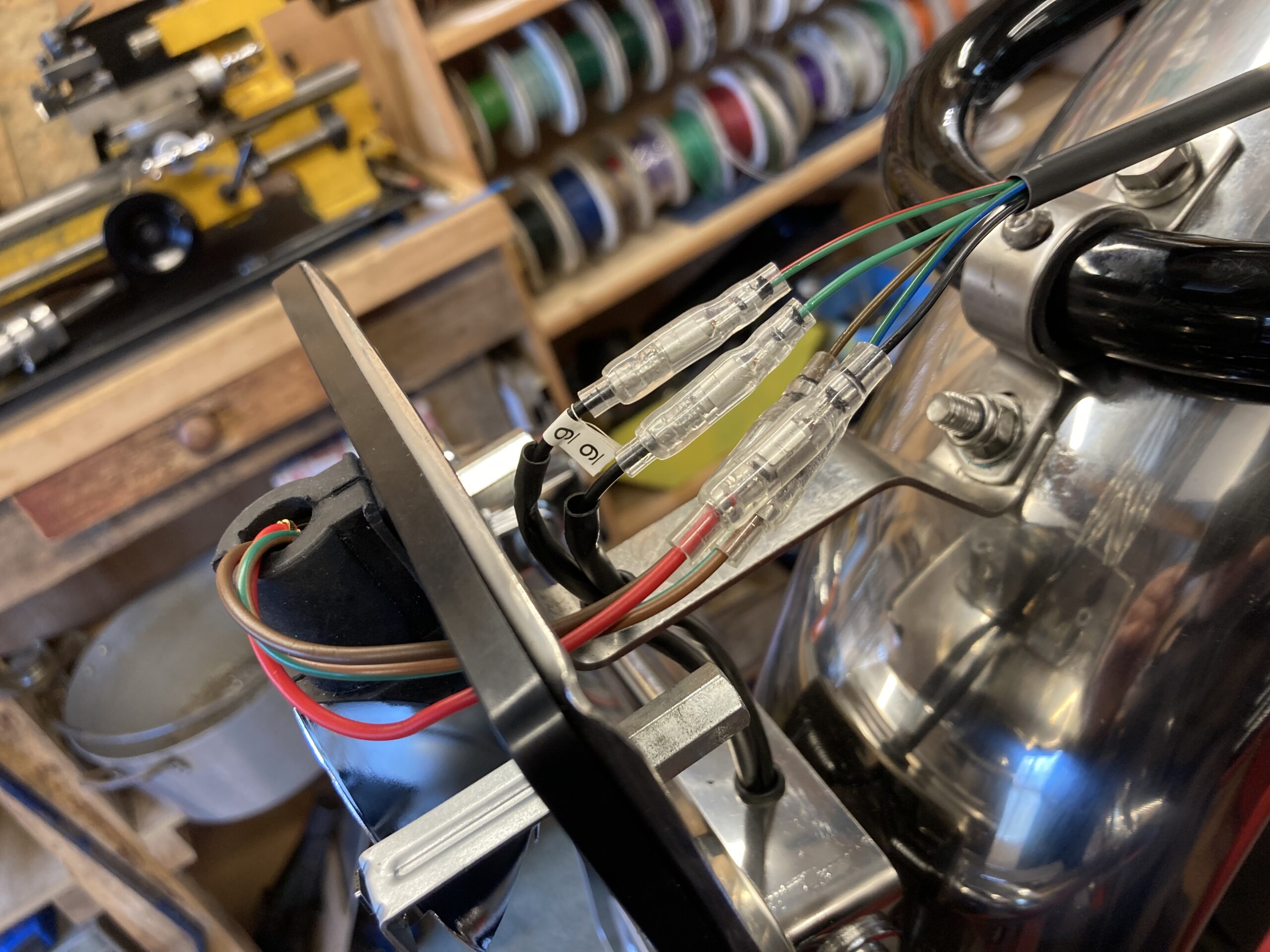
Brit wires, such as these on the tail light, are always ridiculously short. I fitted Japanese bullets like this
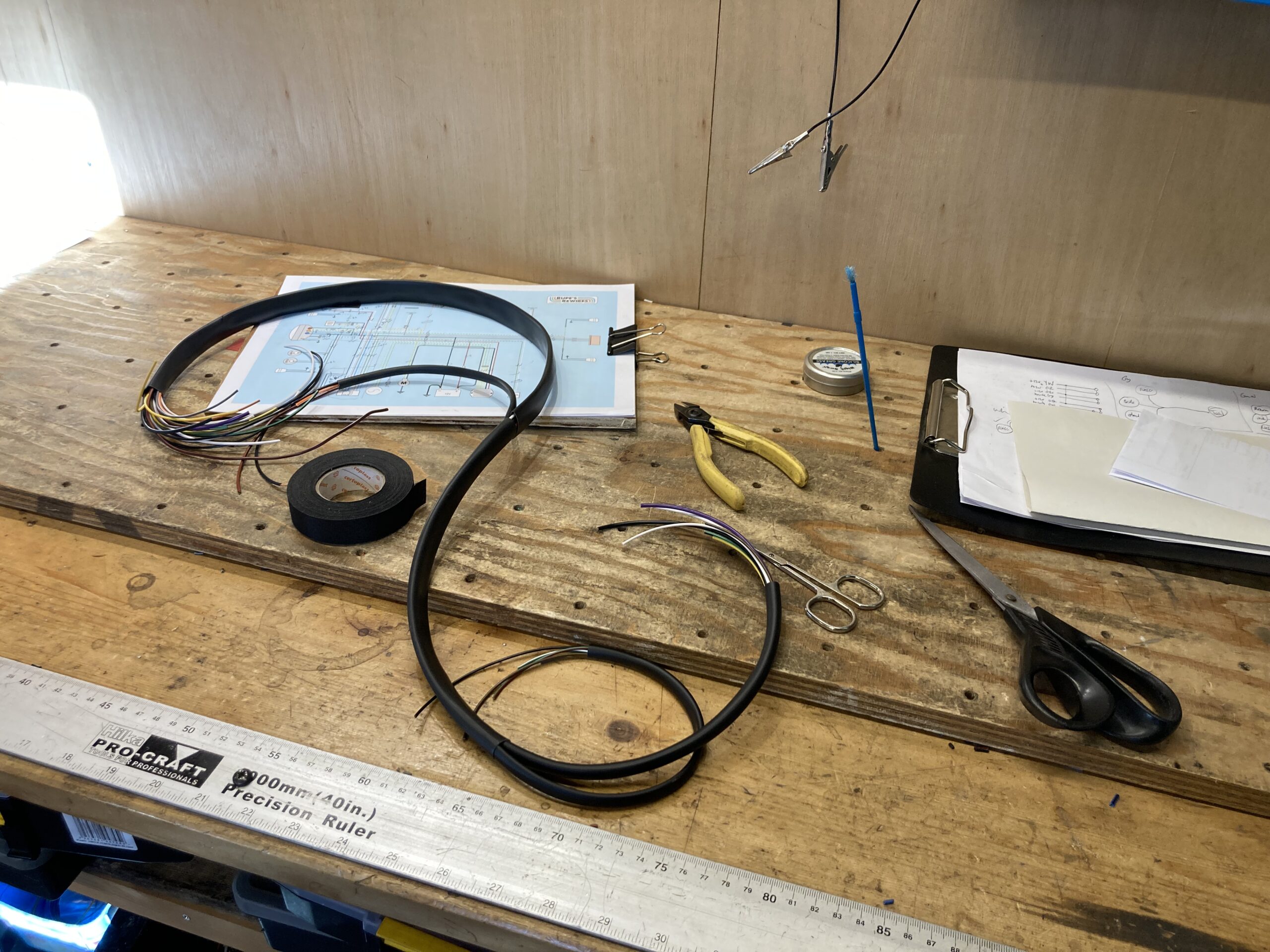
Work in progress. Loom wrapped and ready to go on. After a cup of tea
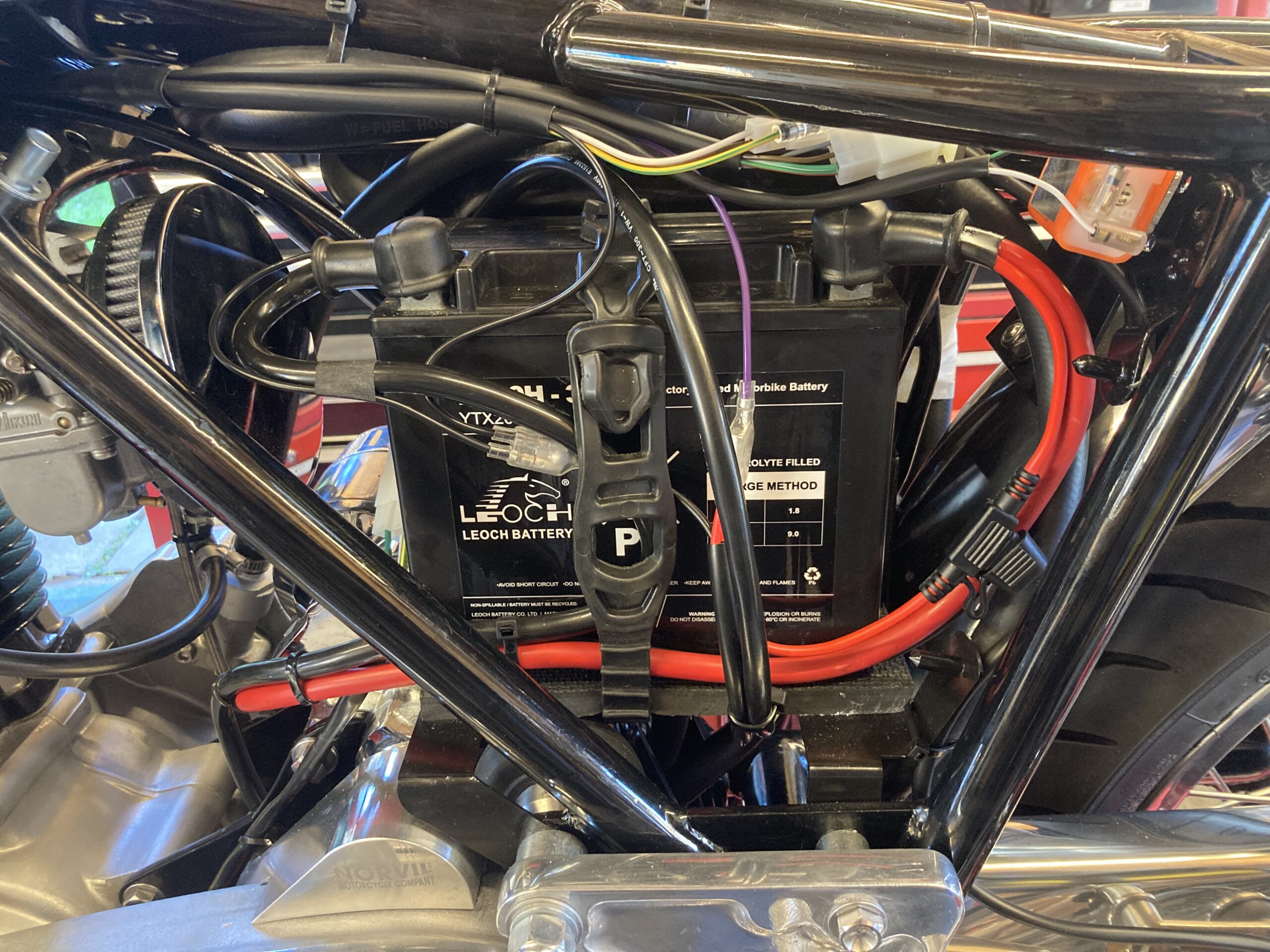
With an electric start comes a huge battery. Here’s how it ended up looking under the left side panel
Adrian’s Norton 750 Commando special
Adrian is a returning customer at Rupe’s Rewires. Previously I’ve done one of his extensive collection of 851 Ducatis, which you can see here.
But Adrian has also been building a trick Commando, and here it is. The engine came together under the magical fingers of Jim Hodges, who in my opinion is the best builder of old Brit bikes on the planet. (He’s been doing it long enough.)
The spec is just what I would want: pukka motor, electric start, Maxton suspension, decent paint and a Rupe’s Rewires electrical system.
The electric start kit is a Norvil device. Jim was not particularly impressed with the fit but he got there in the end, and it works. It comes with car-type battery leads which are a bit stiff, but they work OK. I prefer hi-flex 110 amp cable. It has thinner strands, but more of them, and goes round corners nicely in a tight spot. Which is the only kind of spot you’re going to get on a Commando.
Ignition is Tri Spark, which is probably the best you can get. It’s easy to fit and set up, and doesn’t need a box. It’s just the pickups and the cols. On a bike whose frame is essentially a gigantic bent scaffold pole (and therefore has no mounting points), this is a good thing.
Adrian had chosen to fit a (fairly) modern front brake. This meant he had a good excuse to ditch the original switchgear, which is otherwise tangled up with the original brake and clutch levers. The replacement switches came from a Suzuki (right) and LexMoto scooter (left). It doesn’t matter too much what bike they come from, as long as the wires can carry the current they need to. (You work this out by measuring the copper strands and counting them, then looking up the answer.)
He’d also gone for LED front and rear lights, for extra brightness. The indicators got ordinary bulbs because four LED ones come to daft money.
Altogether, the only vaguely original part of the Commando’s design to survive on Adrian’s bike was the tail light and warning lights. Everything else is simply better than what they got up to in 1975.

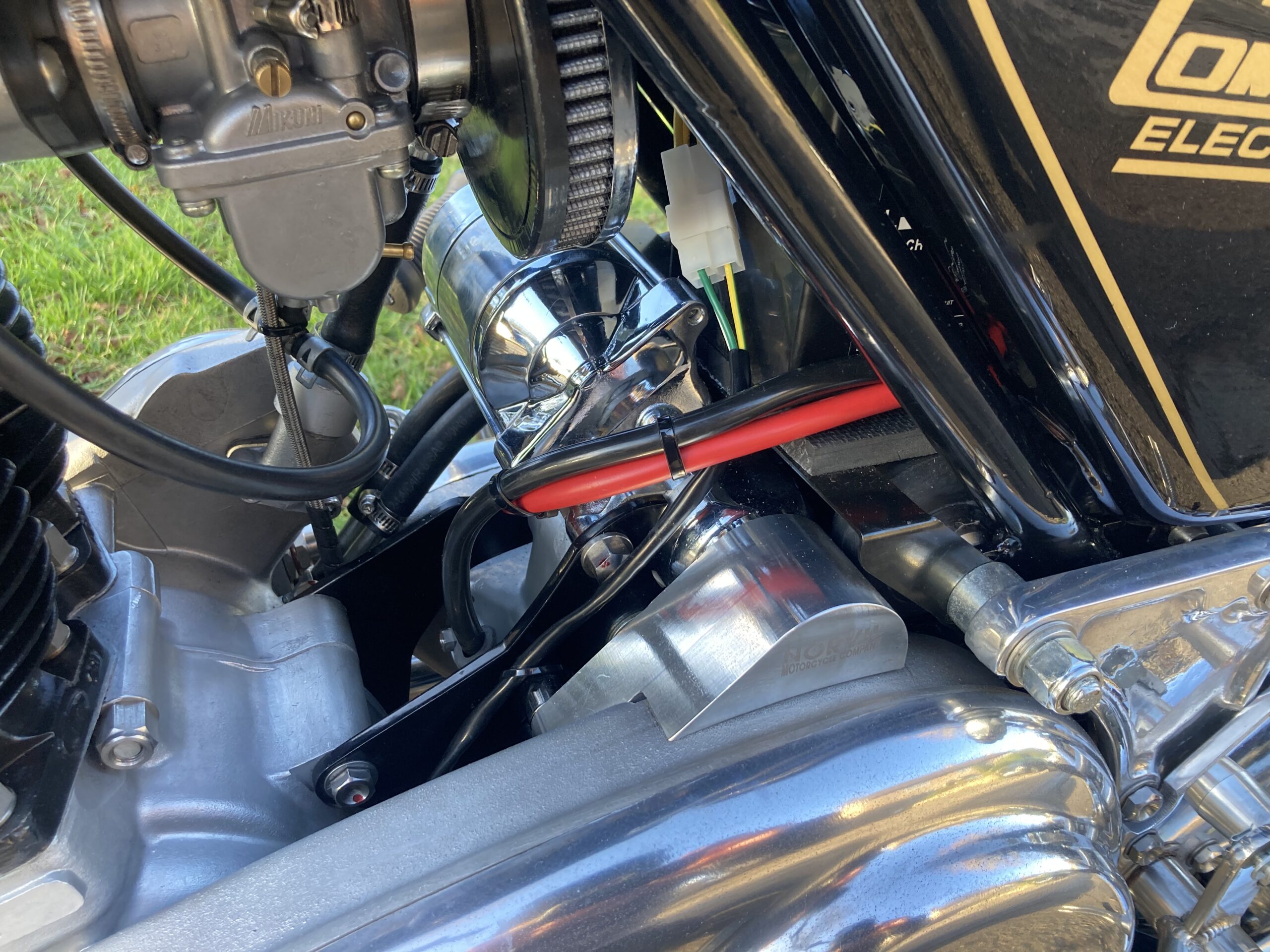
This is the Norvil bolt-on electric start kit. The white electrical plug connects the alternator to the regulator rectifier
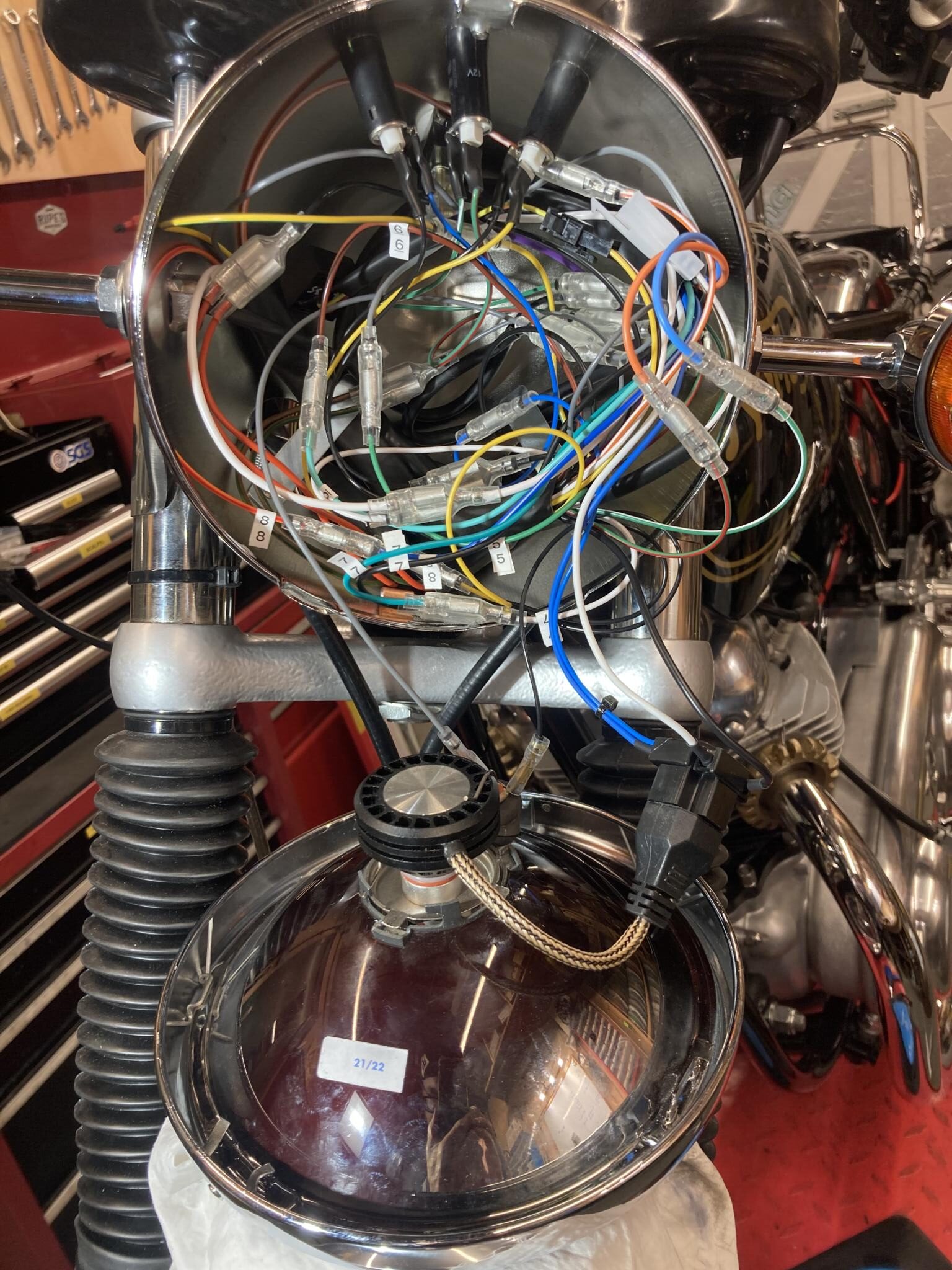
You can’t put much around the head steady of a Commando because the engine leaps around like a copulating gibbon. So it all ends up in the headlight
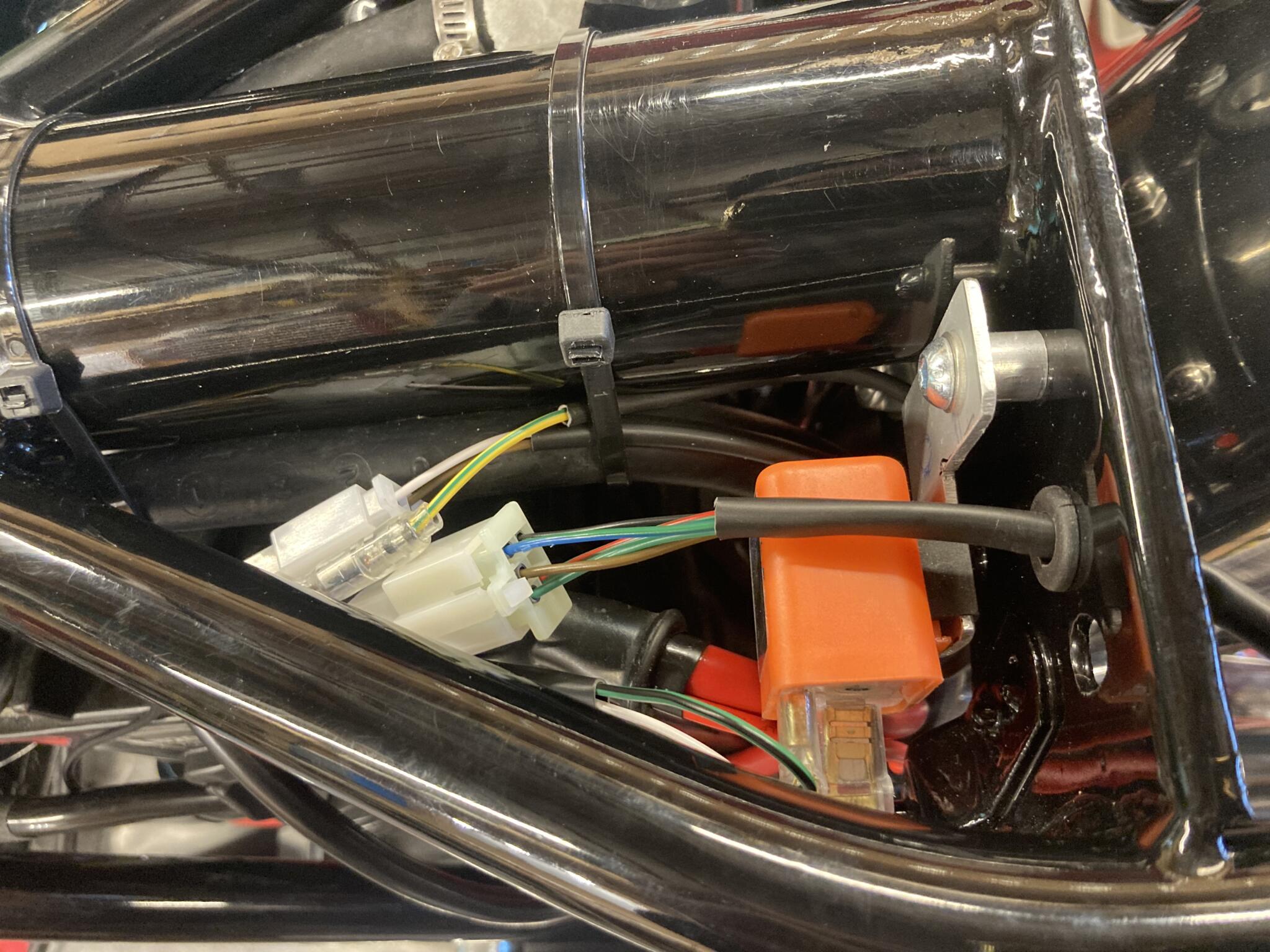
Orange device is the flasher unit, which picks up one of the bulkhead holes for a mounting point. I prefer to run all the wires on a Commando leftwards like this, to avoid the oily oil tank
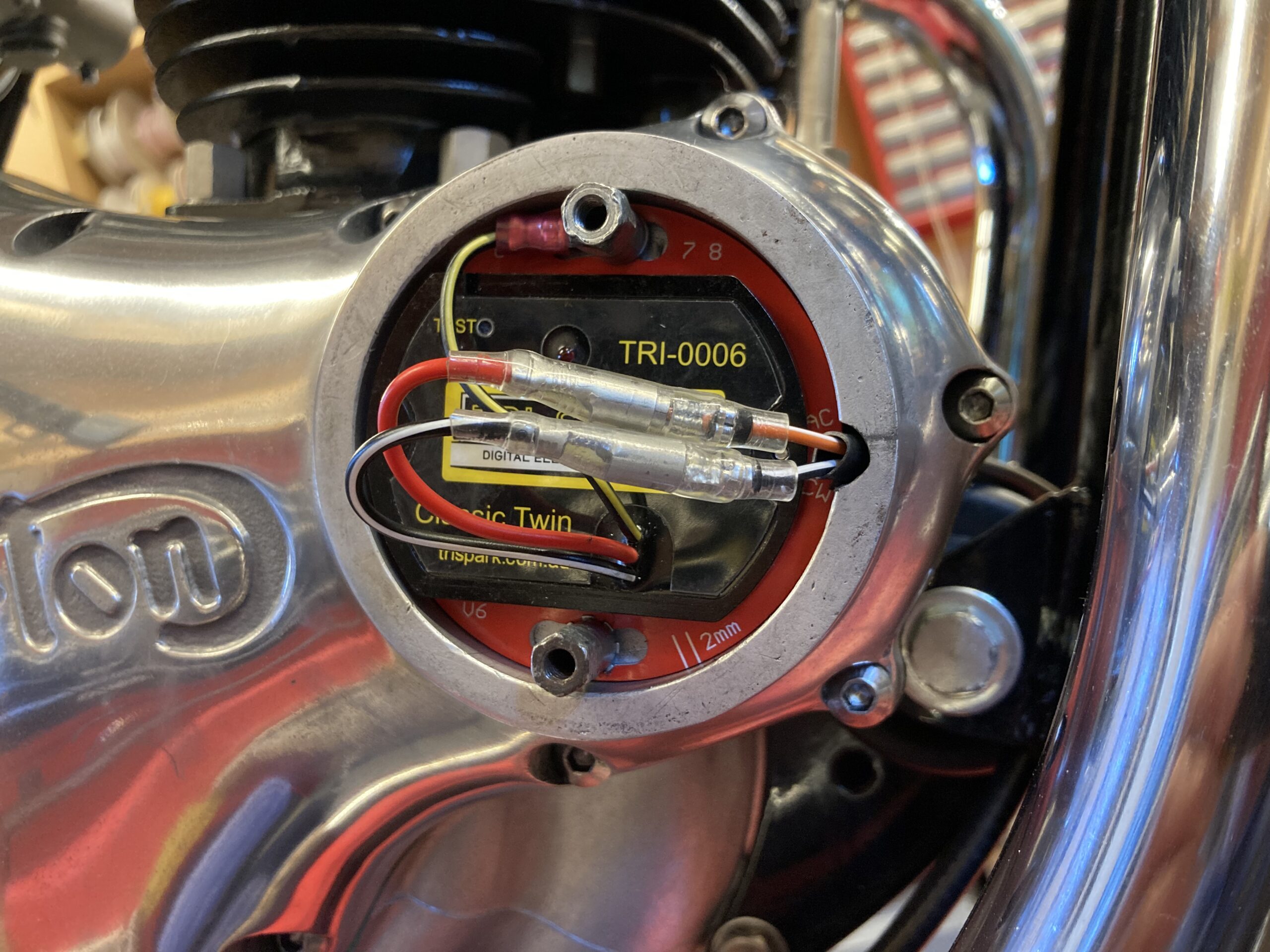
Tri-Spark ignition: nice
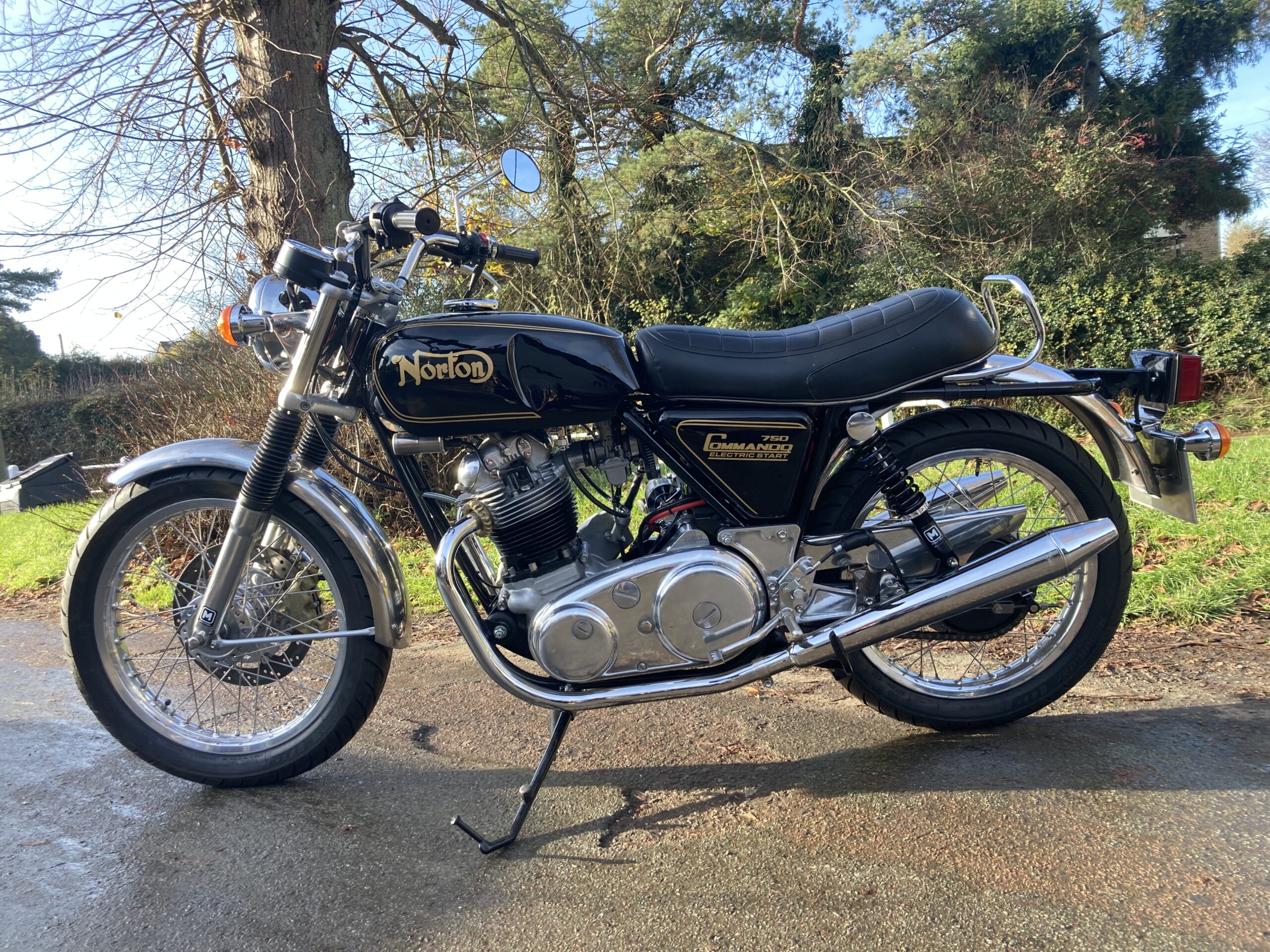
One very thoroughly sorted 750 Commando