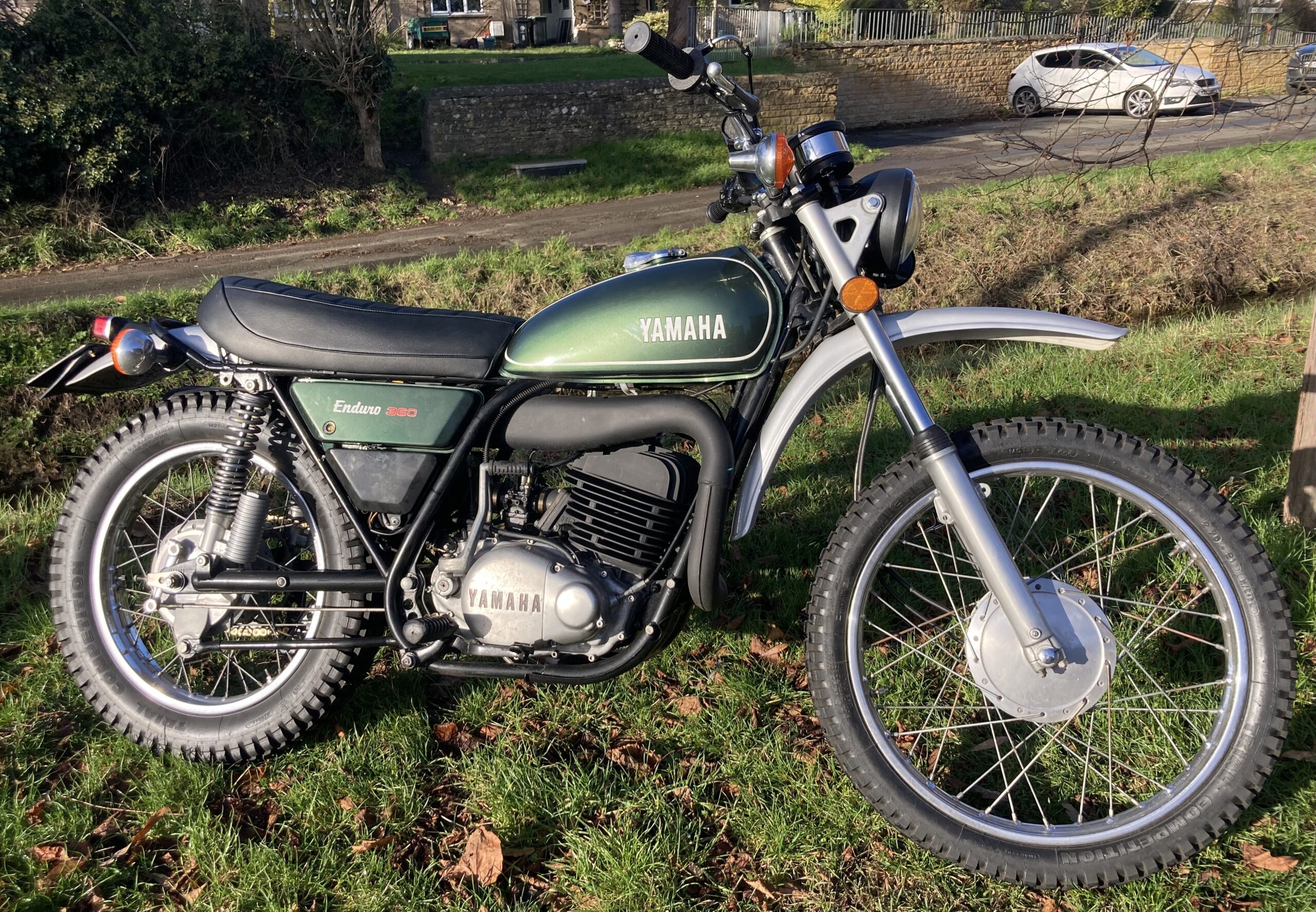
It’s really hard to get a better-looking motorcycle than a 1970s trail bike. Italian, Japanese – they were nearly all gorgeous

New clocks look great
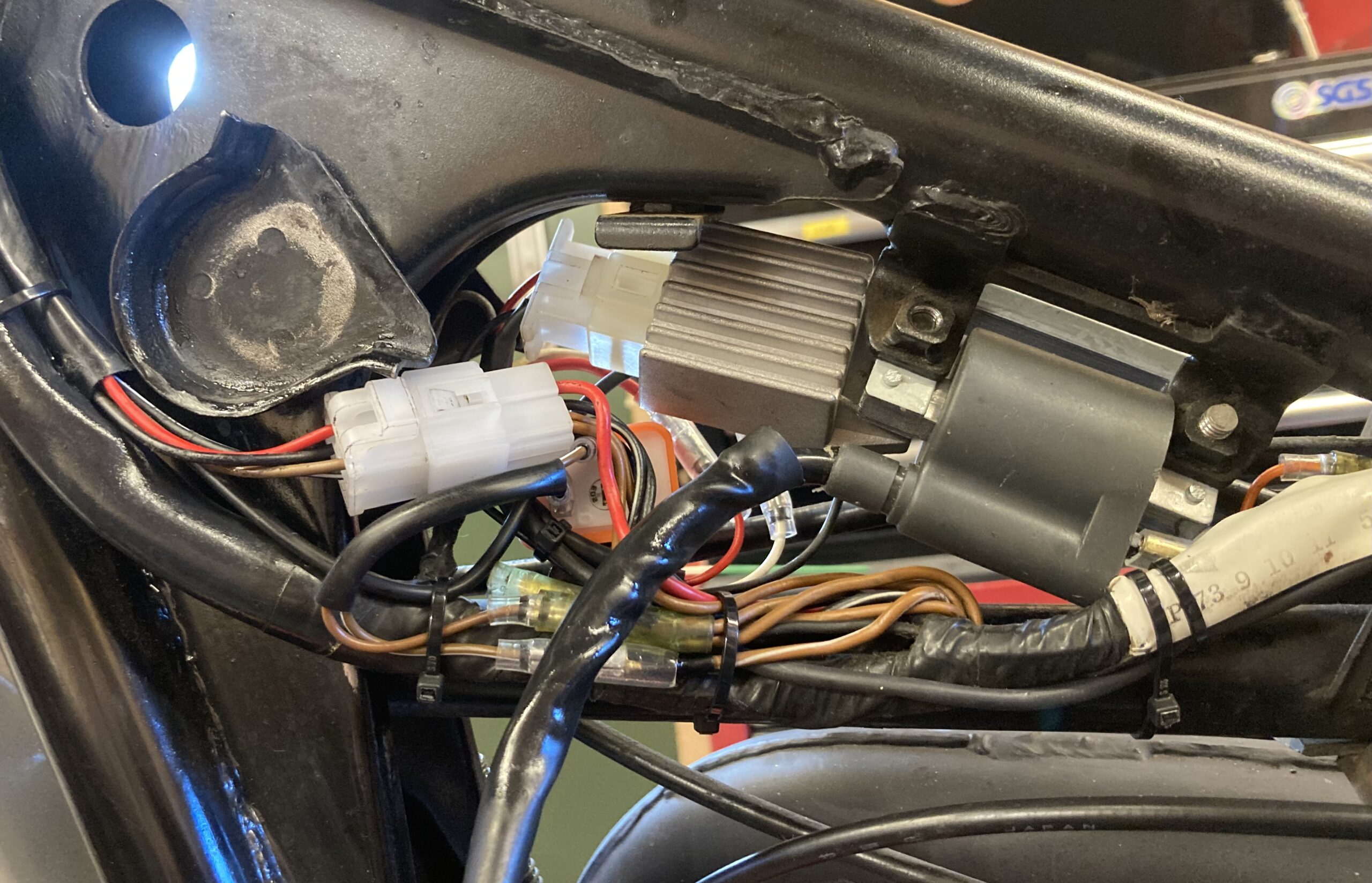
The Rex regulator rectifier squeezes in nicely next to the ignition coil
The charging problem on Simon’s Yamaha DT360
This is a 1974 US import model A, but you knew that because they didn’t bring the DT360 model into the UK.
Being a man of some taste, Simon bought the bike and spent some time doing it up – new bits, paintwork, switchgear, cosmetics and so on from good ol’ Yambits. Electrically the loom was OK, but it made sense to fit a CDI/12V charging kit from the excellent Rex’s Speedshop.
If you are restoring a 1970s or 80s Yamaha trail bike (or many other bikes for that matter), Rex is your man. In fact, if you need to know what goes wrong with old Japanese electrics, the Rex technical pages are the best collection of wisdom and advice I have seen.
Nevertheless, Simon had a problem. The bike was charging OK with the lights off, but the voltage rapidly dropped when they were on. He’d bought LED bulbs to reduce the load, had the voltage checked by a good mechanic, and even returned the stator to Rex for bench testing. (It came back with a report saying it was working fine.)
At this point he brought the bike to the RR workshop. I did a quick charging test, and agreed with his observation that it was only charging with the lights off.
First job: inspect the whole loom and make good any loose or sketchy connections. There’s no point trying to diagnose an electrical fault unless the electricity is at least getting the chance to do its intended job. So: battery connections made perfect, reg rec and flasher properly mounted, lights all sorted out, Halfords connectors banished.
Repeat test: slightly higher charging voltage, but basically the same problem as before.
Sometimes old Brit bikes can’t muster enough charge because the flywheel is demagnetised, but I have never heard of it on a Japanese bike. And I was sure the Rex hardware was fine. All of which suggested a switching issue.
Small capacity 1970s Japanese bikes usually ran AC headlights, and DC indicators/horn/brake/warning lights/tail. This was a cost-saving measure, since the main consumer of power (the headlight) could run with a coil only just powerful enough.
That way, you saved a bit of copper wire. For a mass-produced bike, that added up. But it did make for complicated switches. When the lights come on, you need separate AC and DC contacts to make separate connections.
And the Japanese factories kept doing different variations on this basic idea, often in the same model year. Sometimes they did the switching in the ignition switch; sometimes in the left switch, sometimes the right. And the exact coil layouts varied too.
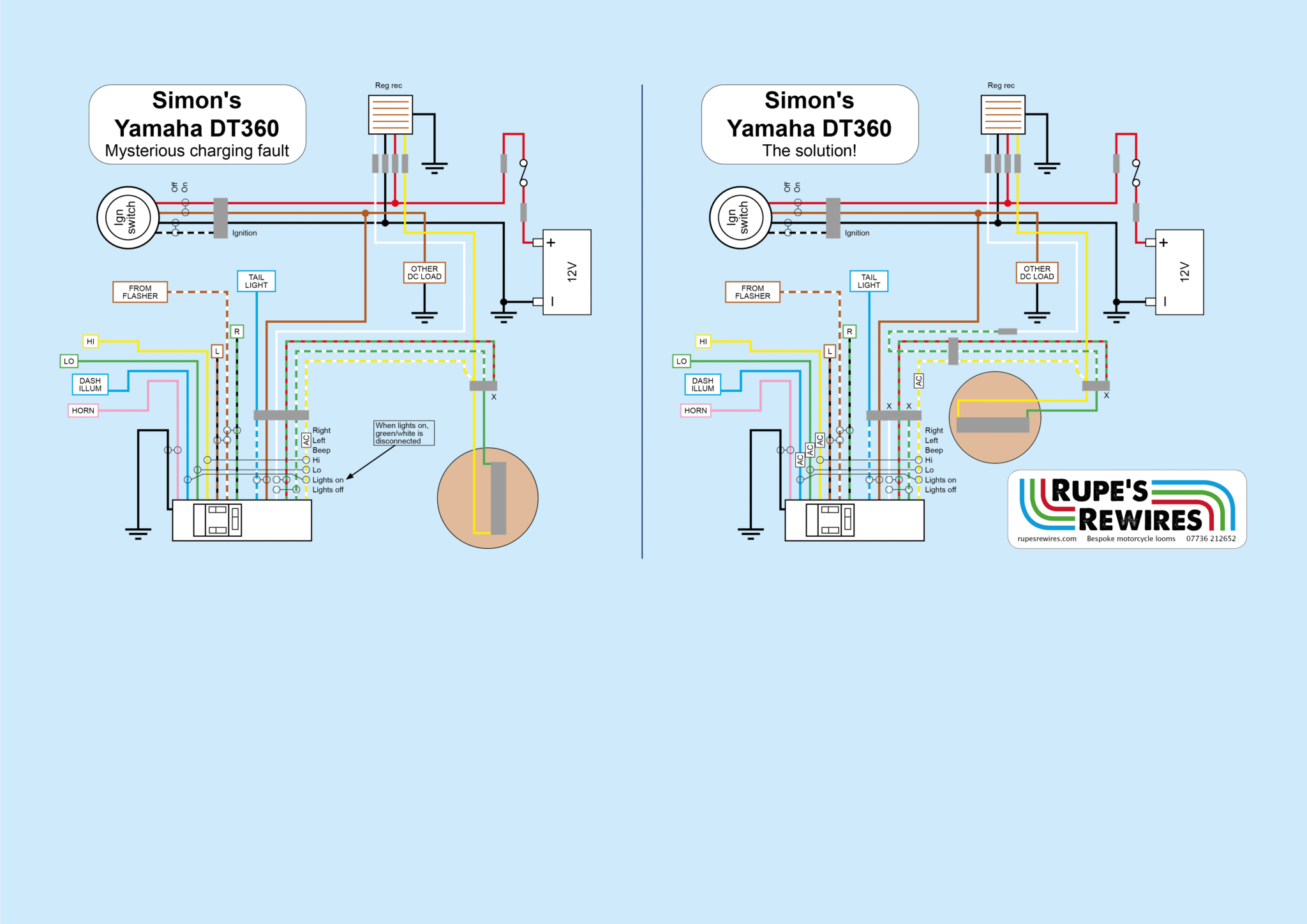
Long story short, Simon’s left handlebar switch was cutting the charging coil out in the ‘lights on’ position. Plenty of AC still available, but no DC. This wasn’t immediately obvious because the wire colours and plugs all matched up. But once I’d mapped the left switch to see what was really happening, it was obvious.
The cure was to bypass the switch and deliver a permanent connection between the DC charging coil and the regulator, as per the outline diagram in the Rex kit. Problem solved. I don’t think we can blame Yambits. It’s just one of those things with old bikes.
Even then it still took a long time to make all the connections neatly, and tuck them away. But finally Simon’s DT is ready to do battle.
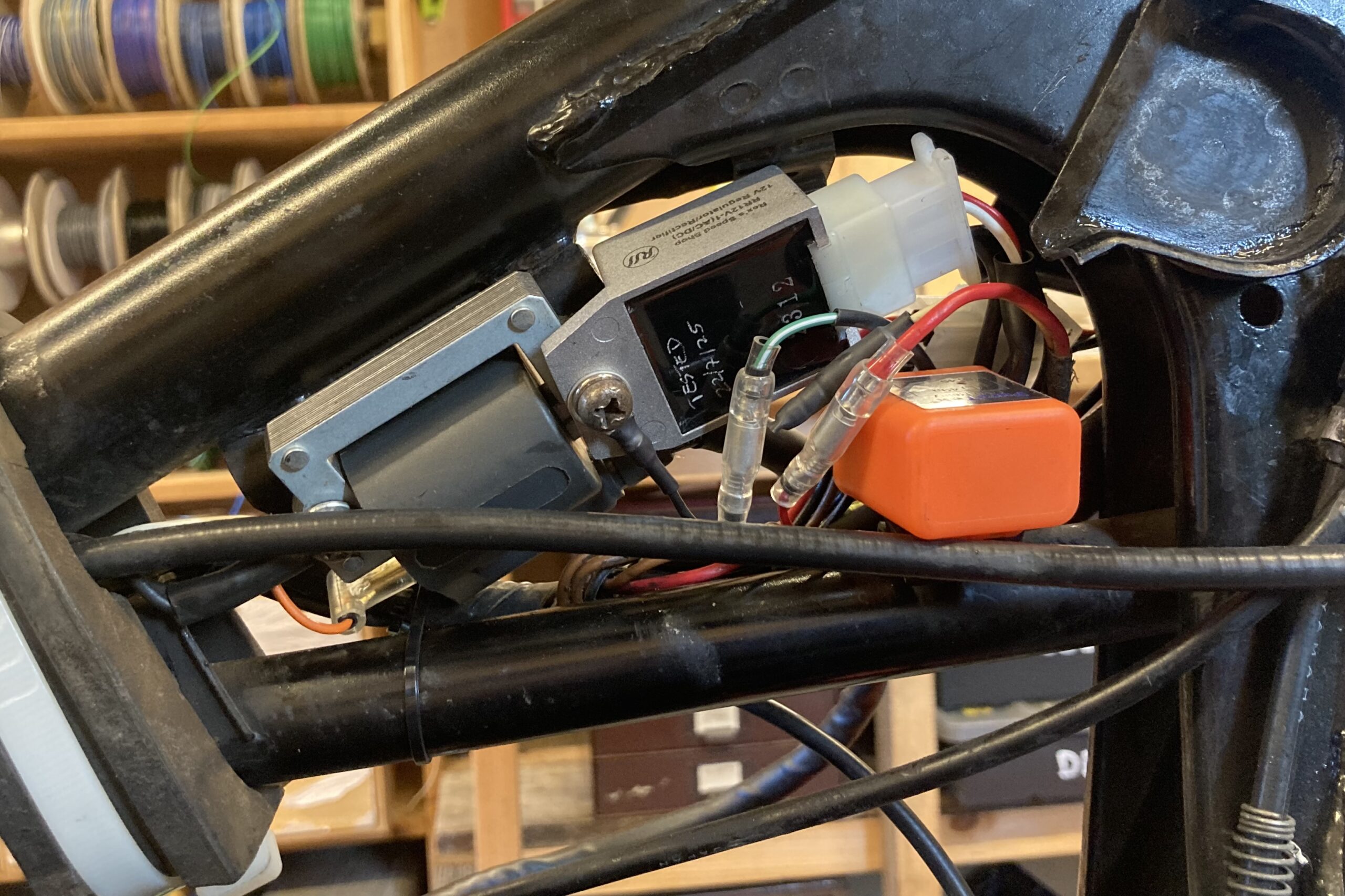
Here’s the reg rec from the other side, with an orange flasher unit just underneath. It’s tight, but it all fits
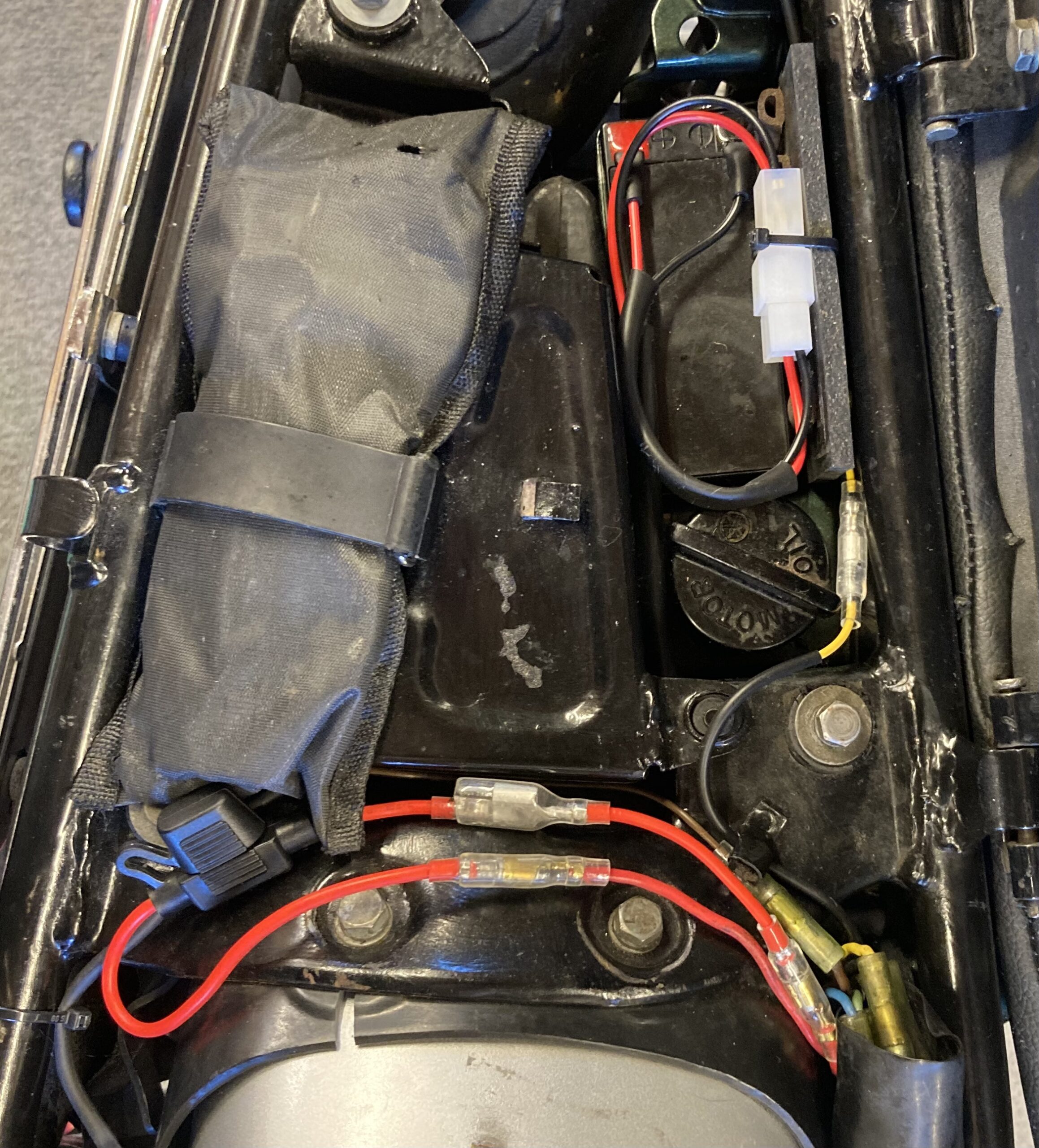
Rex recommend a little 12V battery with spade terminals. I soldered on wires and made a main connection plug (the white thing) from a 6.3mm connector. It’s very secure and won’t work loose
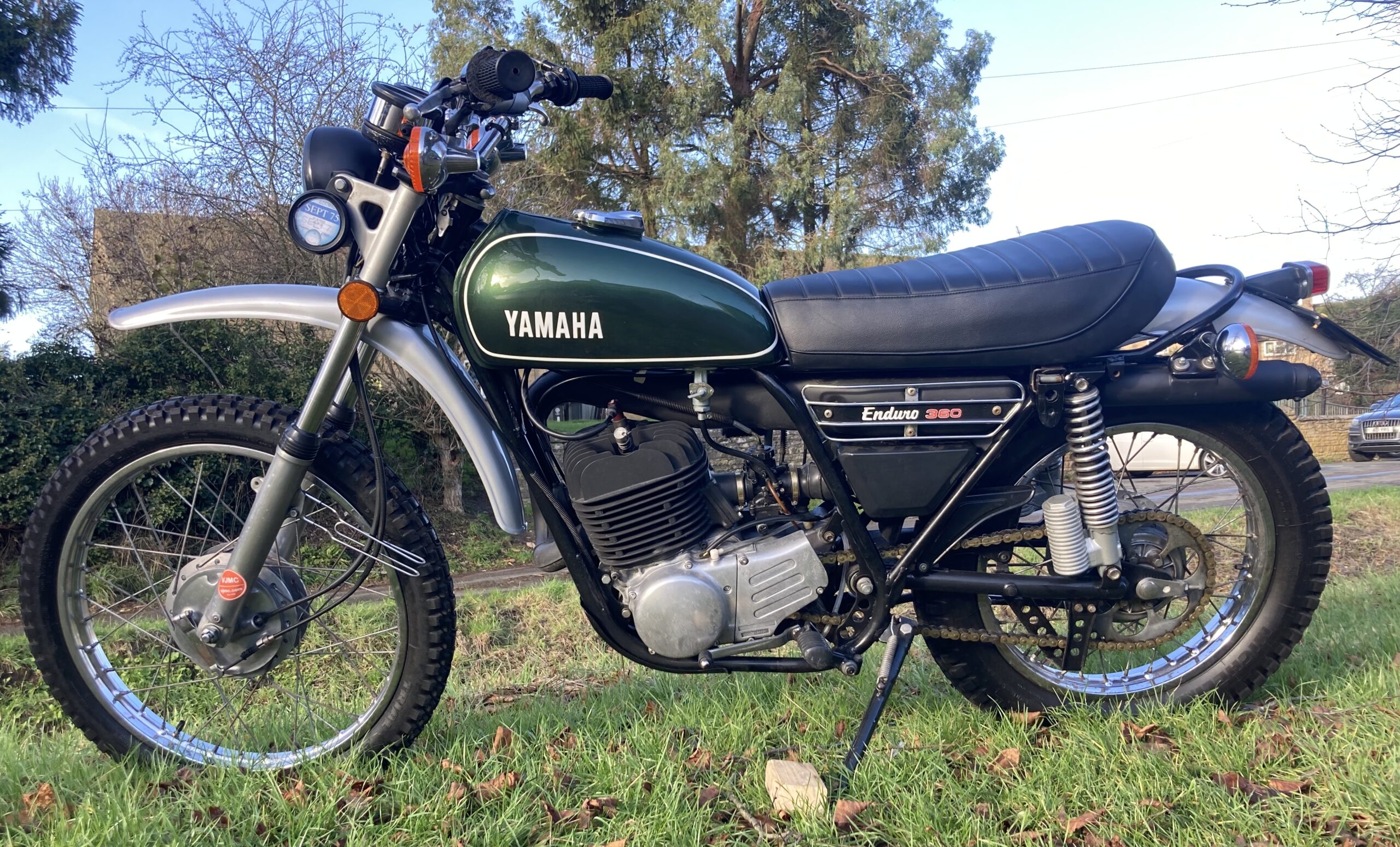
Ready for a bit of fooling around on dirt next year